

Scotti Norman’s Lightning Term: A Striking Success
Richmond Joyce | April 1, 2026
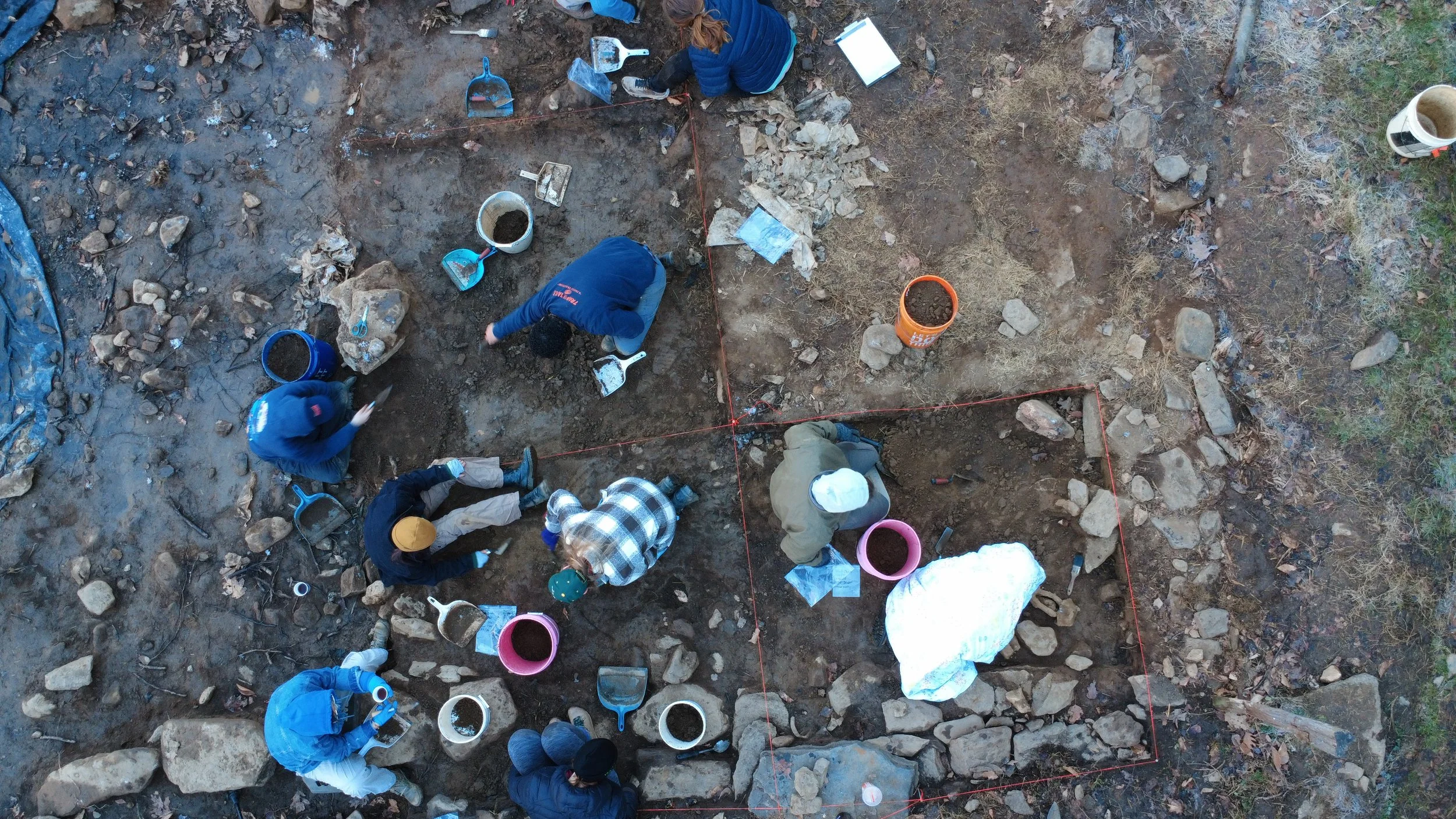
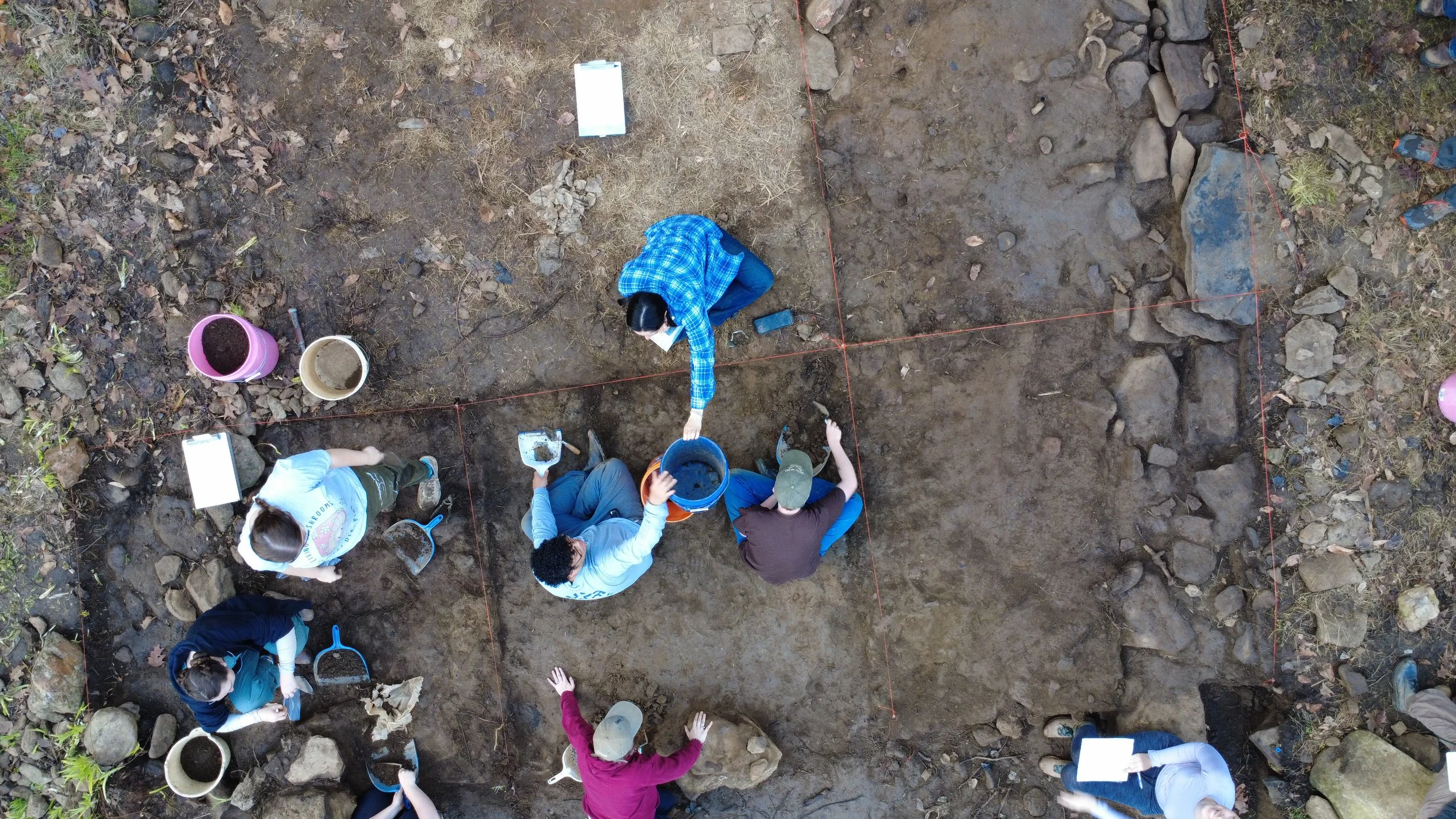
For two days a week, every week, for the first quarter of the 2026 spring semester here at Warren Wilson College (WWC), Professor Scotti Norman has been teaching a unique class in her home field of archaeology. Freedom and Family at Boyd Cabin was one of three “Lightning Term” courses offered to WWC students in the spring semester of 2026, all pitched as four-credit classes that would be attended over a quarter, and then completed during the week of spring through hands-on work.
Boyd Cabin itself is an archaeological site on the grounds of a historically Black-owned farmstead in the Appalachian mountains, which was inhabited by the titular Boyd family from their emancipation onwards to the mid-twentieth century.
Aside from an interest in local history, the schedule for this class was another tempting draw factor—eight weeks of classes, meeting two days a week, an intensive one-week excursion and then you are done. Half the time of a normal semester-long class with four full credits. For many, this already sounds too good to be true, but for participants of Freedom and Family at Boyd Cabin, there was a whole other gravitational force pulling them in: Doctor Norman.
“I love Scotti, I love the classes that she teaches,” Lillian Fetty, a second-year sociology/anthropology major with a concentration in archaeology, said. “I think Scotti teaches well. I think she is very kind, knowledgeable, compassionate and patient.”
Fetty, a member of the Archaeology Crew, was not the only person to echo this refrain. Jeanne Berruet-Zorelle is an international WWC student from France who will be graduating soon. When asked why she chose to take this short-term course, one of the many reasons she cited lines up well with her classmates’.
“Fully because of Scotti… I feel like the professor can really change your view of a subject,” Berruet-Zorelle said. “I was talking to a friend about it, and I was saying how if this had been my freshman year, I probably would have decided to major in archaeology. This could have leaned towards helping me choose a major… I feel like that is thanks to Scotti.”
In classroom hours, students reviewed archaeological practices and theory by reading the works of Whitney Battle-Baptiste, Alice P. Wright and Jodi A. Barnes on topics like Black feminist archaeology, community archaeology, and what archaeology should look like in historically depressed and depleted regions of Appalachia. Students were also encouraged to engage with their own historical niches and interests in the context of the Boyd Cabin site, from perusing old North Carolina deeds and property maps, to tracing down manufacturers and researching antique clasps and buttons.
“This class has changed my perspective of both the past and my future… you don’t really learn about Black histories in Appalachia,” Rowan Lackland, a pupil of Scotti Norman and a participant in the lightning term class, said. “It’s not something that is taught. I didn’t grow up here… and we didn’t really learn about Appalachia in general, so being able to work hands-on with this history that isn’t generally taught was really important to me, especially as a Black person. Being able to understand these things better and learning firsthand what they were doing at that time in Appalachia was really fulfilling, and I think it’s helped me realize that I do actually really like archaeology.”
In archaeology, many hands make light work. With a classroom full of engrossed and educated students, Norman was able to make tremendous progress on the old cabin site, which she has been working on for years. Four units set out on Monday, March 9, with individual adjoining two-by-two meter squares, and mindfully began to dig down into the silty soil of Sandy Mush, Buncombe County, N.C.
“There’s a lot more details that go into that (field archaeology) than people think,” Lackland said. “We did a lot of digging, and sifting and bagging. It was a lot of careful measurements… I think I only knew [field methods]because we went over it in class, which was really helpful.”
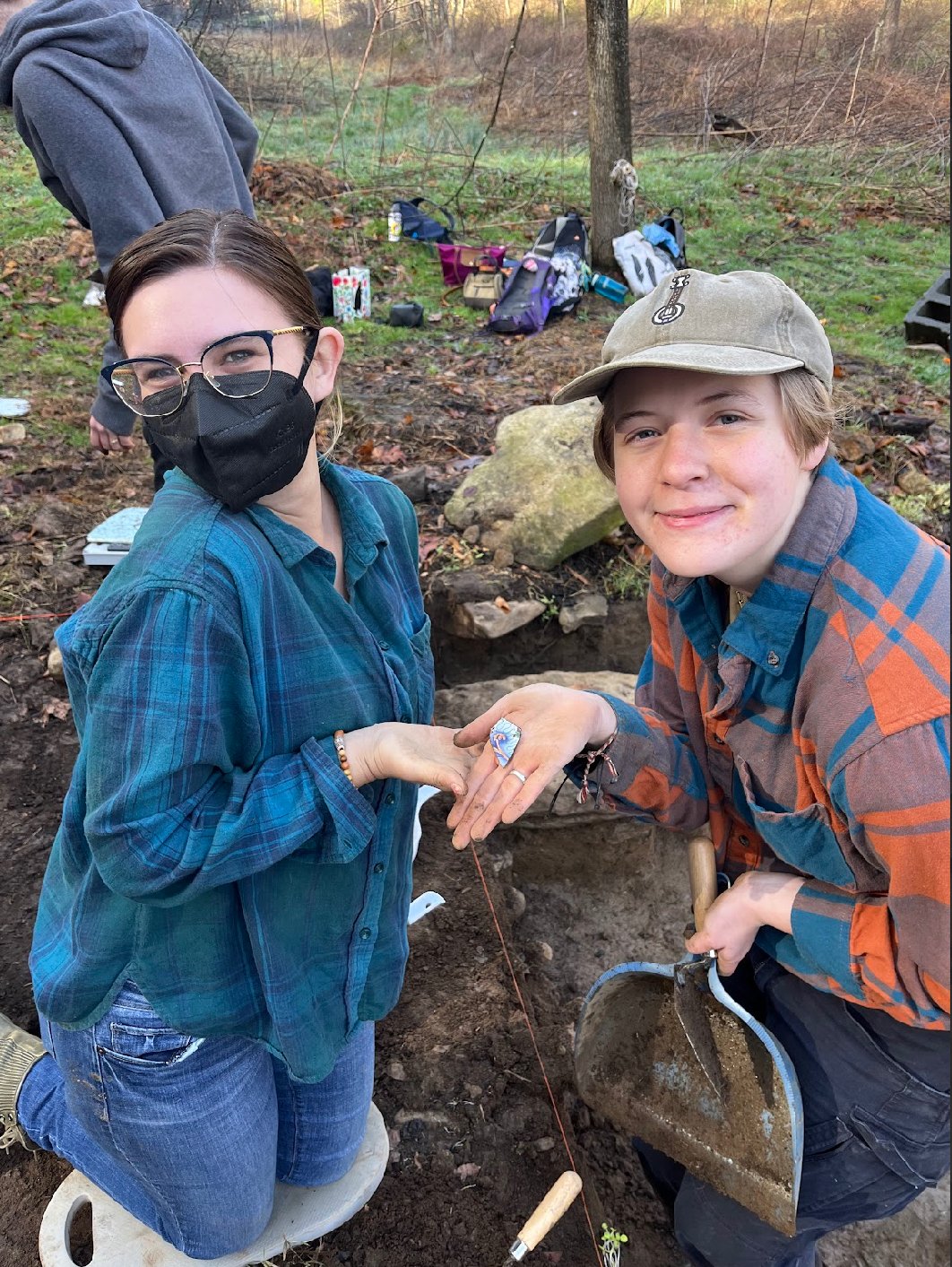
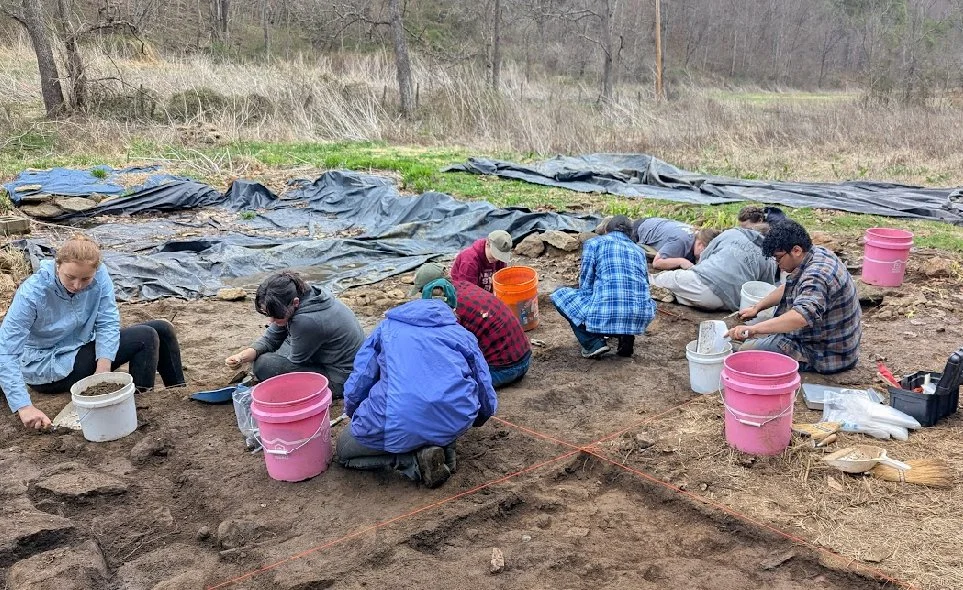
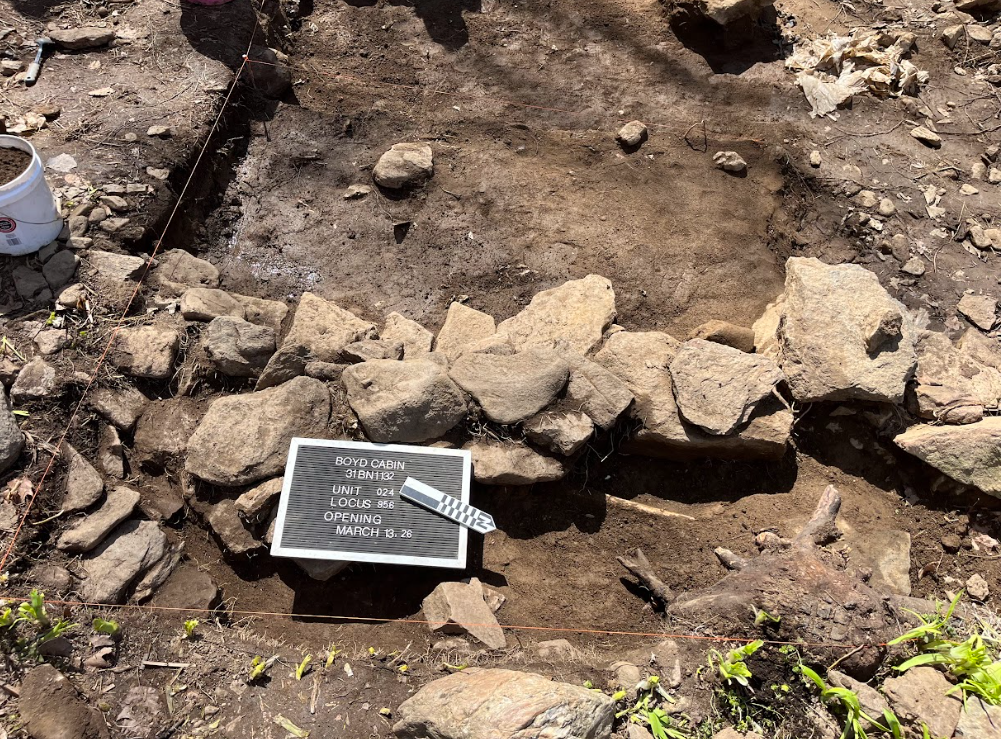
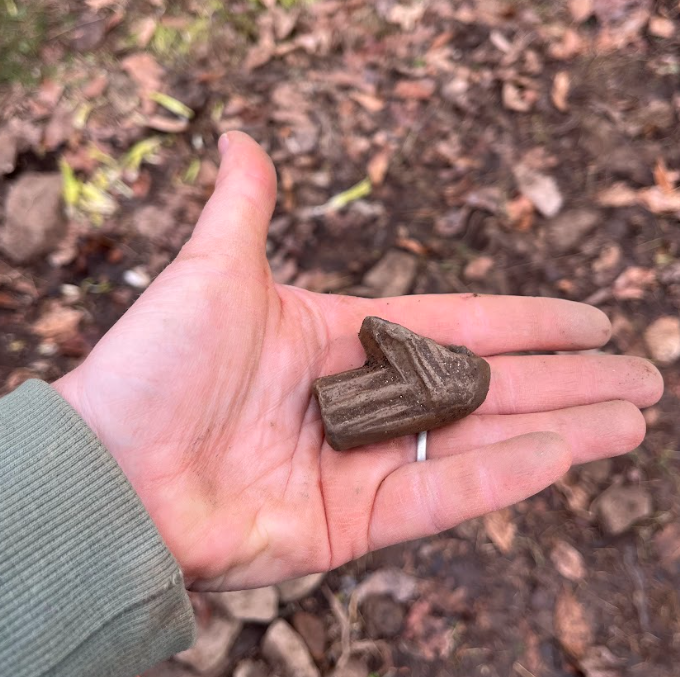
“I feel like as a community, a Warren Wilson community, I’ve met a lot of new people through this class,” Lackland said, “I think we, as a whole, did have a very positive impact on both Buncombe County, like the Sandy Mush community, but also the descendant community. We found a lot of things that we hadn’t previously found—like a pipe—that are really significant in the local history…The work we do is less involved than other community-engaged courses, but it’s involved in an important way that isn’t often seen automatically. It’s like delayed gratification.”
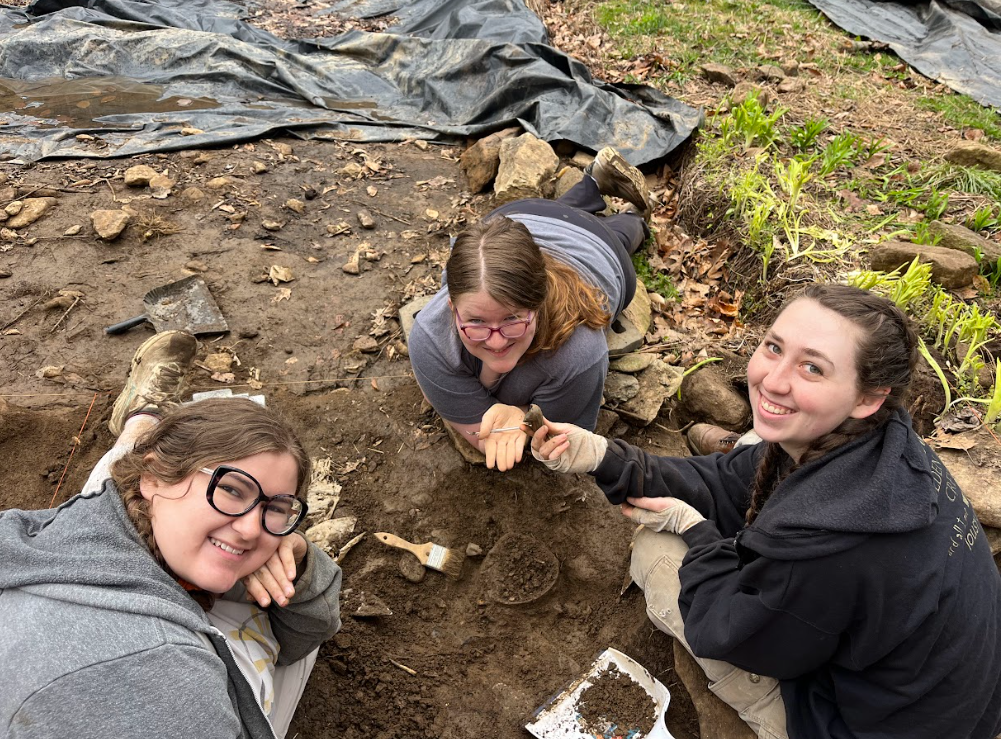
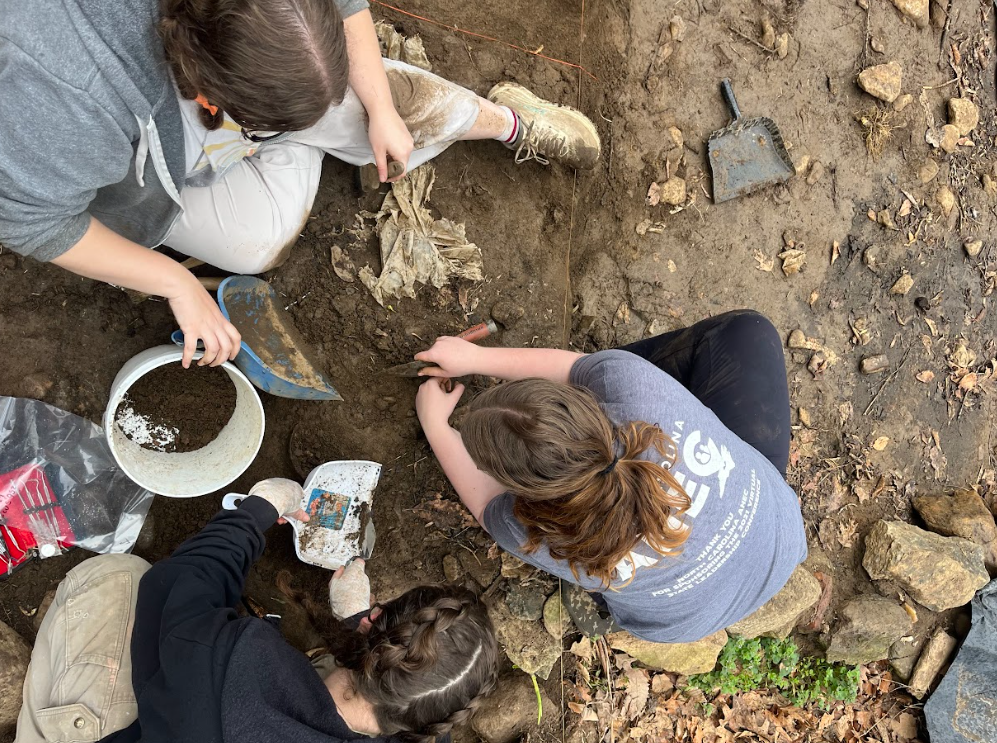
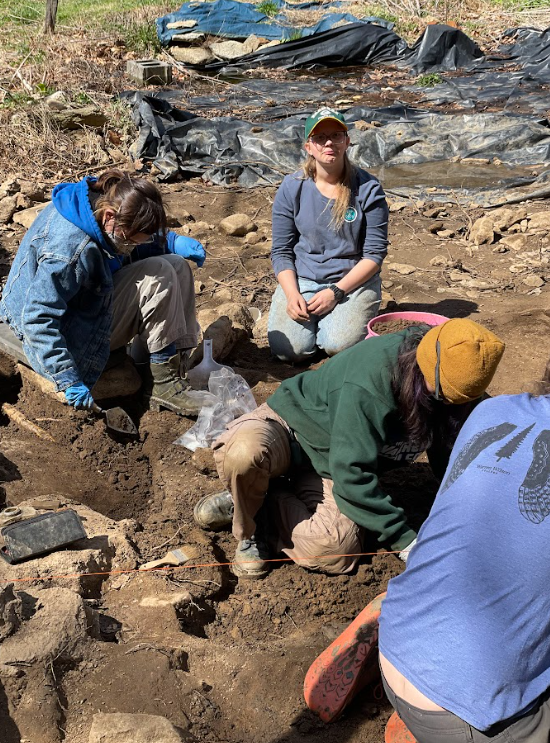
“I feel like I was a part of a group that was helping Scotti achieve something for the community,” Berruet-Zorelle said. “This is not a job that she went to get; it’s something that came to her. She didn’t have to pursue the excavation of this site, but she was offered it and now she’s working with the community, working with the descendants, and with the landlords. I feel like by being part of this class, we were able to be part of that project… it was a very impactful thing just to be there.”
On the topic of making progress at the site, “The sooner we finish excavation out there, the sooner it is that we are able to start the next part of the process of working with the Boyds and the Boyd family stuff, then rebuilding the Boyd cabin,” Fetty said. “Maybe in a different location, maybe the same location, but yeah.”
The cabin’s foundations, built right beside a creek, were inundated by floodwater in Hurricane Helene. For more information on that story and a general history of the Boyd Cabin site and why it is so important, readers can find Norman’s own writing on the subject here.
The cabin was carefully dismantled by the current landowner and stored in a barn for future projects and a prolonged lifespan. The property is no longer owned by the Boyd family, and the descendants of the cabin’s constructors have spread out across the United States over the past half-century. Norman, in tandem with the property owner and the Boyd family descendants, plans on raising the structure again and storing the thousands of artifacts that have been recovered so far to give individuals a better understanding of what life might have been like for a Black farming family in rural Appalachia after the Civil War.
Nine weeks later, it is clear that the lighting term course Freedom and Family at Boyd Cabin was a success thanks to the college’s very own Norman, her pursuit of fair knowledge for communities facing inequity, and her encouragement of her students. Her passion for the subject is infectious.
“I’m not a nature person at all,” Berruet-Zorelle said. “I hate the dirt and insects, and I thought, ‘Why am I even doing this course?’ Because I love Scotti, and I was so excited to get to know more about what she’s passionate about. The first day I was squatting, not to get dirt on my pants… and then the third day I was fully sitting in the dirt, and I realized it doesn’t matter—like what if there’s dirt on your pants? It’s not important. I was so happy to do that, and I had my hands in the dirt and I felt tired at the end of the day… at the end I realized, this is so much fun to do that I wish I’d done more of it in my life.”
One does not need 16 weeks to make a change in people’s lives; all that is needed is passion. Through her community-based archaeology project, Norman has successfully embodied the spirit of WWC and has given a handful of students the kind of class that most only dream of. Dirty hands, hard work, compassion, empathy and intellectual growth have always been core aspects of the college that can too easily get swept away by bureaucracy and deadlines. Norman’s dedication proves that this spirit is not dead—it just might be hidden under a few inches of dirt and debris.