

Answer Richmond: What Is the Oldest Building On Campus?
Richmond Joyce | Feb. 10, 2026
Inspired by the Asheville Watchdog’s “Answer Man” column, Echo writer and photographer Richmond Joyce is here to answer all your historical queries.
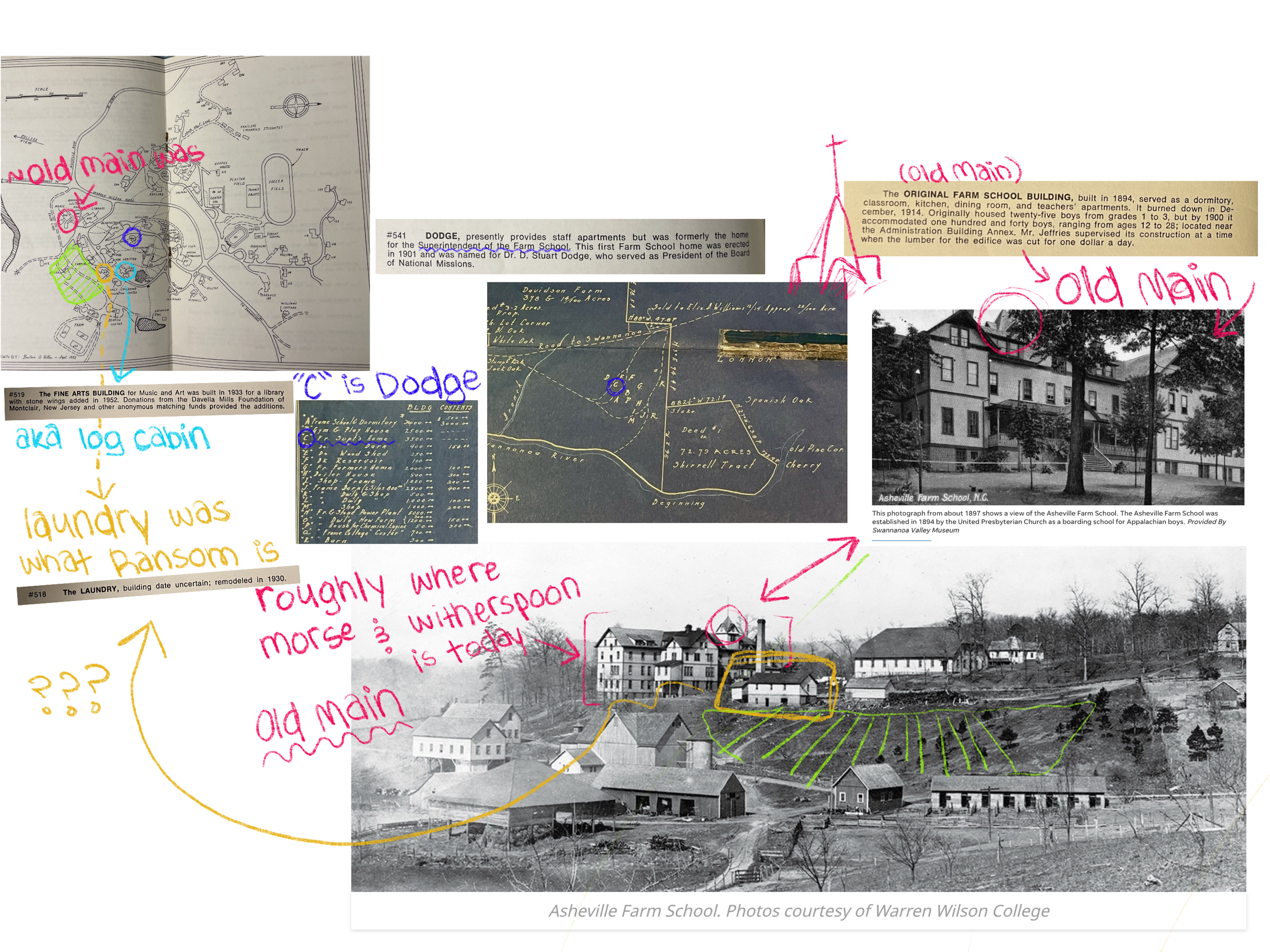
Author Richmond Joyce’s notes and maps created while writing this story.
A frequently asked yet hesitantly answered question buzzing around campus is a simple one; what is the oldest building on our campus? From the Log Cabin to Sunderland, Dodge to Bryson, responses vary from person to person—and yet there is only one right answer. So which one is it?
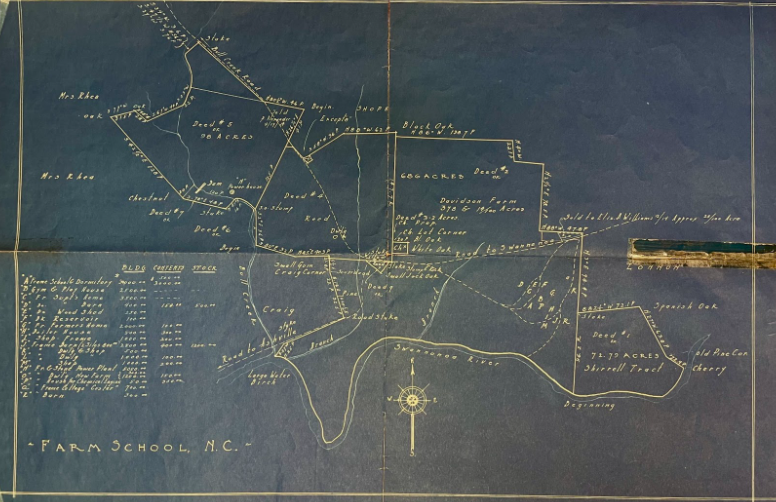
Blueprint of the Asheville Farm School.
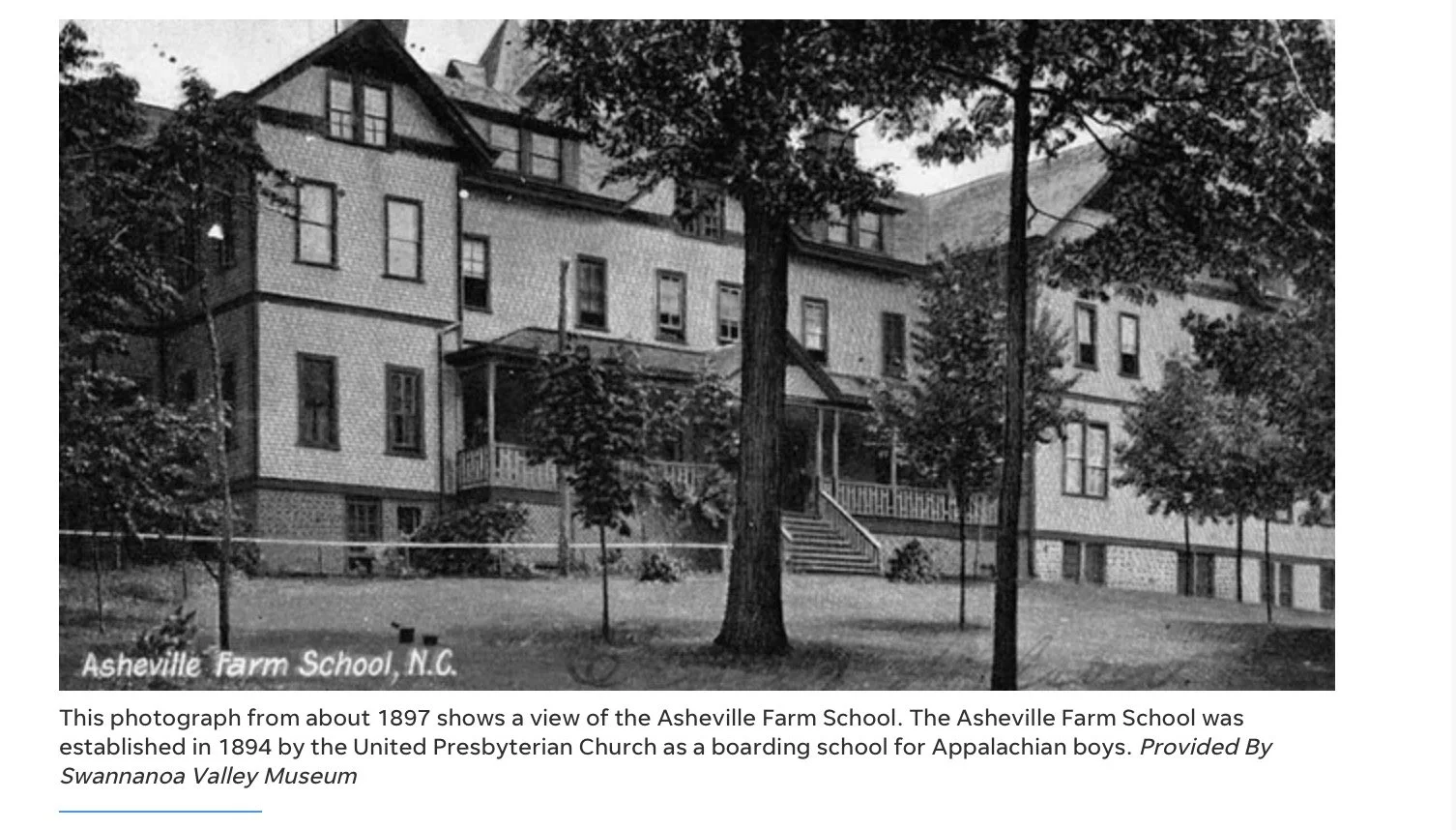
The Asheville Farm School (AFS) was established on the modern grounds of Warren Wilson College (WWC) in 1894 with the construction of the original farm school building, colloquially called “Old Main.” This three-story structure housed dormitories, classrooms, teacher apartments, a chapel and dining spaces. The wooden building once towered where Morse and Witherspoon now sit, the front doors looking out towards what is today Warren Wilson Road, greeting twenty years’ worth of students.
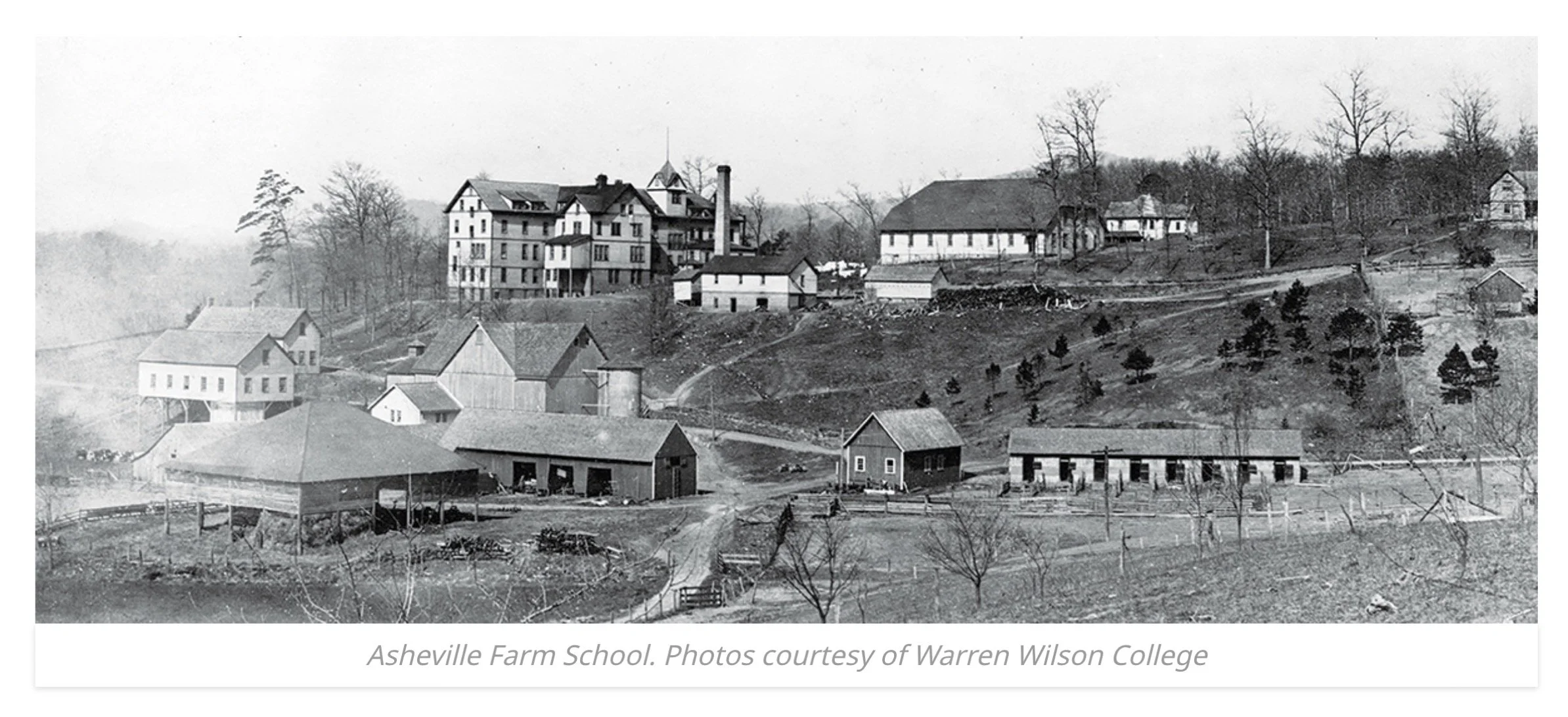
Archival photograph of Asheville Farm School with “Old Main” present as large white building on top of hill.
Unfortunately, this marvel burned to the ground over the Christmas break in 1914, and today, this building can only be seen in old photographs of the Farm School. This was a major setback for the institution and contemporary newspapers estimated that the blaze caused $40,000 in damages; or almost $1.3 million when calculating for inflation.
With Old Main reduced to rubble and ash, the construction of two new, smaller dormitories was being discussed as early as January of 1915, after AFS staff and the Northern Presbyterian Board of Home Missions met in New York. Out of the two dorms which would be constructed, one still stands today on campus. The Carolina Dormitory, which stood where Vining now exists, was the sister structure to our very own St. Clair Guest House, which was originally built as a dorm in 1915.
The gymnasium, which stood adjacent to Old Main, was also damaged in the fire. While it was not decimated to the same extent as the larger building thanks to the efforts of firefighters and students combined, the gym would still have to be rebuilt.
Why it took until 1920 for Bryson Gymnasium to be erected, six years after the blaze, is unclear—the onset of World War One could be theorized, or perhaps it was simply deemed a low priority by the Presbyterian Board—but what is known is that the structure we still gather in today in recognized as the oldest standing wooden gym in the great state of North Carolina.
Following the construction of Bryson Gym was Carson Hall, the predecessor to Boone, built in 1926 and then Sunderland, built in 1929. The Log Cabin was built in 1933 to be a fine arts building on top of ruins of a dining hall which burned in the 1914 fire, was rebuilt, and then burned again in 1929. Archival records suggest that underneath the cabin’s floors, the stone base of that original dining hall can still be found, reworked into the modern structure’s support.
That seems to cover the obvious candidates for the title of oldest building… except for one. Smack-dab in the middle of campus there is one building that sticks out like a sore thumb, between the heavy bricks of Sunderland and the peaks of Gladfelter’s roof: Dodge House.
Against all odds it seems, dodging fires and floods, the peculiar building which looks to be pulled straight off the page from a Sears, Roebuck and Co. catalog is in fact the oldest still-standing building on Warren Wilson’s campus. Better yet, it was constructed all the way back in 1901, before you could even purchase blueprints and materials from catalogs (the “Sears Modern Home” series ran from 1908 to 1940!).
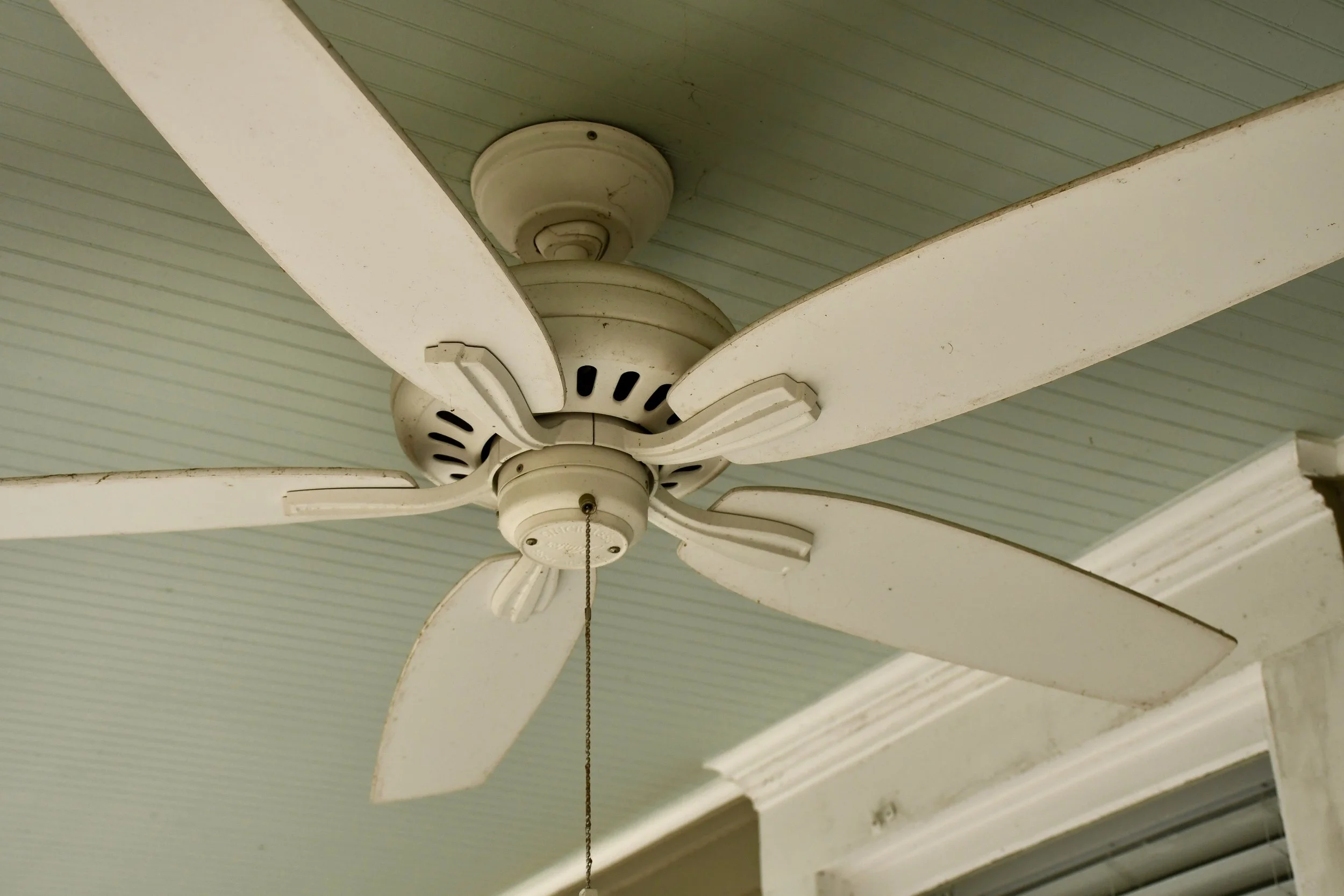
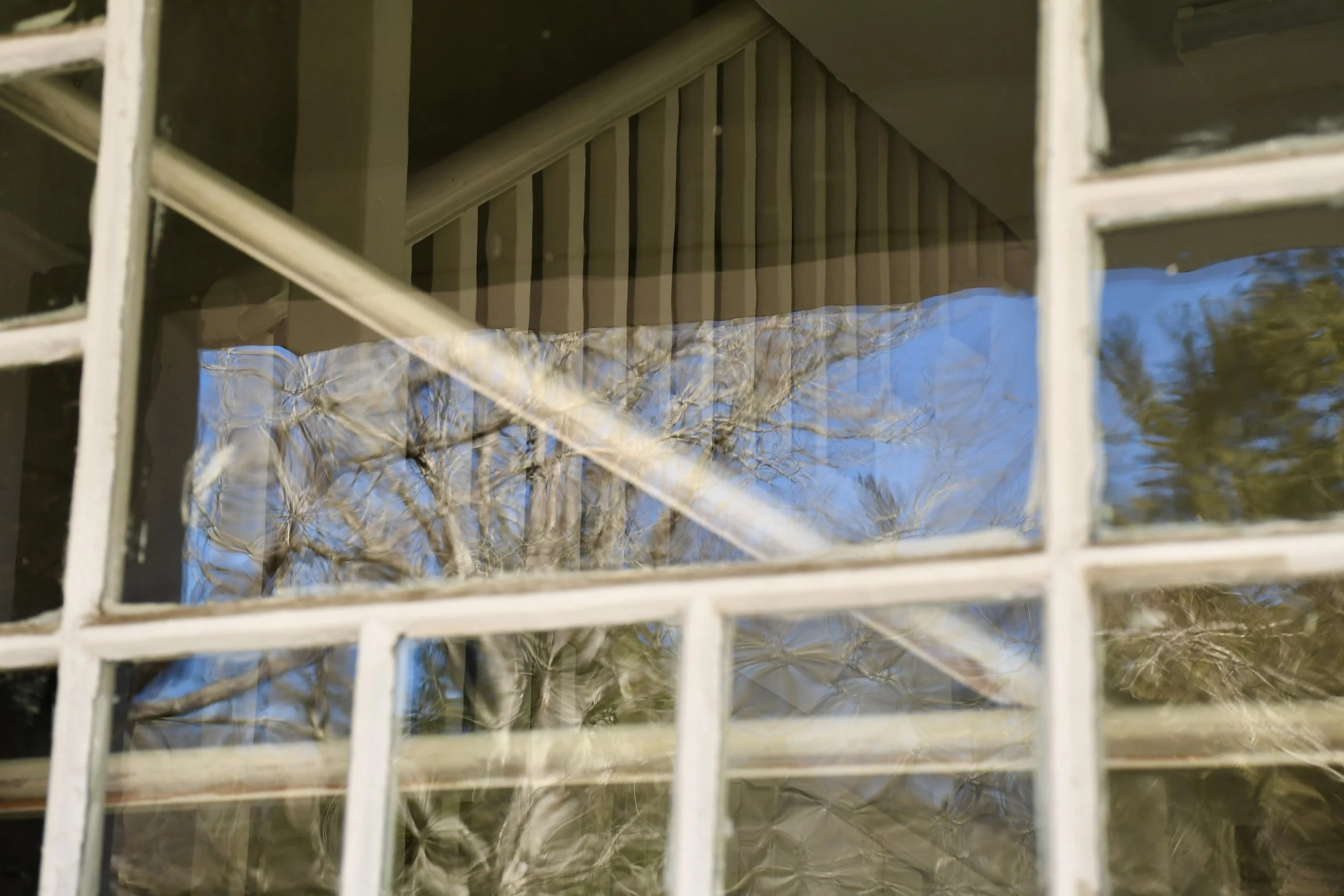
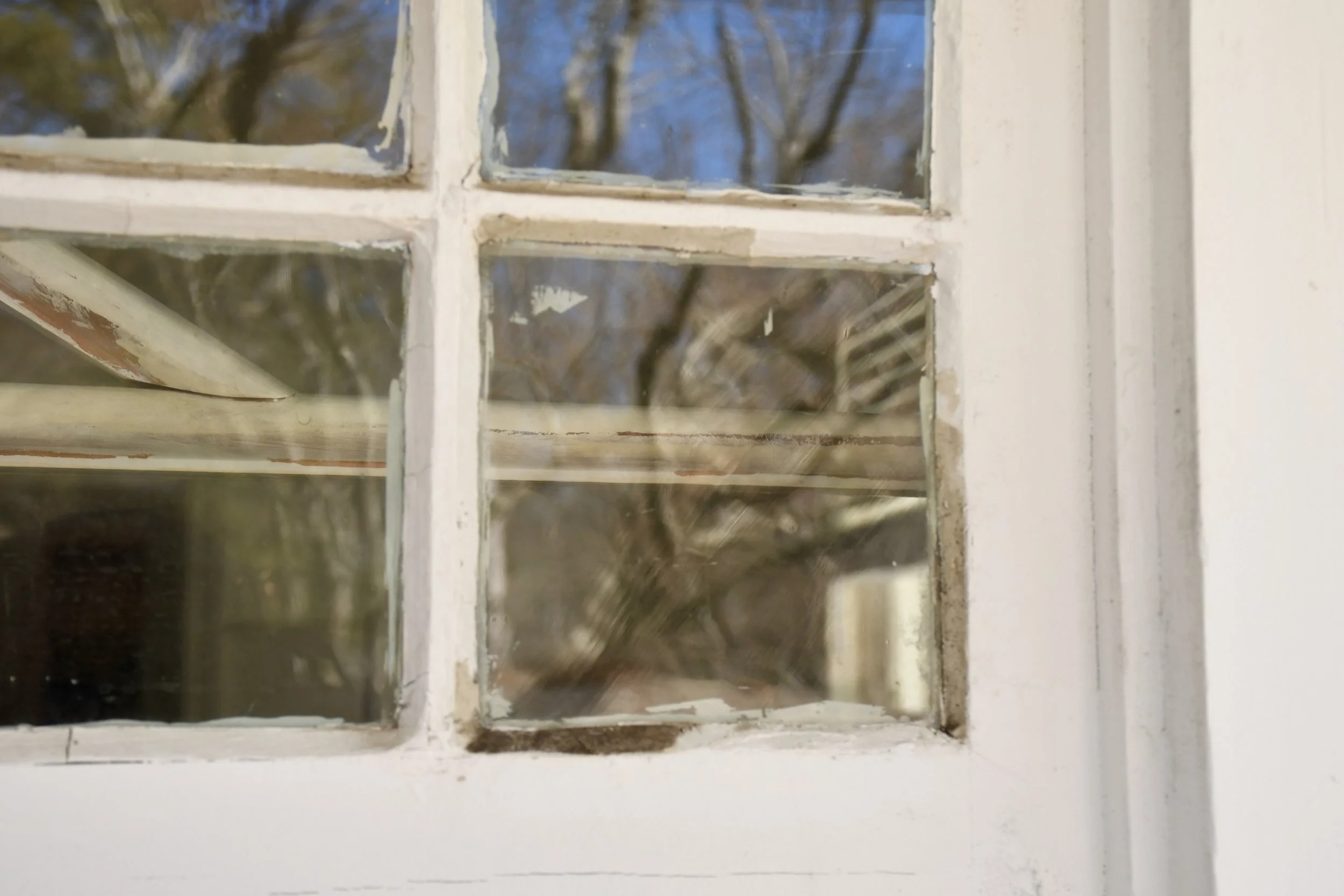
Dodge House is a product of its time. The interior hallways are cramped (it’s the opposite of an “open floor plan), many of the old windows are wavy and the porch ceiling is still painted the classic haint blue, a tradition brought all the way up from the Carolina and Georgia lowcountry’s Gullah culture, popularized and appropriated on white plantations and porches.
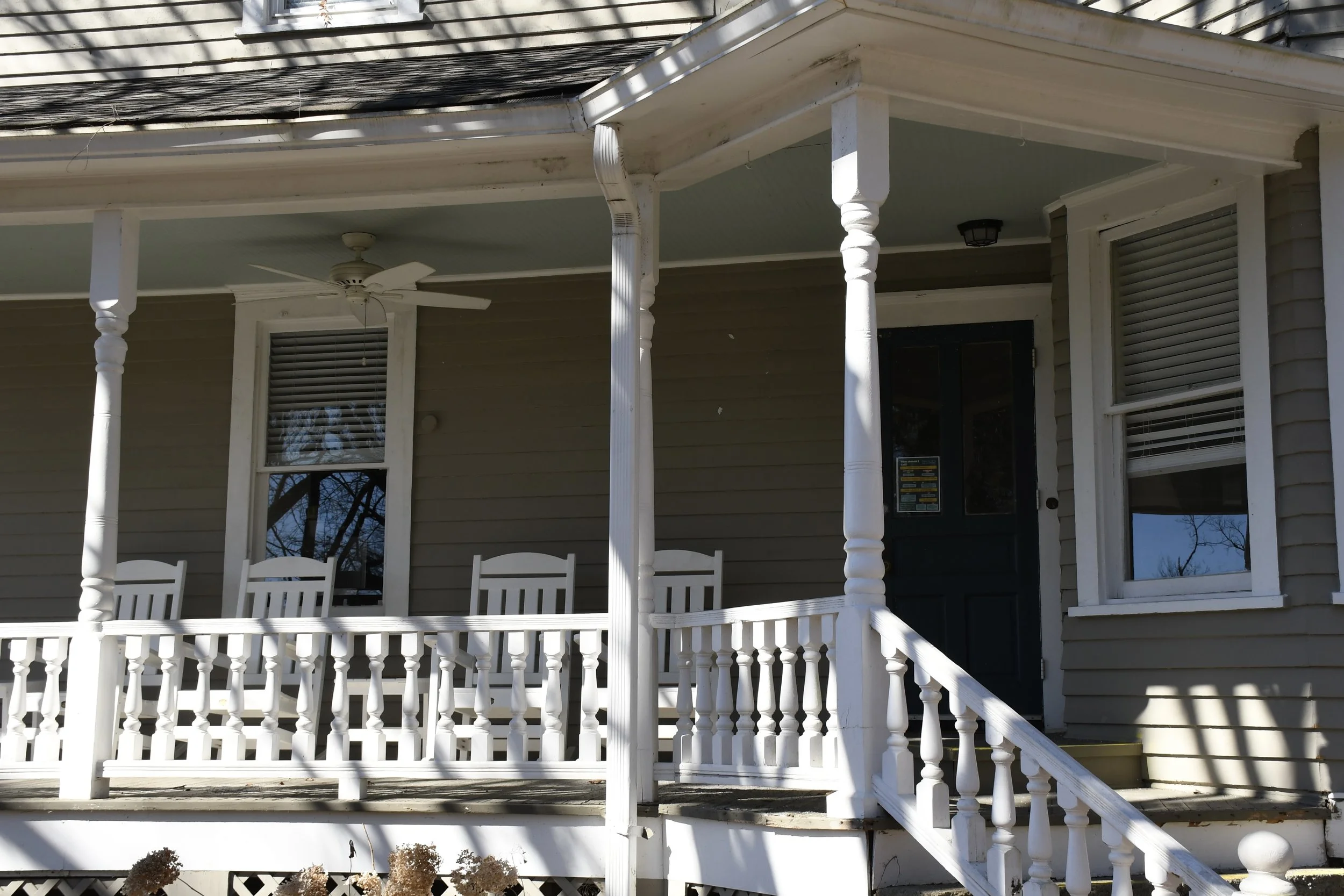
Long before Dodge kept the offices of Student Life, Residence Life, Housing and the recently featured Gilbert Hinga, it was faculty and staff housing, going all the way back to the home of the superintendent of the Farm School. On the early blueprint given at the top of the article, the letter “C” is defined on the bottom left side of the page as the “Fr. Supt’s Home” and indeed, when the corresponding letter is located on the map, the location lines up with the coordinates of our very own Dodge House.
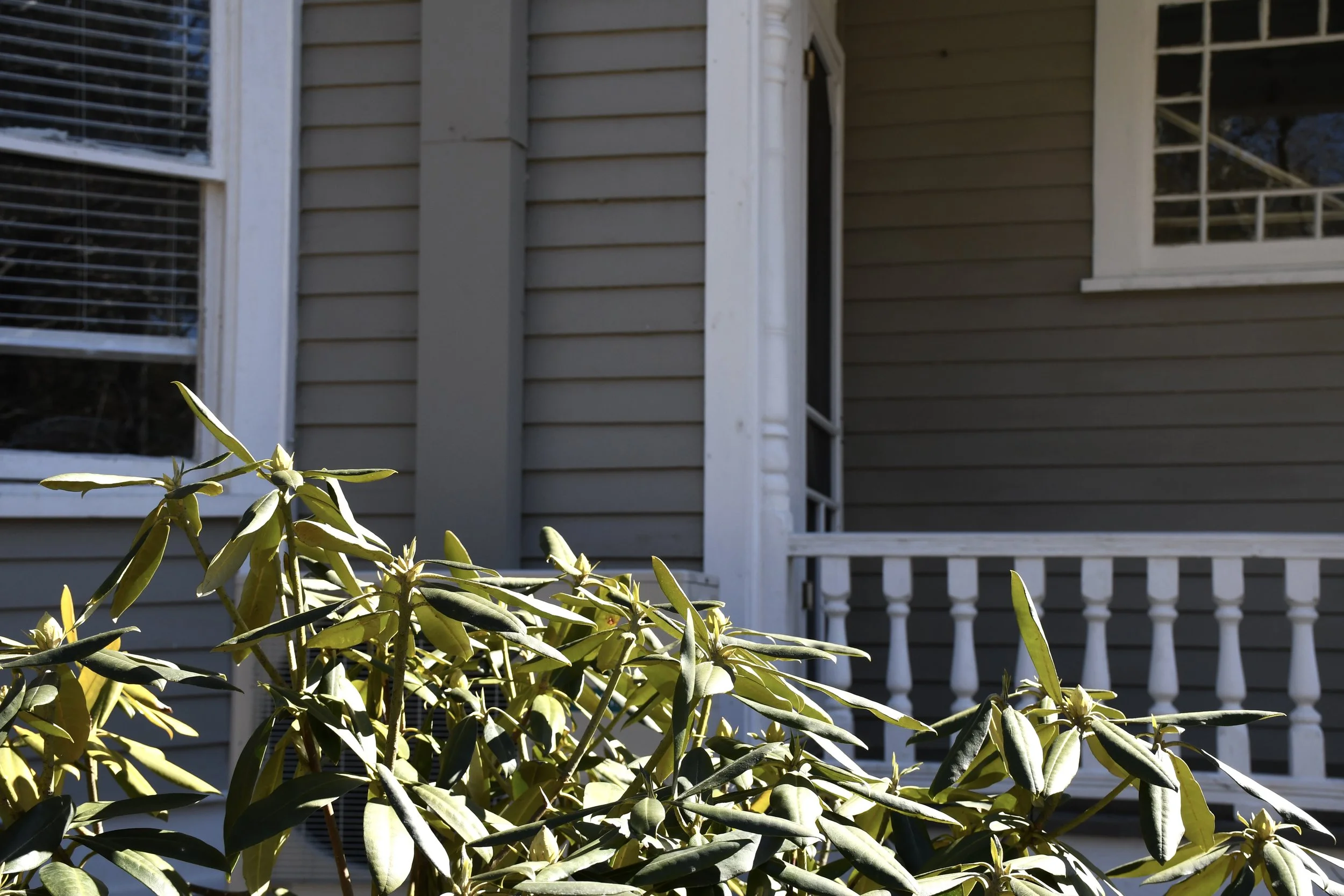
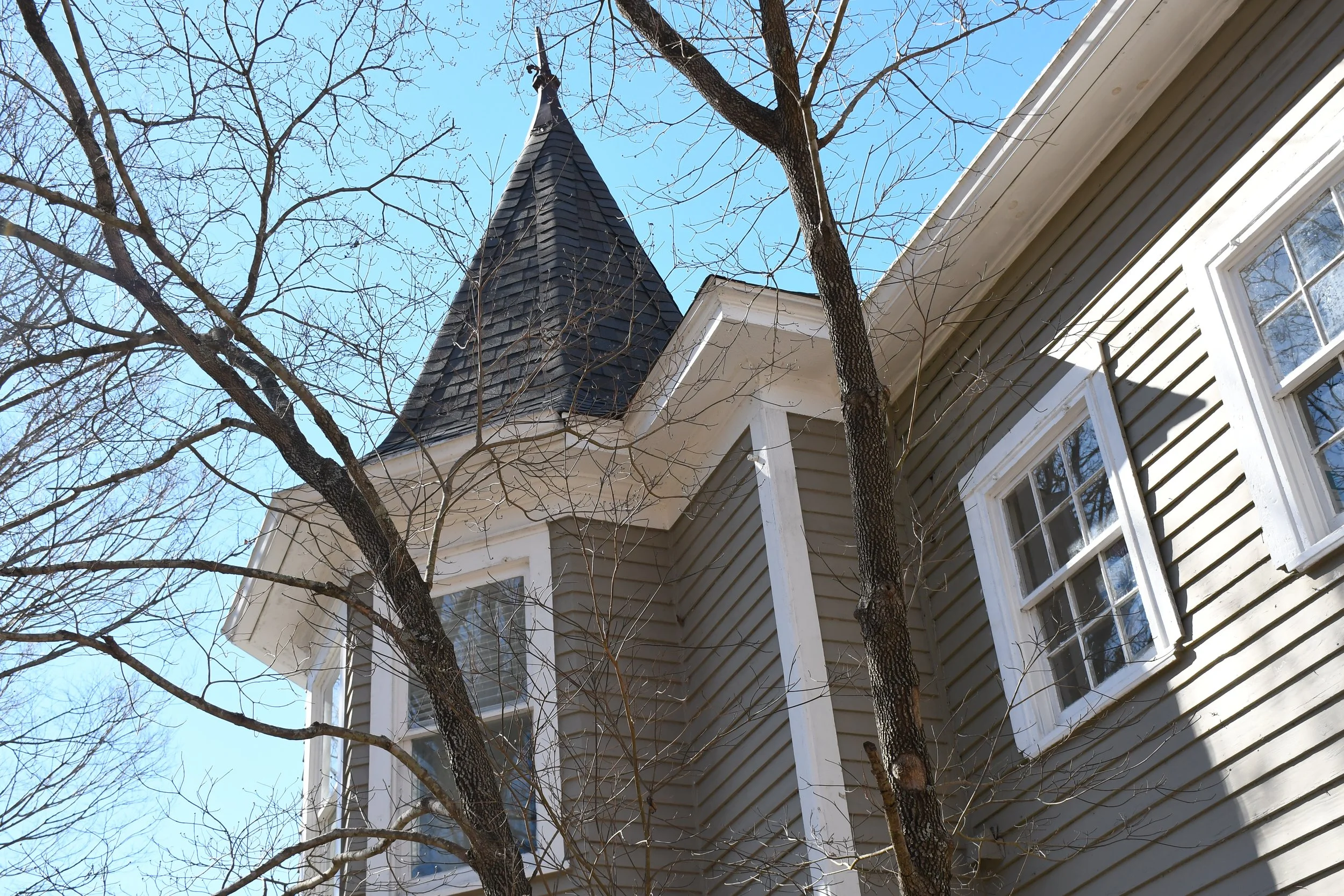
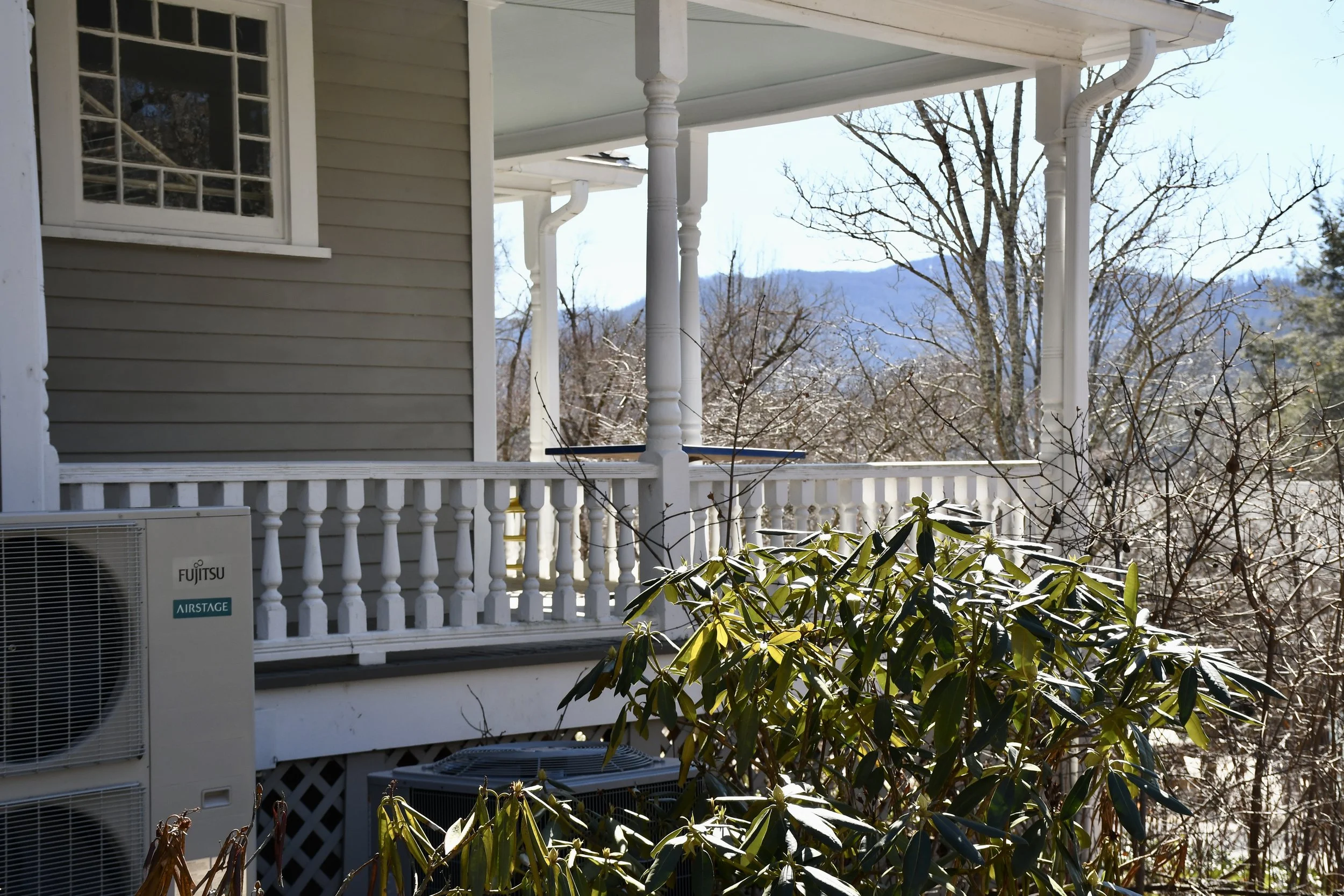
Dodge is a peculiar building on a peculiar campus, in a peculiar part of North Carolina. Despite Mother Nature’s hurricanes, lightning strikes, and windstorms and Father Industry’s blazes and waterline breaks, it remains. From its lattice underbelly to the peak of its turret, this structure has seen off farm boys to global wars and welcomed hundreds of international students over its 125 year history. Strange as the site might be today, between our new forests and paved roads, next time you pass by, just try to think about the generations of curious students it has stood and watched before you.