

Queer Revelations: A Cabaret Film Analysis
Alia Caserta | Feb. 24, 2026
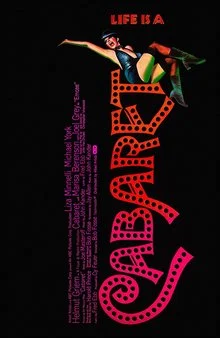
Leave your troubles outside, for in Bob Fosse’s “Cabaret”, life is nothing more than glamor and inebriated sing-song tragedy. In the Kit Kat Klub, gender is fluid, and sexuality is ambiguous in the form of rhinestone fishnets, boas and bowties. Each performance in the club provides commentary on the social and club culture in Germany during the encroachment of the Nazis. Based in Weimar, you watch the fascist regime unfold from a group of disregarded hooligans to a force beyond control. Every other scene, they grow closer to infiltrating the liminal queer spaces and the hearts of the neighbors. “Cabaret” offers representation for all through musical numbers and blurred moral clarity, and you are offered an opportunity to see life for what it truly is: unstable, painful, poetic, political, amusing, erotic, fragile and captivating.
The film comes from a long lineage, starting with the semi-autobiographical novel “Goodbye Berlin” by Christopher Isherwood and “I Am a Camera” by John Van Druten. These books were the calling that inspired Joe Mastroff to construct the infamous 1966 “Cabaret” musical. It only took six years for the “Cabaret” film to hit theaters in 1972.
The curtains are opened, and we are introduced to the Emcee’s wide, unsettling grin. The painted smile symbolizes that pleasure hides the danger underneath. He is an allegorical character, an insider looking out, representing the club narrator and society’s call for entertainment and complicit media during hardship. In his performance, he promises them an escape, reflecting fragments of reality and political truths to the audience through a distorted mirror. This is the central theme; the outside truths, no matter how bleak, demand to be heard, while the spectacle of the show offers safety at the cost of awareness of these realities.
The Emcee is a prominent queer figure, with his ambiguous style and cross-dressing, yet he is shown through song, navigating a heteronormative crowd with male-centered jokes. This was intentional, done to shed light on the social dynamics of the time. Women and the LGBTQ communities were marginalised figures within this society and were largely seen as objects for sex, humor, and entertainment. The Emcee is not challenging these notions but offers the audience to laugh with him, which is important commentary on how laughter can sometimes reinforce societal divides. This, paired with the first appearance of a member of the Nazi regime at the club, creates the groundwork for what we are to look for while watching the movie.
At the very start of the film, we are introduced to Brian, played by Michael York, a British literature student with little money, seeking a room to teach Germans how to speak English. He is clean-cut and soft-spoken with a reserved nature. As he is introduced to the culture of forthright German talk of sexuality, he is seemingly a sexually confused individual. But his early acts of refraining from the topic or from expressing his sexuality reads as repression by polite culture, not a lack of desire. Within the club culture of Berlin, to which he is soon introduced, queerness is performed and lived, and it ultimately serves as an invitation for him to do the same. What I enjoyed most from the representation of this journey of sexual enlightenment is that he is first portrayed as possibly asexual, then gay, then straight and then bi, showing that sexuality does not have to be constrained by its labels and there is always room for discovery. You watch Brian slowly relax into his bisexuality with the help of Maxamillion and Sally Bowles, the suggested threesome marking the collapse of his mask.
It does not take much to see that Sally is the star of the show. Played by the one and only Liza Mannelli, Sally is an American stage performer who works at the Kit Kat Klub. She dreams of climbing the ladder of fame to become an actress and is a captivating wonder who thrives on shock value and maintains her insistence to be not only seen but desired. Through bold makeup and clothing, her queerness does not have its roots just in her expressive and open sexuality but in her rejection of what this society deems normal.
Polite conversation leaves her yawning; she resists stability and marriage and clings to a life caught in fabrics, candles and fantasy. This becomes apparent with her repeated lines “Divine decadence, darling” and “Life is a cabaret” along with her club performances like “Mein Herr” where her exaggerated confidence borders on fragility. Meanwhile, she refrains from speaking of the more tragic aspects of her life and struggles in the face of tears. This might lead one to question her character; is she free and high-strung, or is she digging through insecurity to appear to be so? Either way, her slogans and yearning for luxury are not just marks of a holier-than-thou ego; they are survival strategies to insist on joy while living in a queer world, all the while longing for acceptance.
From the start, Brian and Sally’s relationship is confusing. Brian moves into the room across the way, and their parallel personalities queer the relationship off the bat. Initially, it is hard to decipher whether or not Brian's fascination with her comes from wanting to be with her or be her. He does not pounce but studies and mimics her with puppy-eyed fascination, seemingly without yearning. The glue that seems to maintain their relationship is shared fantasies. For him, she represents freedom from restraint, for her, he represents a loving witness to her eccentric nature. Even after Brian is stripped of his delusions and leaves Germany, Sally clings to the sensational. The final scene is a full-circle moment with the original club mirrors reflecting Nazi sashes. While watching the fluctuations of their relationship, you watch the film's central theme bloom into full effect: glamorous safety vs. the intrusion of reality.
“Cabaret” is an incredibly important film, especially during the time period it hit theaters, as it serves as a space where nearly all the taboo subjects of the time can simply exist. The film is not afraid to show premarital pregnancy, abortion, bisexuality, threesomes, crossdressers and transsexuals, and presents them as lived realities under glamour. Ultimately, it is shown that life is not a cabaret, and performance is both destructive in the realm of denial and a powerful tool. We all have our masks, we paint our faces and manifest how we feel or wish to feel through our clothes and cadences, but when there are individual and political truths banging down our doors, it is important not to undermine or play off their powers. Performance can delay the truth but not prevent it.