

The Knife Twists of Jack Twist’s Yearning
A “Brokeback Mountain” Movie Review
Maya Allen | Feb. 24, 2026
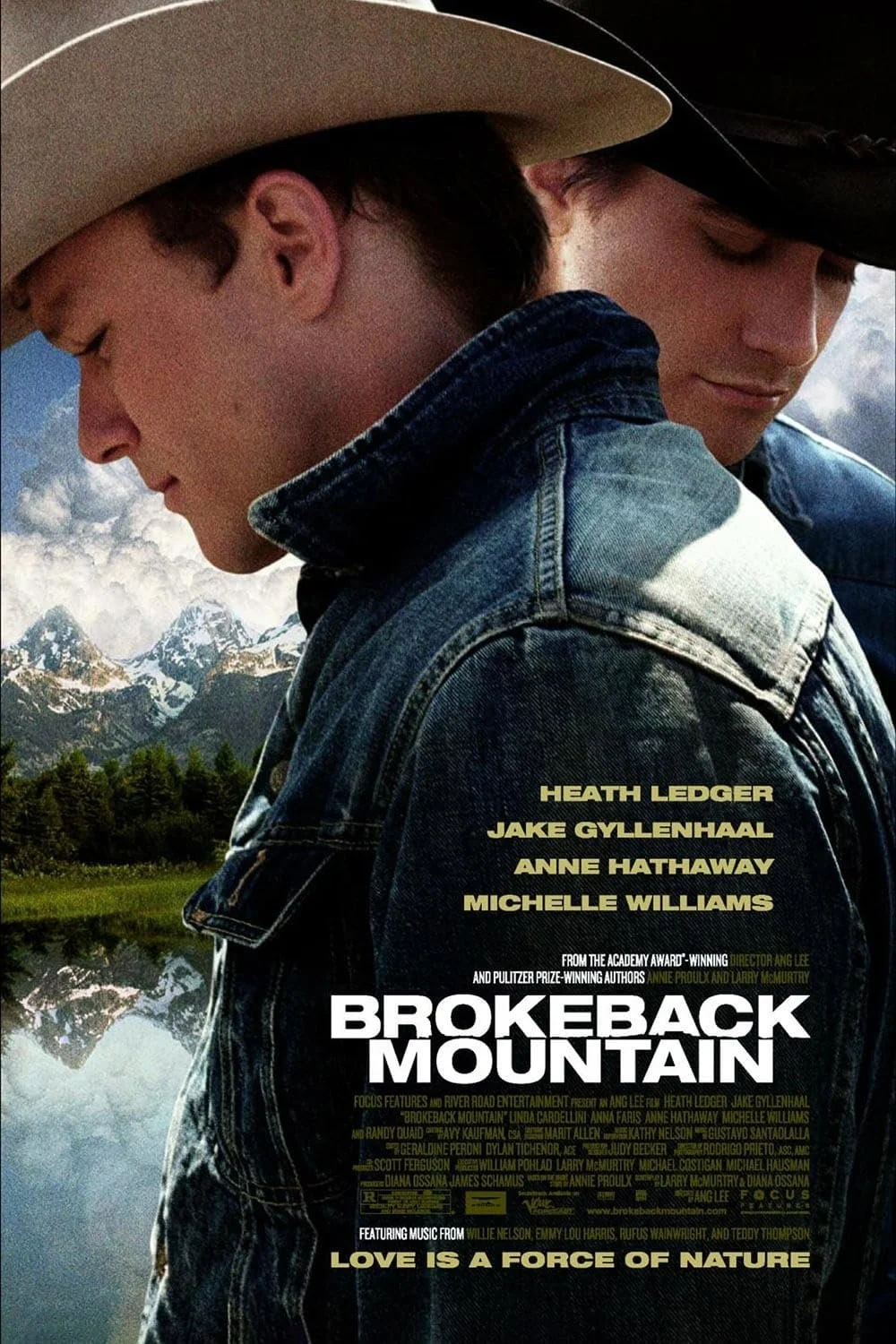
The vow I have taken to express to everyone how profoundly “Brokeback Mountain” represents a secret queer love affair is everlasting. What is shared on screen between the main characters, Jack Twist and Ennis Del Mar, is so much more than what has been called a “gay cowboy movie”. “Brokeback Mountain” tells a story about a true love that could never be. The two cowboys' intense love intertwines over the span of 20 years, their infatuation beginning while working the pastures of Brokeback Mountain herding sheep in 1963.
Right off the bat, one of my favorite parts about this movie is the paradox of how Jack Twist and Ennis Del Mars' characters look on the surface, versus the tenderness they show each other. They were written, and appear on screen, as strong and rugged cowboys who wear the same jeans the whole summer they are working together, and most likely reek of Marlboros. Undoubtedly, some aspects of this characterization are true, but there are parts of them we get to see as an audience that they only show to each other. It was evident to me that Jack and Ennis had moments of “I know you’re thinking what I’m thinking and you know I’m thinking it” before ever acting physically or even verbally on any feelings.
Jack starts with slight advances on Ennis in the way of “showing off”. It’s not uncommon for many men to do this; to show one that they are tougher than the other, but, to me, even this posturing had an underlying tenderness. From the start, Jack Twist immediately dives headfirst into the unspoken manner of this endearing ego act. The shaving of his face with just water and a cheap razor in his side view mirror on his busted up truck, the mentioning to Ennis that he’s done this work before, the sticking his feet closest to the fire as if he’s so tough that it won’t hurt him, the various commands to Ennis and the pushing Ennis to talk to him more. Most importantly, Jack demands that Ennis sleep in the tent with him, instead of sleeping outside in the cold, the night that their physical relationship starts.
Ennis does the same through seemingly “tough” but ultimately tender actions. He orders soup, which he says he doesn’t eat, because Jack says he’s tired of eating beans, and he volunteers to stay at the top of the mountain to watch the sheep they’re herding. When Jack complains about the labor of going up and down from the pasture to camp every day, he opens up to Jack about personal hardships. These hard yet soft moments shared between the two men create a bond that will become unbreakable.
Despite both characters being madly in love with one another, and Ennis’ character being so well written, I believe that the most pivotal part of this love story is Jack Twist’s desire to keep the fiery romance that he and Ennis started on Brokeback Mountain aflame. Not to say that Ennis does not also want the same, but he thinks of their situation in a very logical way based on societal standards at the time. Jack yearns from a place of deep emotion that defies all logic to him.
The very second it is time for the men to say goodbye to one another, because their job on Brokeback is finished, Jack wastes no time asking Ennis if he’s going to be back next summer. Ennis knows what he’s asking. Jack is really asking, “Am I going to be able to see you again?” This is the first example of Jack having what I want to call “queer hope”. Jack has this heartbreaking longing, which is experienced by many suppressed queer people, that there might be a way that their relationship can continue as normal in circumstances that are not. This ache for a life with the man he loves will be the forefront in Jack’s feelings towards his and Ennis’s unfortunate situation for the next 20 years of their love affair.
There is an important moment that occurs a couple of years after Jack and Ennis' first summer, when Jack tries to buy one of his rodeo clowns a beer, and the clown gets uncomfortable and denies the offer. Jack’s attempt at being discreet and trying to make his first move on a man after Ennis ends up being a tense and possibly dangerous situation for him. Anybody could see this as a cause for Jack to stop wishing for a life he can’t have. People can talk, word could get around about him, and he could be killed. What I love so much about Jack Twist is that, despite this, he is far from giving up on his desire for a life with the same sex, specifically Ennis.
As time goes on, Jack and Ennis reunite multiple times until 1983. Even on that first reunion, despite both Jack and Ennis having wives and children, Jack’s underlying pursuit is to have a life with Ennis. He dreams of leaving the facade of what they’ve built behind and being with Ennis for good. No matter how many times Jack pleads to Ennis that this can happen, their love can be, Ennis has to remind him of what people would do to them if they were to find out. In the face of all this, Jack faces the despair of barely getting to see Ennis, and the relief that he does get to see him a couple of times a year. The hopefulness that this character feels for a love that he can’t fully have is so heartbreakingly frustrating and relatable that it brought tears to my eyes every time he willed it to work.
At the end of all of Jack Twist’s yearning, we get a result of what happens to hope in most suppressed queer relationships. We end up with a realization of what can’t be, and a very undesirable, but realistic, ending. Jack comes to terms with what his relationship with Ennis is, what it could’ve been and now what it can never be. Ultimately, their love can only go as far as the mountain range of Brokeback. The “I wish I knew how to quit you” monologue Jack gives to Ennis will forever be a testament to loving someone or something you can never have.
This movie will, without a doubt, continue to stand the test of time and will remain a much-needed and iconic queer love movie for centuries to come. To be queer is to face suppression, and in the face of suppression, we cling to hope and embrace what we’re slowly being given. We need representation, we need our stories seen and told, and I believe “Brokeback Mountain” does just that.