

WWC Undercuts Exxon: A New Crew For Fall
Clara Shirley | April 1, 2026
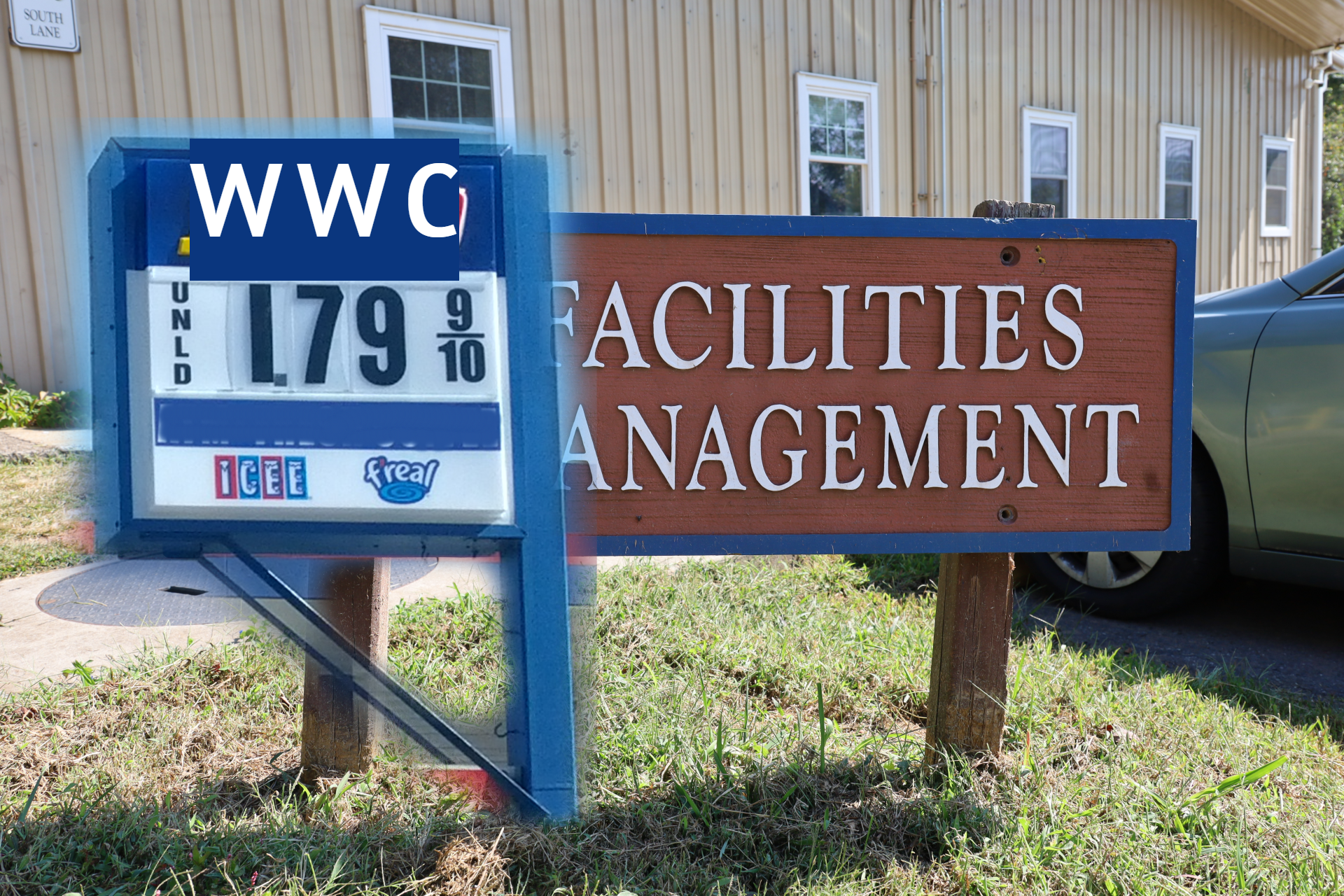
The newly installed gas signs at the Warren Wilson College (WWC) Facilities Management complex in Swannanoa, N.C. on April 1, 2026. (Neko Heinrich/Echo)
With gas in North Carolina at nearly $4 per gallon, the future of affordable transportation is a popular topic. Amidst reports that gasoline will soon be diluted with higher amounts of ethanol, Warren Wilson College (WWC) announced the creation of the Refinery Crew (Ref Crew), a sub-subset of the Garden’s Crew’s current compost subcrew (formerly known as CORE). Ref Crew, under the direction of a faceless hire who goes by the moniker Mad Max, is set to have nine available spots for the fall semester. The crew will allow the college to significantly reduce, if not eliminate, its plastic waste, as any plastic containers from Gladfelter, Cowpie and other crews around campus will be used in the process of extracting fuel for use by students and faculty.
“I’m excited to partner with different groups around campus,” Max said. “I see a lot of potential for collaboration from staff and students, as well as from the Chem Crew and the dining crews.”
Ref Crew will supply each dorm and academic building with a plastic waste container, similar to the compost bins provided by the Compost Crew. Here, students are encouraged to leave any and all plastic they might have left over from projects, containers and food items. The waste will be picked up weekly and brought to the Facilities complex, where a refinery site will be constructed (a project WWC hopes to have completed before the start of the fall semester). Here, the plastic will undergo the mysterious process of becoming a usable resource.
Max emphasized the importance of having a representative from Chem Crew volunteer to oversee part of the process. The students on the crew who spoke to The Echo felt strongly that participating in the refining process would be a valuable and worthwhile experience.
“Finally, we won’t just be tutoring everyone who takes a chem class,” one student said. “We’ll get to put our molecular knowledge to work testing and refining a resource that will directly impact the well-being of our community.”
However, the prospect of having a gasoline refinery on campus is not appealing to everyone. Some students expressed concerns about harmful gases that might be emitted during the gasoline conversion process, but Max assured The Echo that any gases that might be sent into the atmosphere would cause no greater harm than before.
“Most of the gas created by melting down this plastic is collected and condensed into gasoline,” Max said. “That’s why it’s called gasoline.”
When asked about potential byproducts of the gasoline process, Max highlighted other areas in which the college falls short environmentally.
“WWC already has cows,” Max said. “Have you heard about the kinds of gases those things release? Forget the hole in the ozone, that’s a crime for my nose-one!”
There are also worries that the lack of plastic trash on campus will affect the Holden Arts Crew, who use leftover plastic scrap for the annual Trash-ion Show and other art projects. By funneling plastic into the fuel trade, the arts would be forced to look for other potential materials.
“I mean, it’s great that we’ll have way cheaper gas, but the Trashion Show is a well-respected tradition!” A Holden Arts crewmember said.
While the decision to introduce Ref Crew may be contentious on campus, several students expressed excitement about the opportunity to add the valuable skill of gasoline refining to their WWC tool belt.
“I use single-use plastic all the time,” a student said. “Maybe that will get me cancelled, I don’t know. I just can’t get enough of the satisfaction of throwing things away instead of having to clean them. But if I could learn how to repurpose them, not only would I align myself with Warren Wilson’s agenda, I could get super rich!”
Another student told The Echo that the Ref Crew opened a new world of possibilities for the modern graduate. During a time of economic uncertainty, it is important that college graduates feel secure in their future and prepared for the tumultuous world around them, which is one of WWC’s key missions.
“At first I thought the gas prices were outrageous, but when you look at it from the producer’s standpoint, they aren’t high enough,” the student said. “I might even vote for that guy a third time, so long as he keeps these prices climbing!”
This is the latest update not only in the work program, which continues to allow students to gain hands-on experience in fields that will become necessary and highly sought after in the ever-looming apocalypse, but also helps the school maintain its “best buy” status according to “Fiske Guide to Colleges”. Even though the price of tuition and fees fluctuates each year, often impacting student payments by making WWC more expensive, our free laundry, parking passes and now free gasoline prices make the overall costs well worth it.
“I knew the financial risks of attending a private college,” one rising senior said. “I’m just glad I won’t have to give billion-dollar conglomerates any more of my money. Well, until I graduate.”
Following the expected success of Ref Crew, WWC plans to expand its gasoline economy to be available to the larger Swannanoa community. This way, the college can generate revenue from the waste they produce by selling its products for a profit.
“I’m skeptical WWC really produces enough plastic waste to make gasoline for the whole campus,” a sophomore said. “We already try to be as sustainable as possible, and even most of our single-use products are recyclable. But, I guess I can set aside my personal values and buy more single-use plastics for the good of the community.”
If you want the opportunity to work on Ref Crew and gain real-world experience in a hands-on and interdisciplinary setting, apply on Handshake before the deadline of April 24. Facilities is hosting a site tour and virtual meeting with Max on April 1 from 5-7:12 p.m. sharp.