

Warren Wilson’s “One Health” Club Debuts
Ryleigh Johnson | April 21, 2026
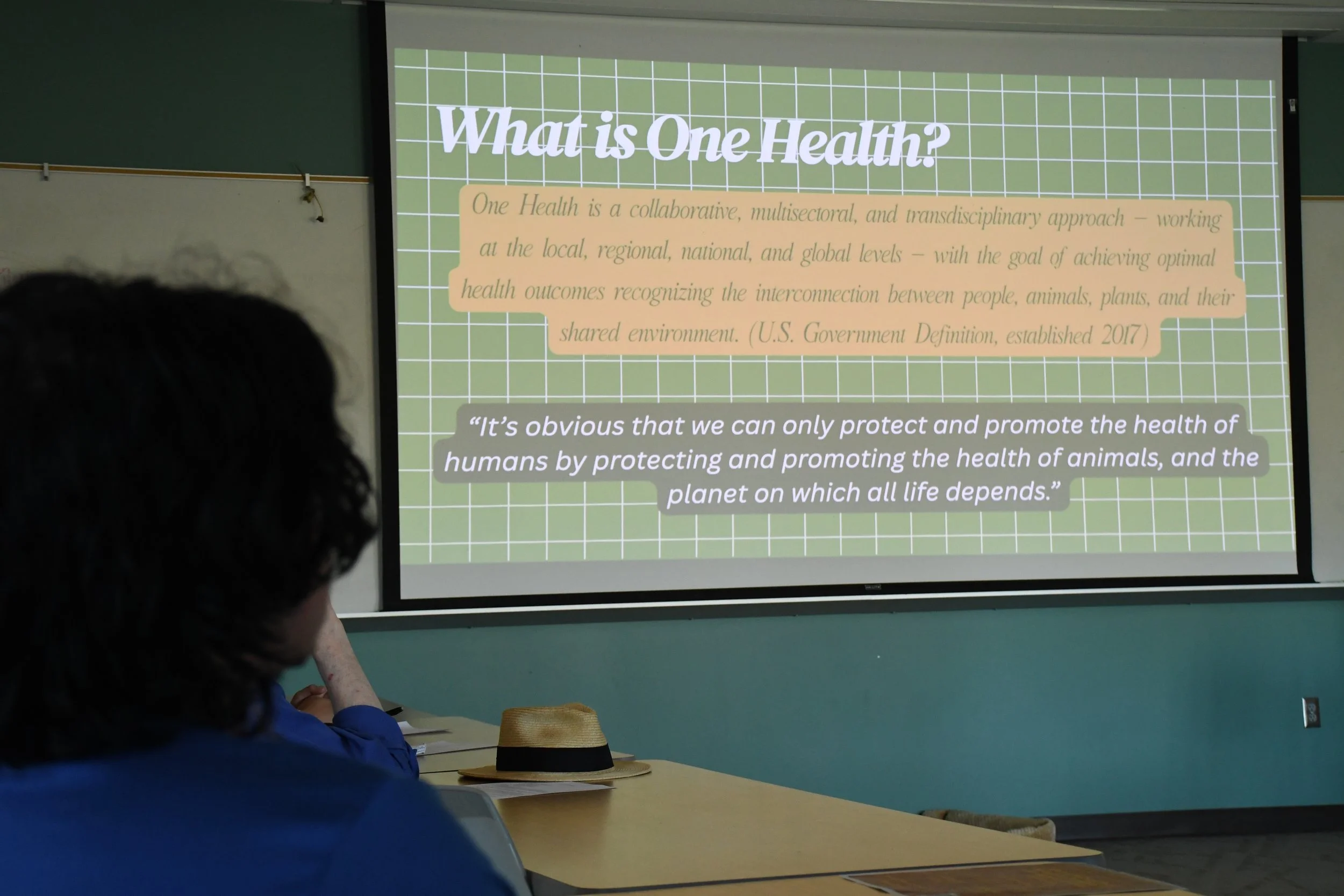
One Health slide projection, Warren Wilson College (WWC) campus in Swannanoa, N.C., on April 15, 2026. (Echo/Richmond Joyce)
What do animal rights, room checks and renowned philosophy professor Todd May have in common? They all were part of the presentation provided during Warren Wilson College’s (WWC) first “One Health” club meeting on Wednesday, April 15. The club, which takes its name from the “One Health” model that integrates the health of the environment, non-human animals and humans, seeks to promote this framework on campus and provide greater community engagement opportunities for animal science majors.
First-semester senior Bella Abeles led the meeting along with co-president Tytus Sanders. Abeles, an animal science major, noticed the lack of community engagement opportunities for those within her major, in part due to the program’s relatively recent academic integration in the fall of 2025. Abeles stressed the need for more interdisciplinary engagement with the major, with a particular focus on increasing opportunities for students to form their own professional connections in the community.
“Something that I have found is that we don't seem to be that tuned in to any local animal health experts,” Abeles said. “We don't have any connections to any local vets. We don't have any connections to any animal shelters. We just don't have those networking opportunities. Not only do we not have the chance to provide student labor and go help out these organizations that oftentimes are underfunded, oftentimes could use assistance, but we as students also don't have the benefit of networking and connections.”

Bella Abeles opening discussion about One Health in their first meeting meeting in Boon 110, Warren Wilson College (WWC) campus in Swannanoa, N.C., on April 15, 2026. (Echo/Richmond Joyce)
Abeles decided to invite May, Nielsen professor of philosophy at WWC, to speak about the philosophical frameworks behind two concepts often discussed in relation to the “One Health” model: animal rights and animal welfare.
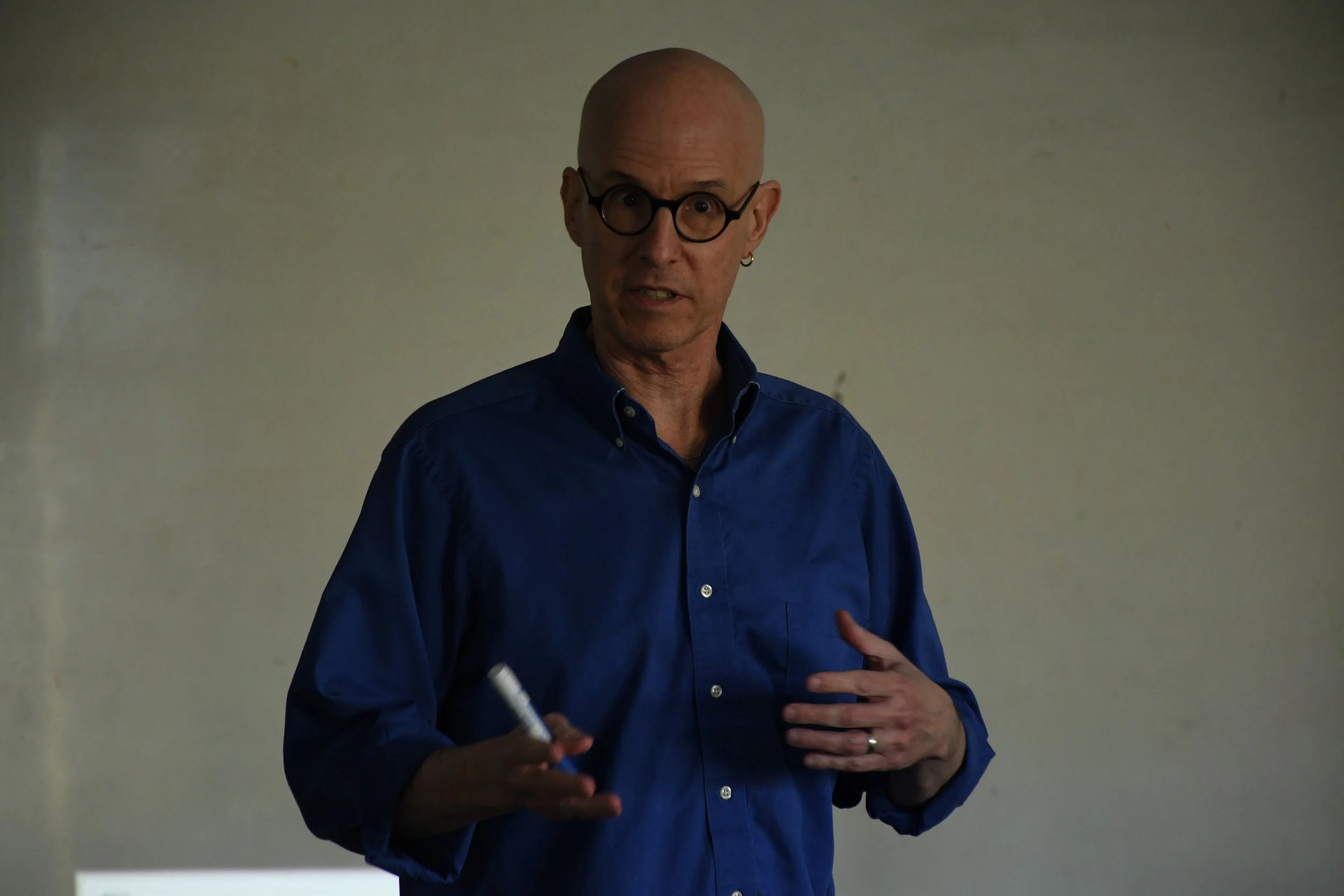
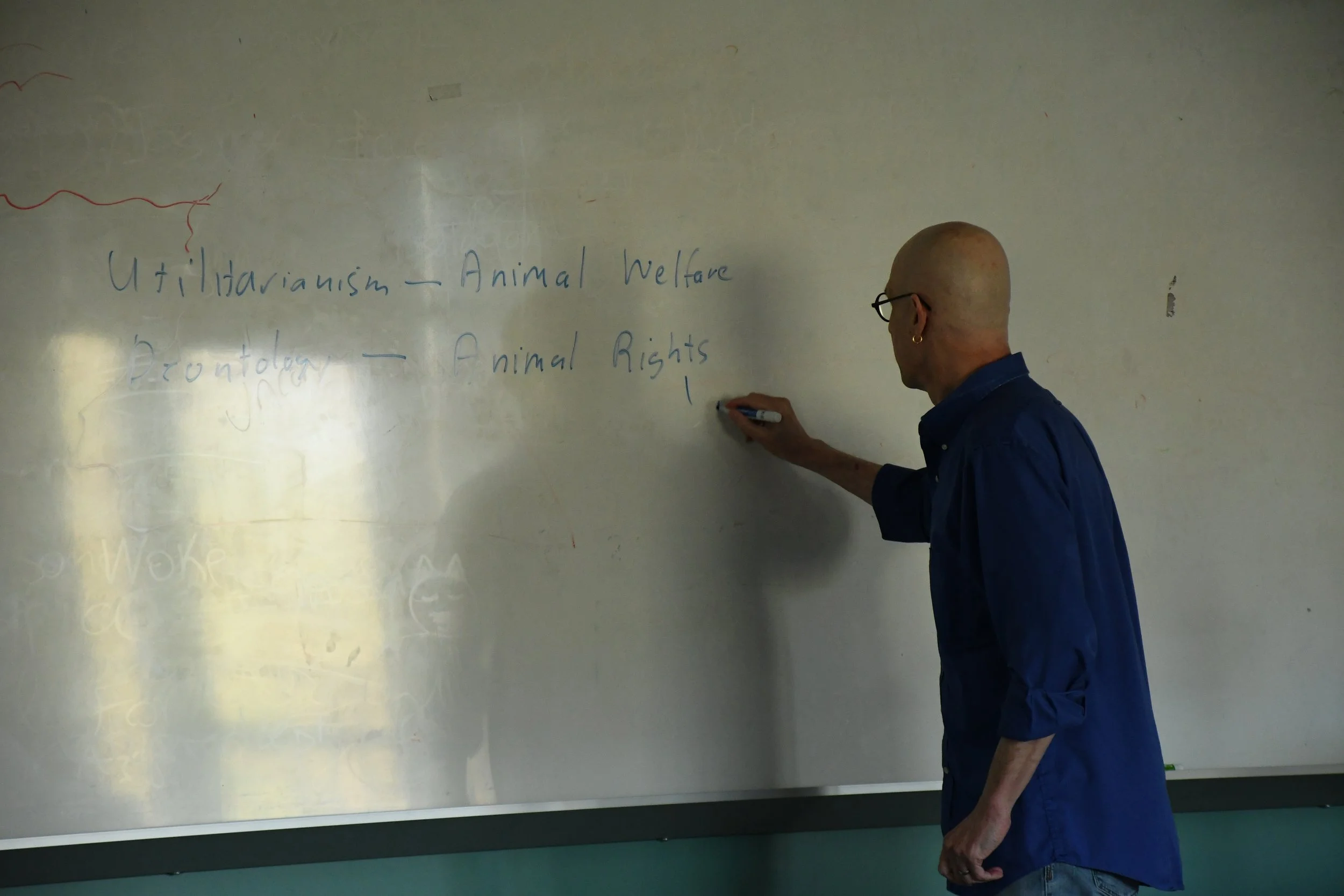
According to May, the welfare perspective is closest to the ethical framework of utilitarianism, which seeks to find outcomes that promote the most happiness for the greatest number of beings. The rights perspective is closest to deontology, developed by philosopher Immanuel Kant, which focuses on the intent behind actions and considers beings to have certain rights that cannot be violated, even if that violation will promote greater happiness for more beings.
“In many cases, the welfare perspective and the rights perspective will converge,” May said. “Where things get tricky is [in examples] like vaccines [manufacturing], where the welfare perspective goes in one direction, and the rights perspective goes in another.”
Luke Drees, a representative for WWC’s Animal Welfare Crew, also gave a short presentation about how the crew tries to ensure animal wellbeing on campus.
“Recently, we went around and joined in on room [Health and Safety] checks,” Drees said. “We were going in if there was an animal in the room and making sure it had food, water- everything it needed.”
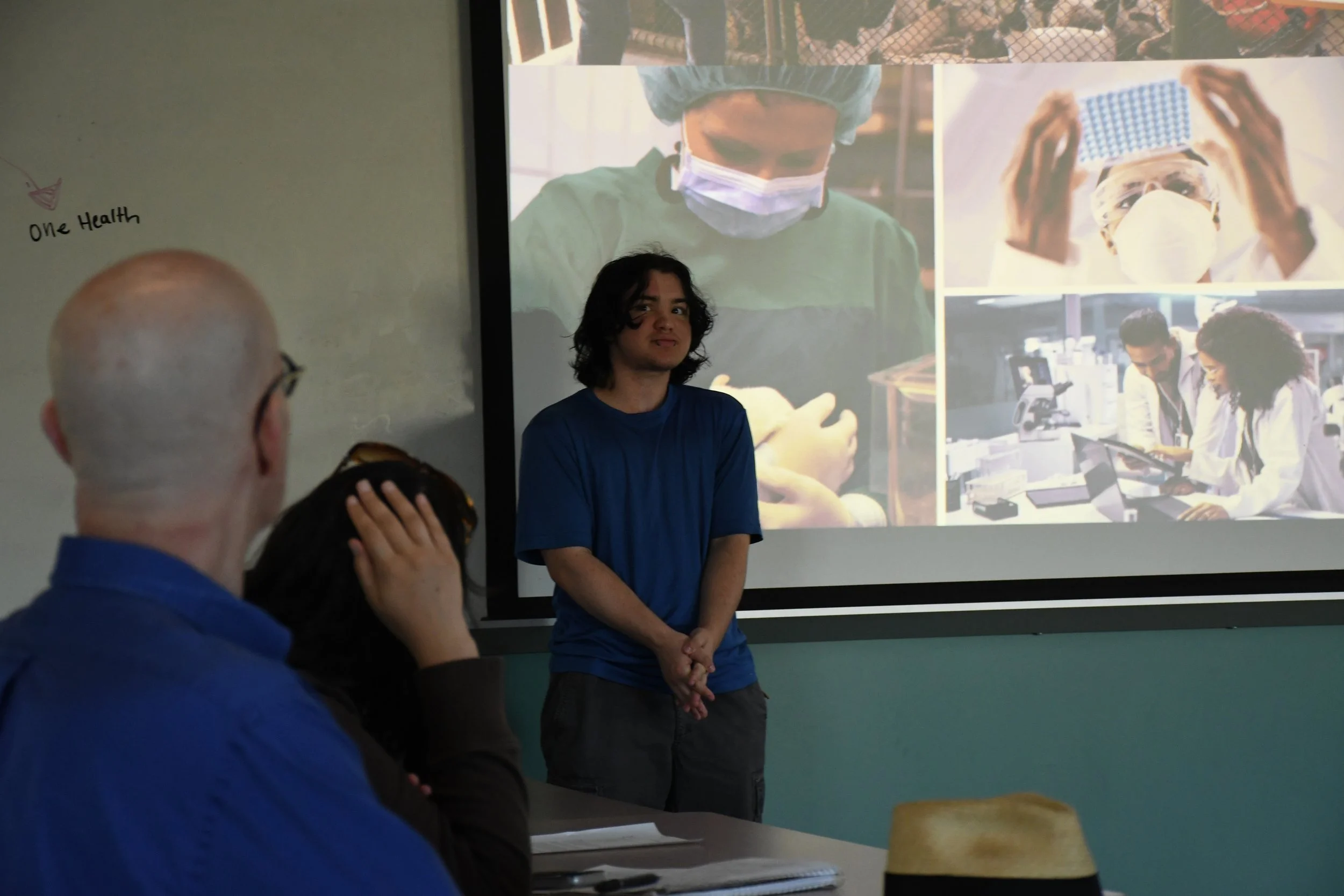
Luke Drees speaking on behalf of the Animal Welfare crew in the One Health meeting, Warren Wilson College (WWC) campus in Swannanoa, N.C., on April 15, 2026. (Echo/Richmond Joyce)
Abeles is interested in not only providing opportunities for Animal Science majors to engage with community partners, but creating a more interdisciplinary space for conversations about animals, the environment and health at WWC. Inviting May and Drees was just one step in this process.
“I think it’s a really great way to get students involved,” Abeles said. “Oftentimes, at least academically, [we tend to think] ‘We have our animal science over here’ and then ‘We have this over here’ and we don’t interact. But you can’t solve these problems on your own. You need to solve them in conjunction with everything else.”
The One Health club is just beginning, and seeks new members who are stakeholders in animal health on campus, along with other animal science majors, to join. In particular, the club is looking for a farm liaison to coordinate club activities, like bolstering biosecurity practices on campus, with members of the Farm Crew. Those interested in the farm liaison position or the club generally can email Bella Abeles.