

Meant to Wrench, Forced to Quit: The Autoshop Boys Go on Strike
Jonah Turner | April 28, 2026
It comes as no surprise to Warren Wilson College (WWC) students to learn of yet another example of the life of a fellow student being made more difficult by an administrative policy or decision. It appears to be some type of feat to progress through four years at WWC without one such occurrence. This spring, the three workers on the unofficial Automotive crew, which is composed of members from the Carpentry Crew and Farm Crew, have run into their own inevitable administrative blockade.
The blockade in question has caused a strike at the autoshop, student outcry across more than one crew, and the deterioration of the work happening in the autoshop. Here is the context:
1: Meet The Autoshop Workers
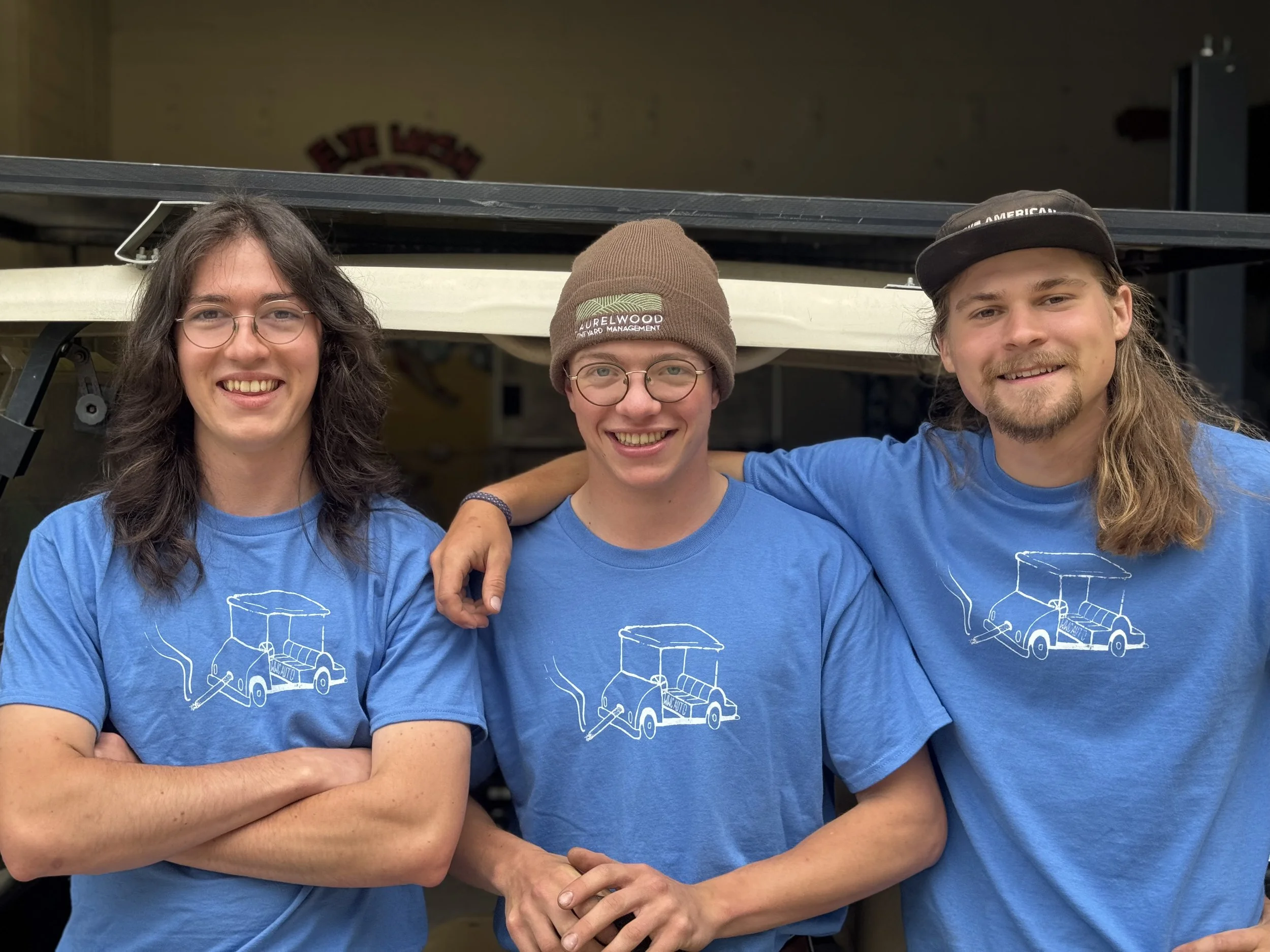
Autoshop workers (from left to right) Sid Rambo-Mohr, Carlo Hamacher and Henry Blair pose for a photo at Warren Wilson College in Swannanao, N.C. (Echo/Jonah Turner)
The old automotive shop and the work crew that ran it were disbanded in the weeks leading up to the Fall 2022 semester. Since then, the derelict shop has seen little use, mostly by Carpentry Crew Supervisor Andy Denison.
That is, until two Carpentry Crew workers, Henry Blair and Sid Rambo-Mohr, would inquire about a side project early in the fall that would transform the old autoshop for the rest of the year.
“We're sitting outside and looking at all these broken down vehicles, and the first one that we took a look at was this Ford Ranger that had been sitting for a year,” Blair said. “[They told Denison] ‘We don't really have much carpentry work to do. Can we work on this car?’ And starting with that, slowly, we started taking over a lot of other responsibilities.”
The third automotive worker and Farm Crew member, Carlo Hamacher, found a niche on WWC’s campus in diesel and electrics under the Farm Crew’s large fleet of diverse vehicles.
“I would come in on the weekends and work on my car, and slowly started helping out some friends with their vehicles,” Hamacher said. “Then, I became good friends with Henry and Sid, and got to know Andy over at Carpentry. I got [involved in the autoshop] through that, but stayed busy with all the farm trucks.”
The three student workers are not the only ones with automotive experience in the shop. Denison also has college experience in automotive engineering, which has been a massive boon for the unofficial crew.
“Every step of the way, Andy's had our back,” Blair said. “He gives us the space to advocate for ourselves. If there's a project we want to do, we bring it to Andy. If there's a tool we need, we bring it to him, and he has always supported us.”
The crews’ responsibilities include standard preventative maintenance on all land crews within the Work Program Office (WPO) and motorpool vehicles, which has slowly increased over the course of the year as crews have realized they have the privilege of vehicle maintenance. With the essential type of work being done in the shop, all three workers described working beyond the hours required of them to ensure that work gets done. The crew also spends time in addition to all of those required tasks to assist other students with projects and maintenance on personal vehicles.
“[We like] being able to help people who are in a pinch and give them hands-on experience by working alongside them, hopefully giving them the confidence to take on some projects on their own,” Hamacher said. “At the very least, they’ll have a basic understanding, so if they do have to work with a mechanic, they know when they're getting ripped off or what the mechanic is actually saying to them.”
2: The Strike Begins
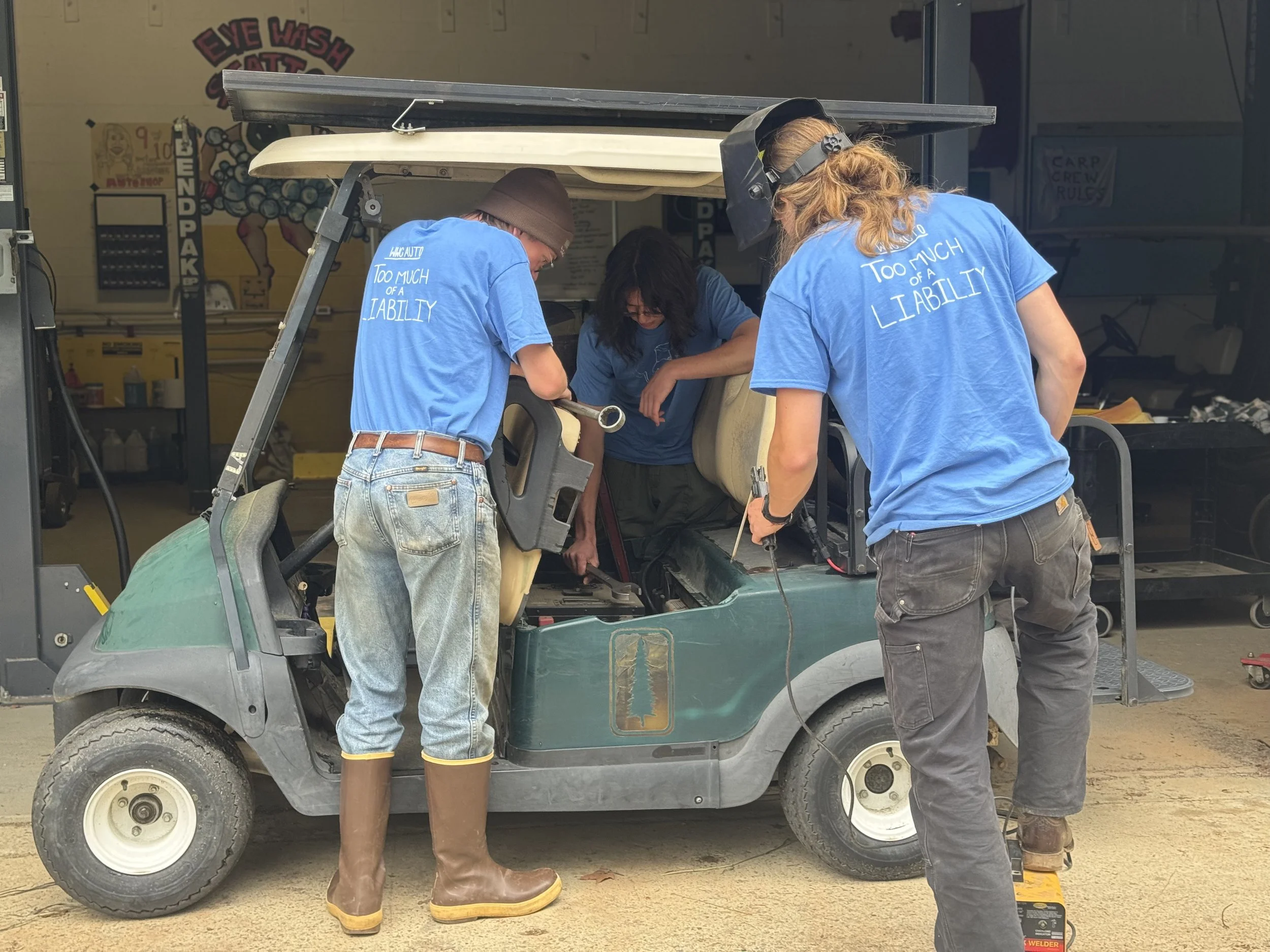
Autoshop workers Carlo Hamacher, Sid Rambo-Mohr and Henry Blair work on a golf cart while wearing shirts that read “Too Much of a Liability” at Warren Wilson College in Swannanoa, N.C. (Echo/Jonah Turner)
Everything changed on March 25 in an email from Denison to the three workers on the automotive crew. The subject of the email, “WWC auto shop only for WWC vehicles,” spoke a clear message:
“We are not allowed to work on non-WWC vehicles in the shop or even outside anymore I was informed suddenly this morning. Of course when my truck needs an oil change no doubt! I'm not sure what started this or brought it on. I intend to find out,” Denison’s email read.
The message was handed down from Director of Facilities Maintenance and Technical Services Will Goins, one step beyond Denison in the facilities hierarchy. The autoshop workers were not pleased with the change. They quickly reached out to Goins and Executive Director of Facilities and Operations Ian Smith to express their dissatisfaction with the new policy.
“We've been really appreciative of having this educational setting in the shop where we work,” Blair said. “If people bring their car and their parts and their problem, or if they need a diagnosis or anything, we will take the opportunity to work with that student. It’s like an educational tool, which we think is the values of what the school stands for.”
Goins and Smith did not respond for the first two weeks; when they did, it was filtered down through Denison as opposed to responding to the autoworkers directly.
The crux of the matter lies within liability insurance. Under current insurance policy, the college can be found liable in lawsuit should any student using college facilities sustain an injury. The workers desire a solution to be reached where liability can be waived in order to continue using college facilities to their full capacity. Despite the workers sending thorough emails with their complaints, Smith and Goins did not seem to respond punctually, and avoided communicating with the workers directly.
When the auto-workers realized their communications were not regarded with much weight, they decided to strike.
“That was a choice that we didn't take lightly,” Blair said. “This [crew] was something that wasn't happening before, and we noticed we were giving a net good to the school, and we realized if we were to stop abruptly, we were leaving a lot of people and crews stranded.”
The workers have been met with understanding and grace amongst their peers and fellow student workers.
“Everyone has been so understanding and understands the impacts of this,” Hamacher said. “The only people that don't seem to understand the impacts of this decision are the ones making it.”
The workers also recognize the broad repercussions that are currently being tested on the autoshop.
“If the precedent is that we can't use machinery without direct supervision, we need to cut liability at all costs,” Blair said. ”The farm, the garden, landscaping, even the kilns they use in the ceramics studio, the blacksmithing studio, the art students who are welding; this has so many broad repercussions.”
3: Seeking a Solution
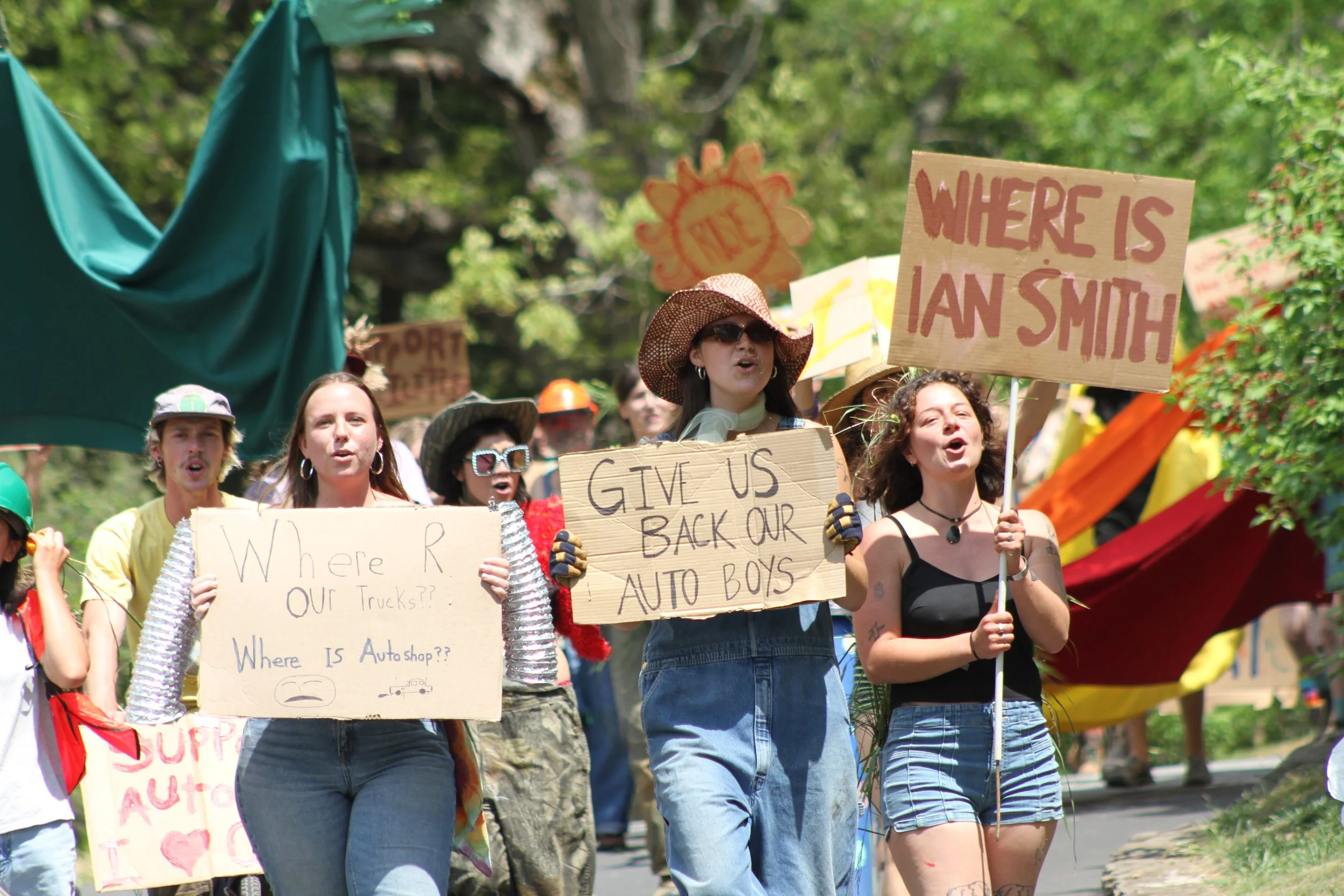
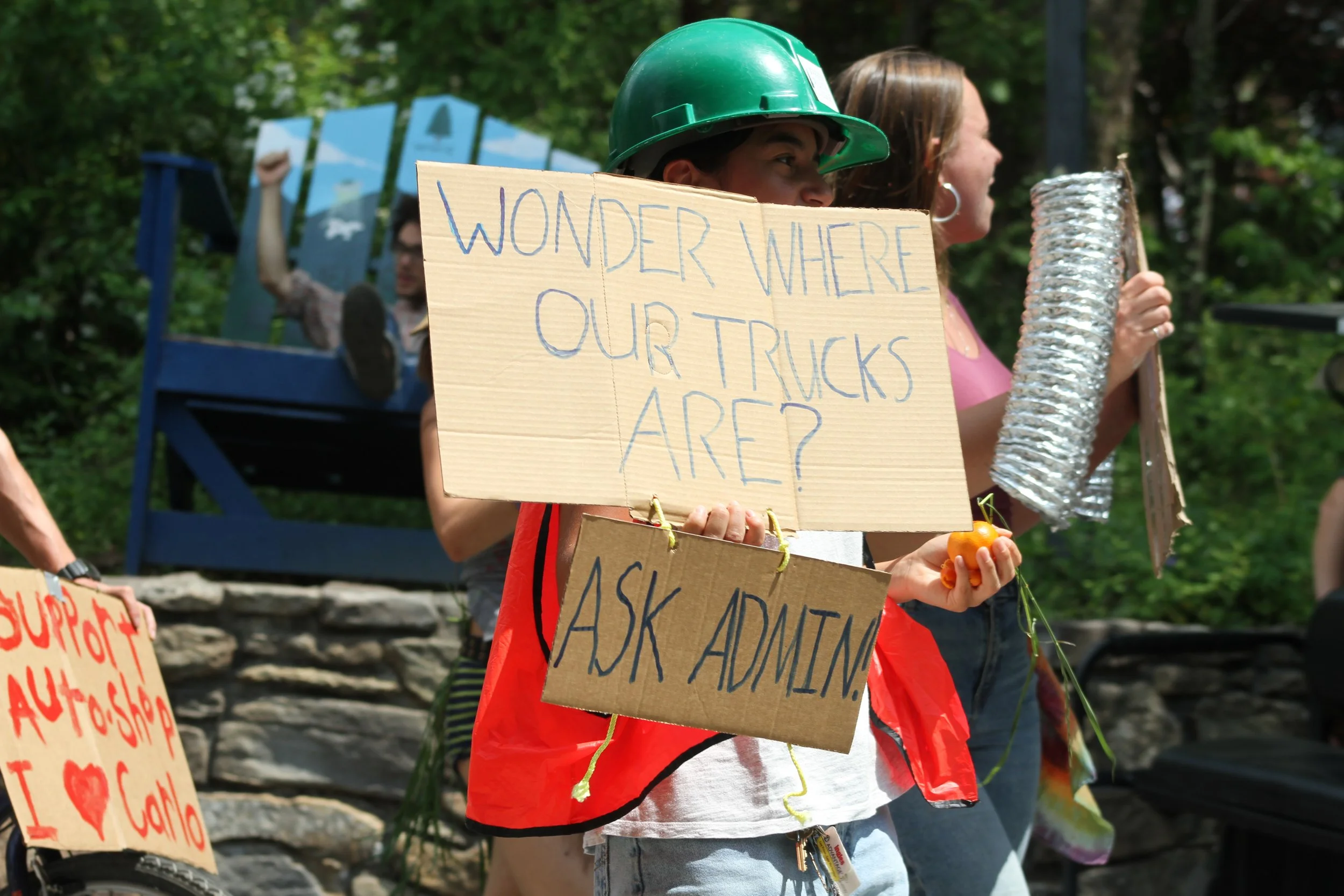
For three weeks now, the workers have refused all tasks and projects besides the bare minimum– all other jobs have returned to their previous source of service: an outsourced local autoshop. In a communication, Goins commented that some type of proof that the work was beneficial would be helpful, and the boys did exactly that: after pulling receipts, tallying general costs and estimating outsourced jobs at counterpart mechanics, they finished a total price tally for the year.
The material cost over the course of the year totaled $6,274 from the receipts they were able to muster. The boys estimated that to outsource all of that work– parts, labor and whatever other fees included– the school would have spent $30,545.27. Rambo-Mohr, reading from the spreadsheet, clarified that the estimate was extremely conservative and could be tens of thousands higher.
Despite repeated attempted dialogue throughout the month that the shop has been under fire, the workers have only ever received one brief email from Goins, in which he expresses administrative support for the Automotive Crew, working within the time constraints of the end of the semester and safety/liability and the request to “continue to complete work order requests as directed by your supervisor.”
“This school teaches students to stand up for themselves,” Blair said. “If you don't expect them to stand up for themselves, then I don't know what you're doing, but you have to realize that you have an educated bunch of people here that, when they see something that's wrong, they're willing to stand up for it.”
Support flared during the Big Gay Earth Day Parade last Friday: various land crews aware of the Autoshop Crew strike bore signs in support of the Autoshop boys, with messages like “Bring back auto shop”, “Where is Ian Smith?”, “Where R the Trucks?”, “We <3 Auto Shop” and “Support Facilities.” Afterwards, student workers took all of their signs down to facilities, where, reportedly, many of the signs ended up in and around Goin’s office. Amazingly, the auto workers are reported to have had no involvement in the spontaneous protest.
The autoshop wants the process to be as respectful and professional as possible, but as the campus community vocalizes its support, those involved have more pressure to reach a solution– and the automotive workers are already as eager as can be.
“There ain't two other people I’d rather be in this fight with,” Blair said. “You guys are great.”
The Echo reached out to Smith and Goins for a statement regarding the reported lack of dialogue and the ongoing strike.
“Will and I will be speaking in person with the students [workers] involved and expect to do a lot of listening and when we do speak, to do so respectfully,” Smith said. “Beyond that, neither of us has a statement to make at this time.”
As of this release, the autoshop boys are set to meet with Goins, Smith and Denison on April 30, after reaching out to the WPO for support to initiate a meeting.
“The three of us are in this together, and knowing that our community has our back is a beautiful thing,” Hamacher said. “Everyone who's affected wants to see a solution, and I'm excited to get started on really solving this.”
The autoshop workers stress that the strike will continue until a solution is reached and their voices are heard, and describe their desire to reach a solution and get back to work.
“When they're ready, we're ready,” Hamacher said. “Seriously, let's get to work.”