Ansley Pate | Nov. 17, 2026
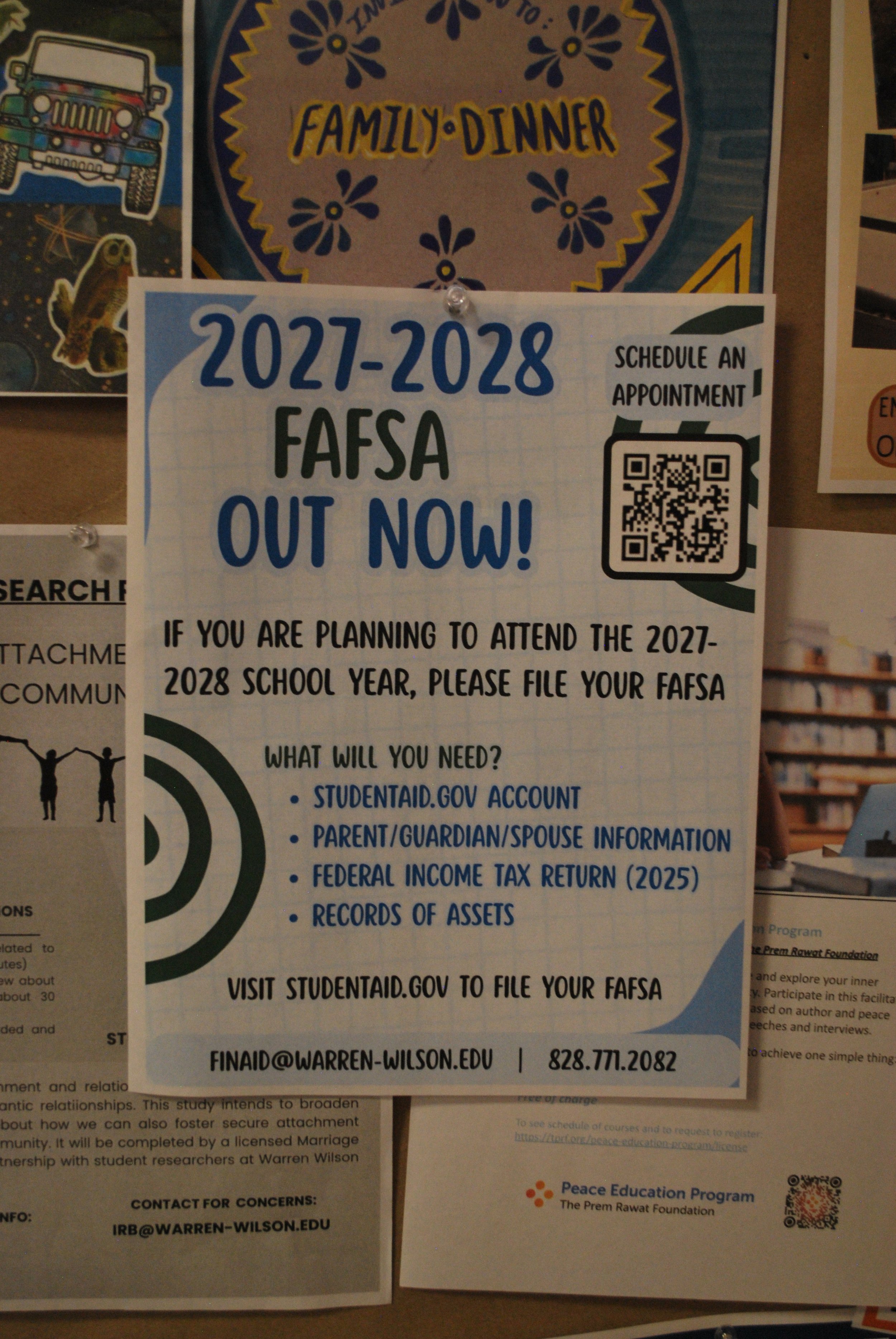
Financial aid for many college students may be at risk under the implementation of the One Big Beautiful Bill Act (OBBBA), signed into law on July 4, 2025, and its introduction of sweeping changes to federal spending. The OBBBA makes several amendments allowing for spending increases in areas such as defense, homeland security and immigration enforcement while, conversely, projecting a decrease in federal funding for many social programs such as Medicaid, the Supplemental Nutrition Assistance Program (SNAP) and federal student loan programs.
In an effort to hold institutional programs accountable for their graduates’ financial outcomes and tackle the growing issue of student debt, the OBBBA made an additional amendment to the Higher Education Act (HEA). Under this amendment, the U.S. Department of Education (ED) issued the Student Tuition and Transparency System (STATS) and Earnings Accountability Final Rule to implement the law, which clarifies that all college degree programs across all institutions will be required to meet specific post-graduate earnings benchmarks through the STATS earnings test to remain eligible for federal Direct Loans. This amendment replaces and expands upon the 2023 Gainful Employment and Financial Value Transparency (GE/FVT) regulations, under which only non-degree programs and for-profit institutions faced a loss in financial aid. ED further detailed the parameters of the STATS earnings test in a press release on June 29, 2026.
“Undergraduate programs will be required to demonstrate that their graduates earn more than the typical high school diploma holder, and graduate programs will be required to demonstrate that their graduates earn more than the typical bachelor’s degree holder,” the press release stated.
ED went on to explain the multi-year analysis format of this new ruling.
“If a program fails to show at least this modest financial return on investment for its graduates in two out of three consecutive award years, it will lose eligibility to participate in the federal Direct Loan program. After three years of consistently failing the earnings premium measure, the Department could also terminate eligibility for Title IV of the Higher Education Act (HEA), including Pell Grant eligibility, for all of an institution's low-earning outcome programs,” the press release stated.
The first earnings test calculations are scheduled to take place in July of 2027. The second round of tests, which will determine whether or not a program is eligible for aid, will occur in 2028. This means that the 2028-2029 academic year will be the first year in which institutions have the potential to lose federal Direct Loan eligibility for students.
Programs projected to be at risk for financial aid eligibility include, but are not limited to, broad fields of study regarding education, humanities, liberal arts and health-related programs. ED’s projections also highlighted high STATS earning test failure rates among bachelor’s programs in fine arts.
Some feel that evaluating these programs based on their financial outcomes might overlook the social value they provide, which is often a strong motivator for the students entering these areas of study.
Cassidy Wells, a sophomore at WWC who plans to obtain a master’s in education, expanded upon the value of the field beyond monetary return.
“Education, in my eyes, is the backbone of our society and the critical thinking skills of the future, everything that we will come to know,” Wells said. “I don’t know a single person that goes into education because they’re looking for money. That’s just not why anybody I know has gone into it, that’s not why I'm going into it.”
Wells is planning her undergraduate career around a degree that she feels promises job security in the event that a master’s degree becomes unreasonable for her to pursue. The new regulation has caused her to have to contemplate that possibility more seriously.
“[Pursuing a master’s in education is] really out of passion more than anything else, and without that aid, without that help, I don't know if it'd be worth it,” Wells said.
Similar concerns regarding the social value of many of these programs were raised by commenters during the rule making process, who argued that their societal benefits may outweigh the lower financial return of their graduates. They recommended field-specific benchmarks be put in place in an effort to combat this. However, those recommendations were denied by ED.
ED argued that the commenters “provided no basis, data, or recommendation for how the social returns could be fairly and consistently measured. Lacking the data and methodology necessary to perform such an evaluation, the Department notes that any attempt to classify the social returns of programs would be arbitrary.”
Beyond the claims pertaining to what the STATS earnings test may fail to measure about a program’s value, there are concerns about how the test’s benchmarks account for the systematic inequalities that some students' educational and economic opportunities abound.
Rylee Muhlwood, a sophomore at WWC, asserted that these regulations might reinforce existing systems of oppression and further disadvantage students who face structural inequities.
“The playing field is not even to begin with,” Muhlwood said. “If the playing field is already biased, it will create biased results.”
Additionally, Muhlwood questioned whether the use of statistical measurements in these instances can adequately account for the broader circumstances of the people and programs involved.
“Statistics are subjective,” Muhlwood said. “It really does matter what the context is.”
Commenters addressed related concerns during the rulemaking process, specifically noting the potentially disproportionate effects that these regulations may impose on women and ethnic minority groups.
They highlighted the large number of female-dominated fields at risk and challenged the lack of account for the fact that many women have familial obligations that result in time away from work that could negatively skew the median earnings outcome. Additional negotiators present for the ruling suggested that the earnings threshold account for gender-based wage gaps, however, this notion was rejected by ED.
The commenters also expressed concerns regarding Historically Black Colleges and Universities (HBCUs), Tribally Controlled Colleges and Universities (TCCUs) and other minority serving institutions (MSIs), worrying that the earnings outcomes of the programs at these colleges would be unfairly weighed against the STATS framework due to the pre-existing socio-economic barriers minority populations face in the workforce. The commenters suggested that ED conduct a further analysis to examine the issue.
ED projected that there would be a slight to moderate increase in programs and students that would be negatively affected by the new regulations. In its response, it stated that this was largely due to the earnings tests' examination of a comparatively wider field of programs and institutions, which failed to fully address the specifics of the commenters' issue.
Despite all of the issues raised regarding how the STATS earnings tests would affect women, MSI students and programs with “high social returns,” ED firmly and repeatedly upheld its belief that the new regulations would provide increasing benefits. It stressed that the benchmarks would encourage students to consider degree programs with higher earnings outcomes and aid in eliminating the large risk factor of entering low-paying career fields and accumulating debt.