

Answer Richmond: A History of Fires on WWC Campus
Richmond Joyce | Feb. 24, 2026
Inspired by the Asheville Watchdog’s “Answer Man” column, Echo writer and photographer Richmond Joyce is here to answer all your historical queries.
Previously on Answer Richmond… We covered the story of “Old Main,” the dormitory and central building upon which Warren Wilson College (WWC)--originally christened as Asheville Farm School (AFS)--was built upon. The three-story building used to sit around Morse and Witherspoon until Christmas break of 1914, when the structure caught ablaze. The ruins were scrapped, and Saint Clair, along with a sister dormitory called Carolina, was built later that year as restitution for what was destroyed.
This event raised a question among readers: How many catastrophic fires has this campus seen in its lifetime?
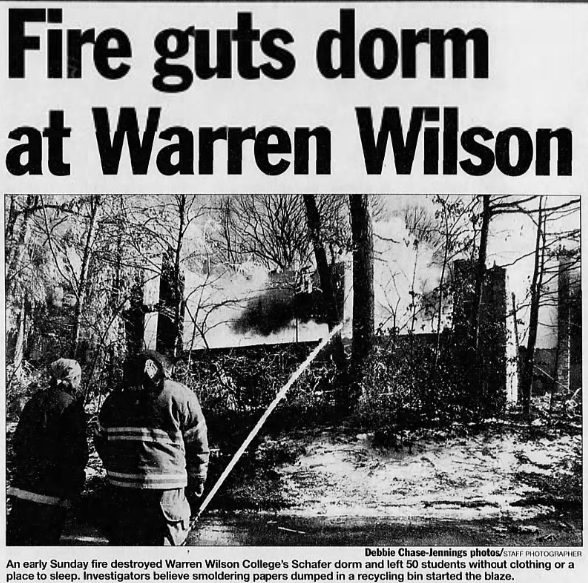
Photo and headline featured in Asheville Citizen-Times of the aftermath of the Schafer fire on Feb. 20, 2003, taken by Debbie Chase-Jennings.
1914
It is December 23, 1914, and you are one of the AFS students who are staying in Old Main over Christmas break. Maybe your family is too far away, maybe you have no family to visit or maybe you just want to see your job done well here on campus. Nonetheless, there is a massive war being fought in Europe, and here on your little, serene farm school, a few minutes past noon, smoke starts curling and snaking up the horizon.
C. Alonzo Conley, an AFS graduate of the class of 1917 who was present on that fateful winter day, recalled in a letter to Miss Elizabeth Williams in 1933, which was published in The Owl and Spade,
“I remember Miss Linney, a member of the faculty at that time, grabbed the bell rope and began pulling it for all she could, to get all of the boys in that were out working, and she pulled the rope until it burnt off up in the attic… we did not have much more time than that to get our belongings out, for the old building soon fell before the fury of the demon, ‘fire.’”
This fire was the end of Old Main yet, miraculously, not the end of any person. Truly, that fact is a miracle. Reading the newspaper and first-hand accounts of the time paint a messy picture for all to envision. Only 18 of AFS’ 120 students were on campus thanks to the holiday, but maybe more hands would have helped when the firetruck stalled out in the river and a team of mules was assembled to drag it to our side of the Swannanoa; or maybe some of their insight could have prevented two firemen from being treed by an angry bull when they traversed his pasture to get at the flames.
You can read the whole newspaper clipping from the Asheville Citizen-Times on the 24 of December, 1914 HERE.
1928
It has been over a decade since the last blaze took down Old Main. A few generations of Farm School boys have come and gone, and never had to think about what was once practically a Presbyterian fortress burning up on the hill. Now they all gather for dinner at the new dining hall that sits where the Log Cabin is today. It is easy to jump to the assumption that such a building was built in the months post-1914 fire, but in fact, the ruins of that old hutch hide another’s fate.
The Old Dining Room and commissary burned down in February of 1928, and reportedly took the school’s entire food supply down with it. This resulted in roughly $425,000 worth of damage in today’s money–and remember–only a year and a half out from the Great Depression of 1929.
Speaking of it: 1929
After the dining hall burned the previous year, in the following days, the laundry room was converted into a suitable space. This laundry room seemed to sit about where Ransom House is today… and yet if you understand the direction of this article, you can see where this is going.
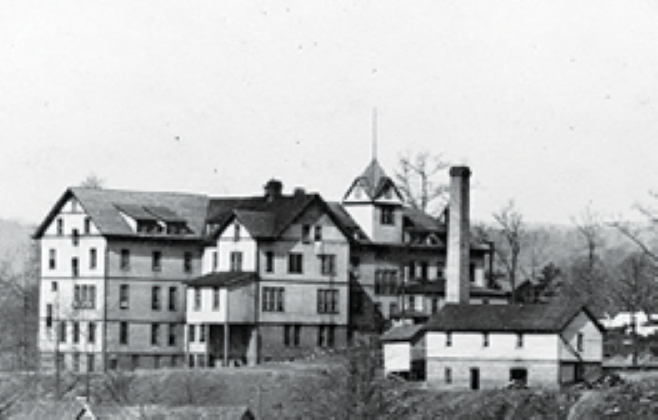
Black and White photograph of Old Main and the laundry building, taken before 1914 by an unknown photographer.
A humorous first-person account of this event was recalled by John LaVerne, of the AFS graduating class of 1933. It was published in the December edition of the Owl and Spade of 1929, it goes as follows;
“About five forty Tuesday morning, when I had loaded the milk into the wagon, and, after much oral abuse directed towards “Preacher”, [a carthorse,] had finally got him into slow motion, my gaze wandered the dark line that was the river, then to the dark timber line of a nearby hill. It was by chance that I turned towards the Laundry. One end was a blaze twenty or more feet into the air, casting weird shadows… I whipped old Preacher into a lively pace, and we ascended the hill in record breaking time… and opened the big fire siren.”
Further accounts of this fire are harder to come by, but it seems that the Laundry was remodeled in 1930 and continued to be used for decades. Confirmation has not yet been made–and here is a spoiler for a possible future story–but it seems this Laundry and our contemporary Ransom House might even be the same structure.
1930
A great year for pyromaniacs on the AFS campus, and just about nobody else. This year saw a record breaking two fires which destroyed buildings across campus, plus two on a relatively undeveloped Daisy Hill.
Starting in February, a barn full of equipment caught on fire and burned down at the farm. Through the quick work of the farm boys and their instructors forming a bucket brigade, and the “fire squad” which was created after the previous fires of the last two years, some of the expensive equipment was able to be saved from the blaze. A thresher, a disker, and a corn binder are known to have been pulled from the flames, however the extent of what was in contrast lost in the blaze is unclear–however contemporary articles cite a damage fee of $4,000, or around $77,600 today.
April of 1930 saw a whole new barrage of fires on campus, starting off with two forest fires on Daisy Hill. These incidents occurred one after another on a Thursday and the following Sunday. Away from most residences, these fires were the least catastrophic of those which are being covered here. Luckily, the “Forest Fire Fighters” were quick to the case, and both blazes were easily contained by students and the local fire chief working in tandem.
Flames were not yet done harassing the campus in April of 1930 after these field fires however. Very soon after the second Daisy Hill fire, but believed to have been started from an overheated stove in the building’s basement, the house of D. T. Vining burned. Vining was the school’s business manager at the time and he lived in the “Teacher’s Cottage”.
An AFS boy with poetic prowess, Luther Thompson of the class of 1933 had this to say in the Owl And Spade about the Teacher’s Cottage fire:
“Quietness prevailed; the birds had hushed their singing and found some shady spot. On my bed I had been dozing, when suddenly there sounded a deep piercing sound, which we knew meant fire somewhere on campus… Down the steps, out the door, and into the sunshine we rushed…”
By the time the firemen from Asheville had arrived, the farm boys had already done everything they could; removing furniture, running for extinguishers, and forming bucket brigades. It was estimated that the fire caused $500 in damage, which is about $9,700 today.
1934
On May 8th, the home of Henry Randolph, the Asheville Farm School superintendent of the 1930s was completely and catastrophically destroyed by a fire. Mr. Randolph, along with his wife and their six children were all in the home when it caught on fire, but miraculously all escaped with their lives. That fate cannot be said for the structure or any of their furnishings however.
The origins of this fire remain a mystery, but what is known is that Mr. Randolph’s extensive library was taken with the flames, valued at nearly $141,000 in 2026. The entire fire, books included, would have cost the Randolphs and their insurance $362,800 today. Costly, yes, but it seems like a fair trade for the lives of the entire family of eight.
1950
May 1st of 1950, 36 years after the burning of Old Main, another dormitory caught on fire. By this time, Asheville Farm School had transitioned into the co-ed establishment Warren Wilson Junior College and as such, dorms had been built to accommodate girls and ladies living on campus.
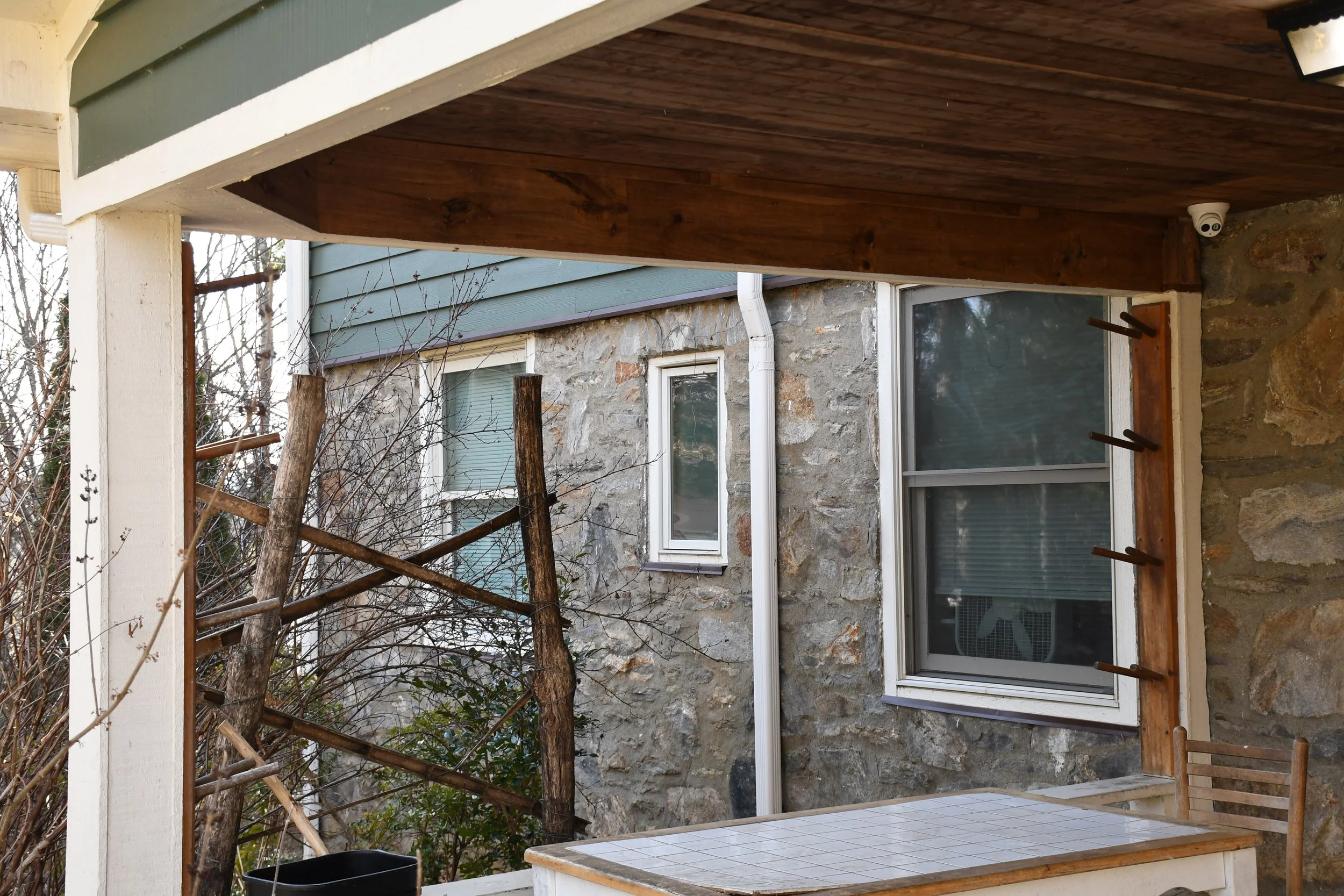
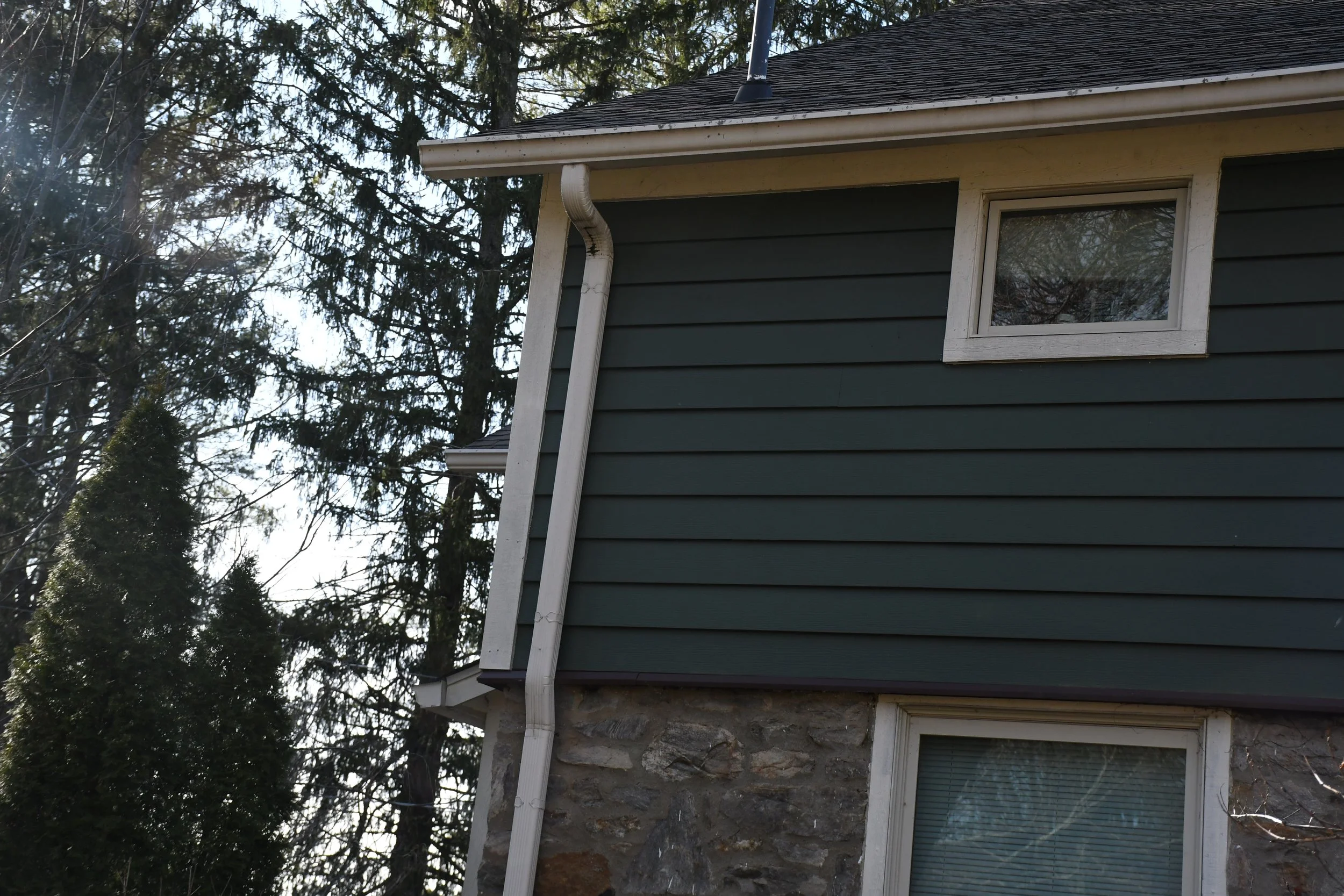
Only three years old at the time, Stephenson was built using funds from the sales of the Dorland-Bell Institute and the Mossup School, which merged with AFS under the gaze of the Northern Presbyterian Church in 1942 to create the junior college. The fire, which was caused by an iron left unattended, charred the first and second floors of the building’s south side. Nobody was hurt, however, $10,000 was done in damages–$134,490 today.
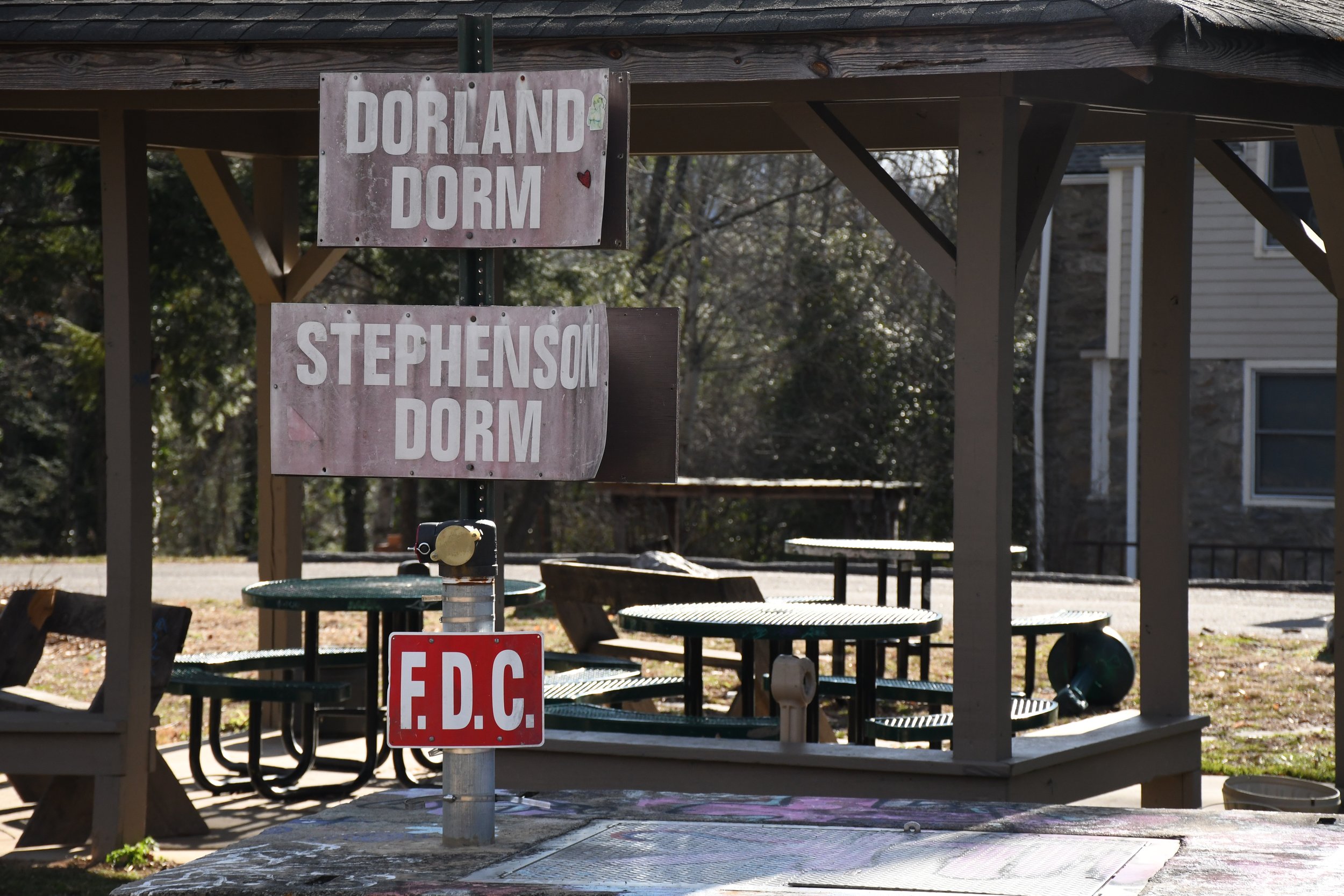
Modern Fire Department Connection in Sage Circle, Warren Wilson College (WWC) campus in Swannanoa, N.C., on Feb 22, 2026. (Echo News/Richmond Joyce)
1963
A less important fire occurred in this year, however had it not have happened, there is a very real chance that the previous Answer Richmond article would have focused on a different building!
The Mule Barn, also called the Little Red Barn, was built sometime before 1895, although an exact year is not known. It was accompanied by the old Piggery which was built some years after its construction in 1910, and then dismantled in 1964 after the fire took out the Mule Barn.
What catches attention in this burning event is how the fire started. This old wooden building was accidentally set on fire by its own Farm Crew, who too-scrupulously tried to heat sanitize their livestock’s food. Somehow in this attempt to kill off bacteria, they managed to kill off the entire barn around them as well.
2003
The most recent, extensive fire on our campus happened 23 years ago now. On January 19 of 2003, a devastating fire broke out in the old Schafer dormitory, started by some smoldering paper scraps carelessly thrown into the recycling. The fire completely gutted Schafer, which was one single building at the time instead of the three we are now accustomed to.
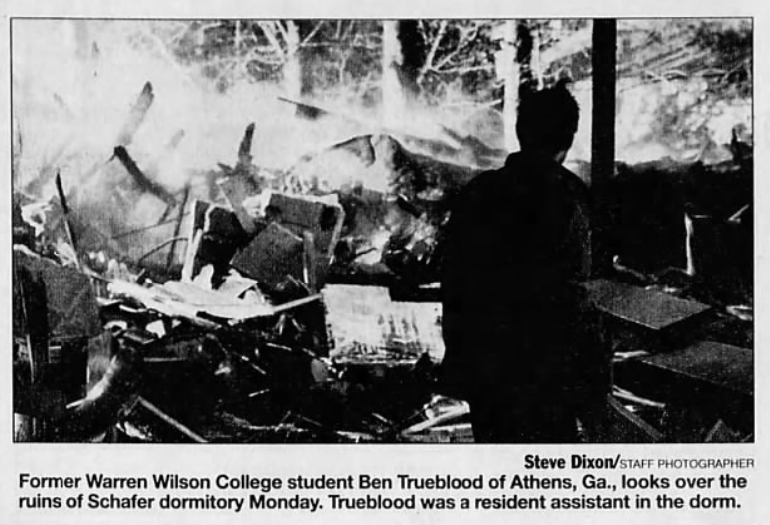
Photo featured in Asheville Citizen-Times of the aftermath of Schafer fire, taken by Steve Dixon on Feb. 21, 2003.
While the building, which was built in 1967, did have fire alarms and was by all means up to the fire code at the time, it was missing one important part of modern fire safety regulations: sprinklers. This allowed the fire to spread and completely destroy the possessions of many students who lived there. The silver lining here is that with the exception of one single student, nobody was hurt. It is truly remarkable that despite all of the fires which have occurred here on campus, there have been no related fatalities.
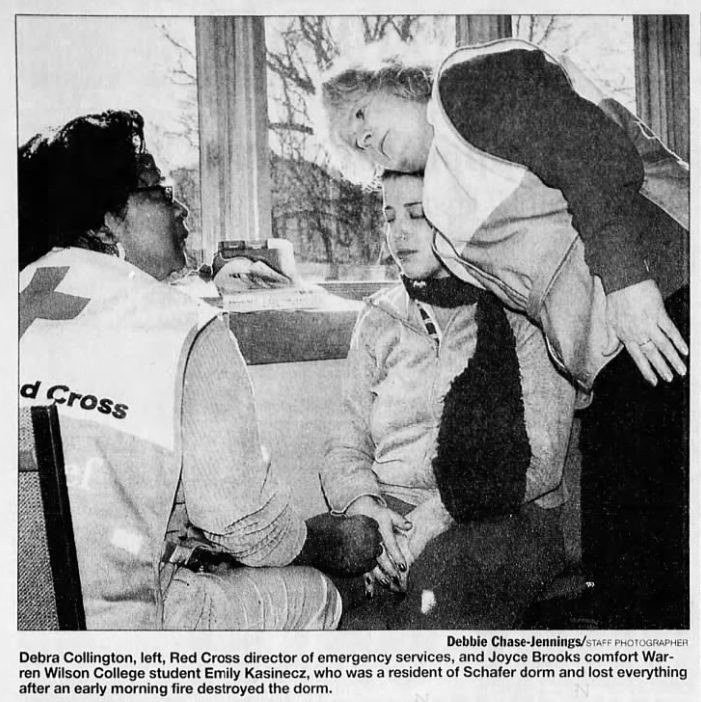
Photo featured in Asheville Citizen-Times on Feb. 20, 2003, of the aftermath of the Schafer fire, taken by Debbie Chase-Jennings.
The Asheville and Swannanoa communities around Warren Wilson along with the Red Cross stepped up after this disaster. Local musicians set up charity shows to raise money and shops all throughout the area donated vouchers to the WWC students who had lost all of their goods in the blaze. From the official Swannanoa FD Incident Report which can be found in our archive, it is estimated that the fire caused $3,000,000 in damages, equivalent to almost 5.2 million dollars today.
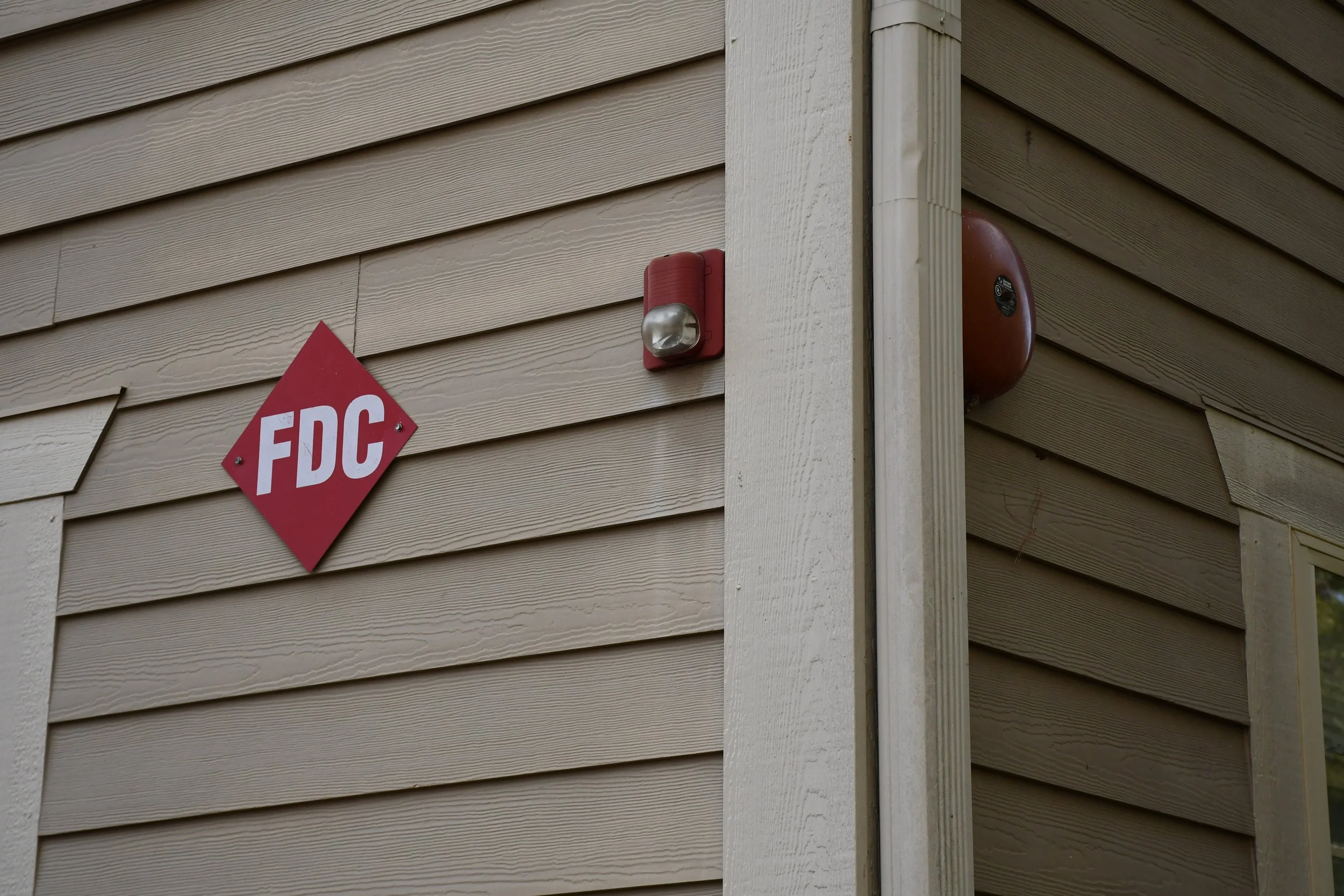
Modern fire safety equipment on Schafer C, Warren Wilson College (WWC) campus in Swannanoa, N.C., on Feb 22, 2026. (Echo News/Richmond Joyce)
From these fires, Warren Wilson and its predecessor school have lost at least $7.6 million when adjusted for inflation, as of 2026. There have been other fires–tool sheds and forest fires and poor Dodge house catching a stray lightning bolt in 2022–but the ones covered here are the most substantial, or in the case of the Mule Barn fire, most humorous.
So stay vigilant out there, Wilsonites. Don’t let sudden snows or hurricanes dropping feet of rain on us take your guard down to the ever constant threat of fire. Put out your super cool cigs in their designated places and don’t leave your fire unattended when Public Safety rolls up to bust your groove. Only you can prevent the dormitory fires that cost us millions.