

Ryleigh Johnson | Nov. 17, 2026
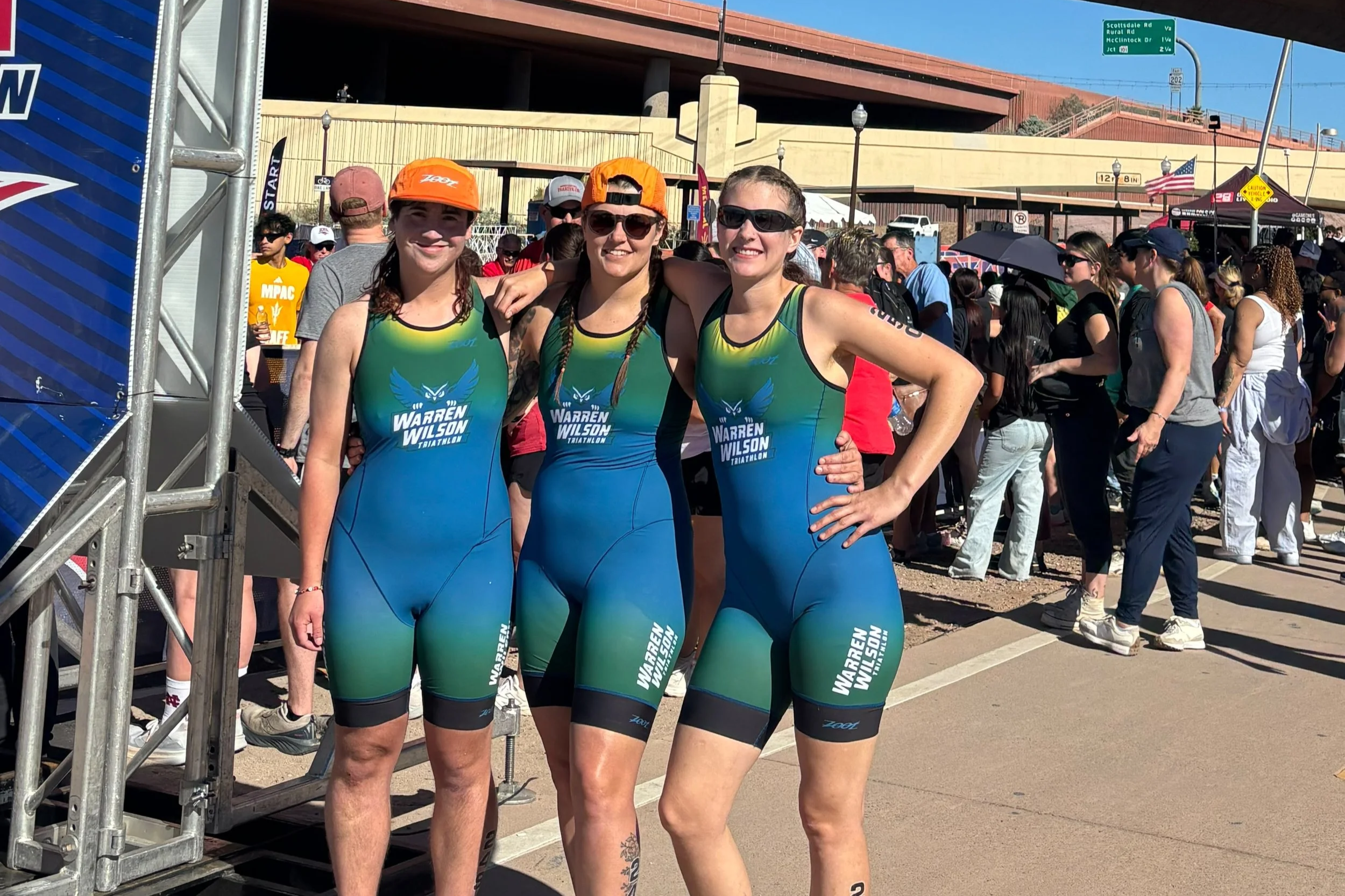
From left to right: Kai Walters, Taylor Knops and June Marvelous pose for a photo at the Women’s Collegiate National Championship in Tempe, Ariz. on Nov. 8, 2026. (Courtesy of June Marvelous)
Despite an unconventional format, training difficulties and late afternoon desert heat, the Warren Wilson College (WWC) women’s triathlon team ranked seventh in the NCAA Division III at the Women’s Collegiate National Championship in Tempe, Ariz., on Nov. 8. Competing against over 200 other triathletes, teammates Taylor Knops, Kai Walters and June Marvelous secured a top ten finish for the WWC triathlon program, which is only in its second year of existence.
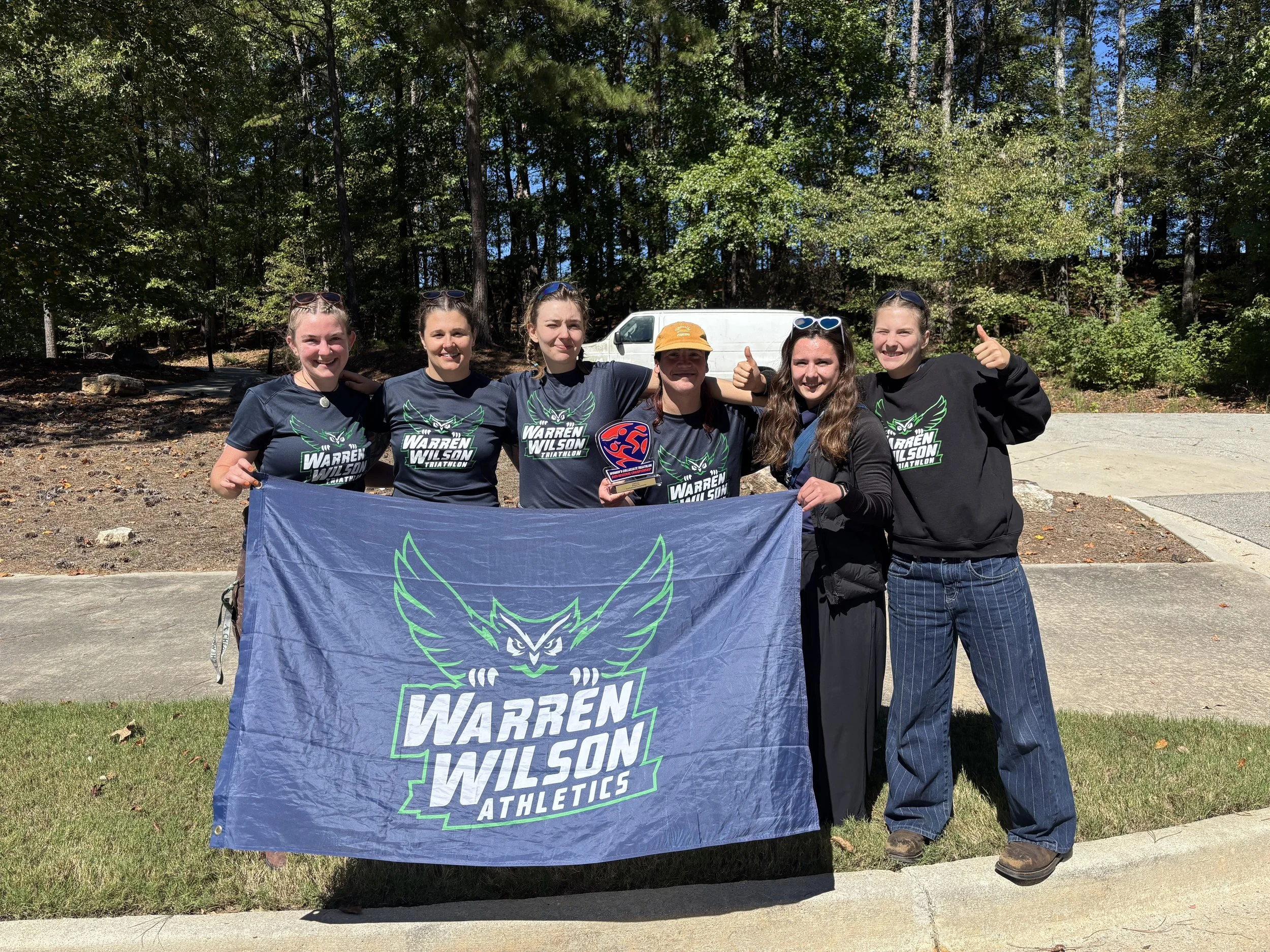
The Warren Wilson College (WWC) women’s triathlon team poses for a photo at Women's Collegiate Triathlon East Regional Championship in Buford, Georgia on Oct. 17, 2026. The team took home second place in Division III. (Courtesy of Jorge Marin)
The WWC triathlon team’s first season took place in the fall of 2024 after the college received a Women’s Triathlon Emerging Sport Grant from USA Triathlon, gifted for the purpose of creating a women’s triathlon team. Jorge Marin has been coaching the team since its inception and has brought the team to the national championship twice, along with expanding the program to include a club men’s triathlon team.
This year’s Collegiate National Championship was modified to a duathlon event with two rounds of running divided by a bike ride rather than the traditional triathlon swim-bike-run format. Marin received an email when the team arrived in Arizona on Thursday, Nov. 5, announcing the change. Knops explained that the switch was due to environmental factors that affected the triathletes’ ability to safely complete an open-water swim.
“[Jorge got] an e-mail and he was like, ‘Oh, there's no swim…they've had flooding,’” Knops said. “[Even] though it has settled, the sediment and all that [stuff] has not settled. [The river] was very brown. We probably wouldn't have been able to even see in front of us. You don't want to ingest that and risk someone getting sick, and the swim is also considered the most dangerous sport of triathlon.”
This switch presented the team with an unexpected challenge, especially given the arid desert climate. All three WWC triathletes competed in the final heat of the championship, which began at 2:45 p.m. Marvelous commented on how the high afternoon temperature, combined with the lack of swimming, was difficult.
“It was a really hard race,” Marvelous said. “It was so hot and I just felt like I was dying the entire time… I crossed the finish line and I was still running. I was like, ‘Oh, I can stop now.’ And I collapsed [and] got water and I just felt really off for at least 30, 45 minutes.”
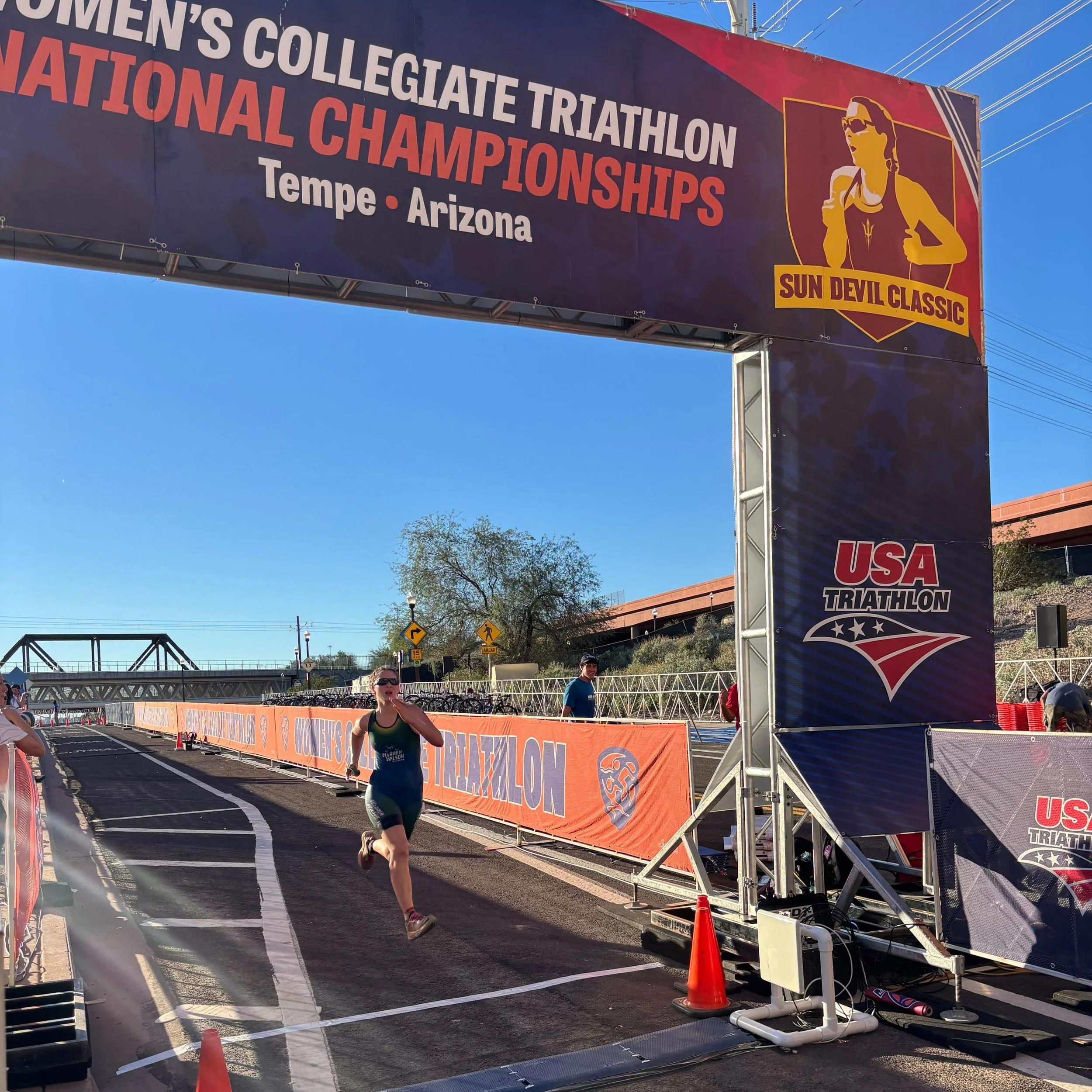
WWC triathlete June Marvelous approaches the finish line at the Women’s Collegiate National Championship in Tempe, Ariz. on Nov. 8, 2026. (Courtesy of June Marvelous)
Knops also commented on the intensity of the heat, recalling seeing another triathlete stopped during the race due to heat stroke.
“On my second run, someone was on the ground having a heat stroke,” Knops said. “We had to do two laps for the run and she was there each lap. I was like, ‘Damn. Homie’s not doing good.’ It was just kind of brutal to race that late in the day.”
The WWC team also faced other challenges, including the relative disadvantage of bringing only three athletes to the race to compete against bigger teams, and a lack of adequate training facilities at the college – especially frustrating is the difficulty of not having an on-campus pool, which forces the team to practice at the University of North Carolina Asheville (UNCA) pool, located 20 minutes away from WWC.
“Not being able to have a pool facility on campus is a huge deal because we're taking an hour of our training time just to drive to the pool and back, and then the teammates are like late to class and barely get breakfast in and then we need to function for a whole day, go to sleep and wake up and do it all over again,” Marvelous said. “That's definitely a challenge.”
Marvelous and Knops both noted their, and Marin’s, desire for the team to have bike trainers, which are modifications that allow for triathletes to convert their competition bikes to indoor, stationary ones that allow for more focused coach feedback in training. Knops also emphasized the more broad disparities in funding she noticed at the championship.
“[There was] this longing of wanting to be able to have what [other teams] have,” Knops said. “They have their cycling set. They have their swimsuits and then they have their tri suits. That's all provided. We just get a tri suit. We didn't get cycling bibs or jerseys. We all had to buy our own swimsuits. We barely got caps; we got the caps from the swim team. We didn't get water bottles for our bikes...We got gear, don't get me wrong, but we can only get so much because of funding. And I'm just like, ‘I wish we could have all that.’”
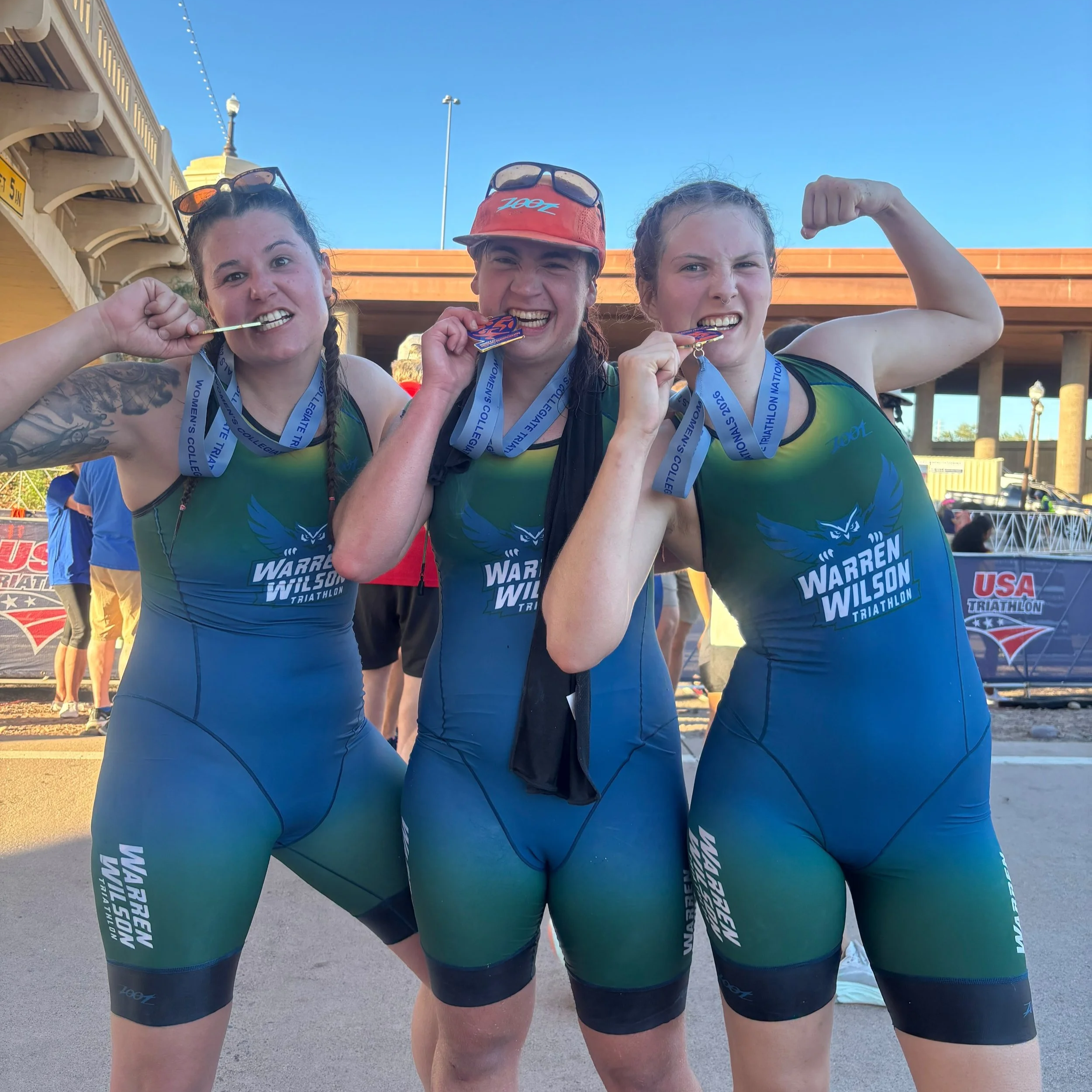
From left to right: Taylor Knops, Kai Walters and June Marvelous pose with their medals after competing in the Women’s Collegiate National Championship in Tempe, Ariz. on Nov. 8, 2026. (Courtesy of June Marvelous)
Regardless of these hurdles, WWC’s triathletes supported each other through a tough race and were rewarded for their efforts. Marin shared his excitement over the team’s race results, especially given that it was Knops, Walters and Marvelous’ first semester competing.
“This was a valuable experience for our athletes and our program,” Marin told WWC Athletics. “All three of our athletes were competing in their first collegiate season, and they showed tremendous improvement throughout the year. They delivered their best performance of the season when it mattered most, and I am very proud of how they represented Warren Wilson College.”
Marvelous, with an eye to the future, jokingly remarked that she might need a full year to recover, but she was excited to compete again next fall.
“Racing nationals was maybe one of my least favorite things I've done in my entire life, ever,” Marvelous said. “But I would do it again, and I would do it better and faster.”