

Study Abroad In Greece
Emma Taylor McCallum | Sept. 29, 2026
Every day there is more news about climate change; rising sea levels, threats to biodiversity, changing weather patterns and inadequate political protections. Last semester I had the privilege to study with seven other students, learning about how global warming is affecting Mediterranean-type ecosystems before traveling to Greece to apply and expand our understanding.
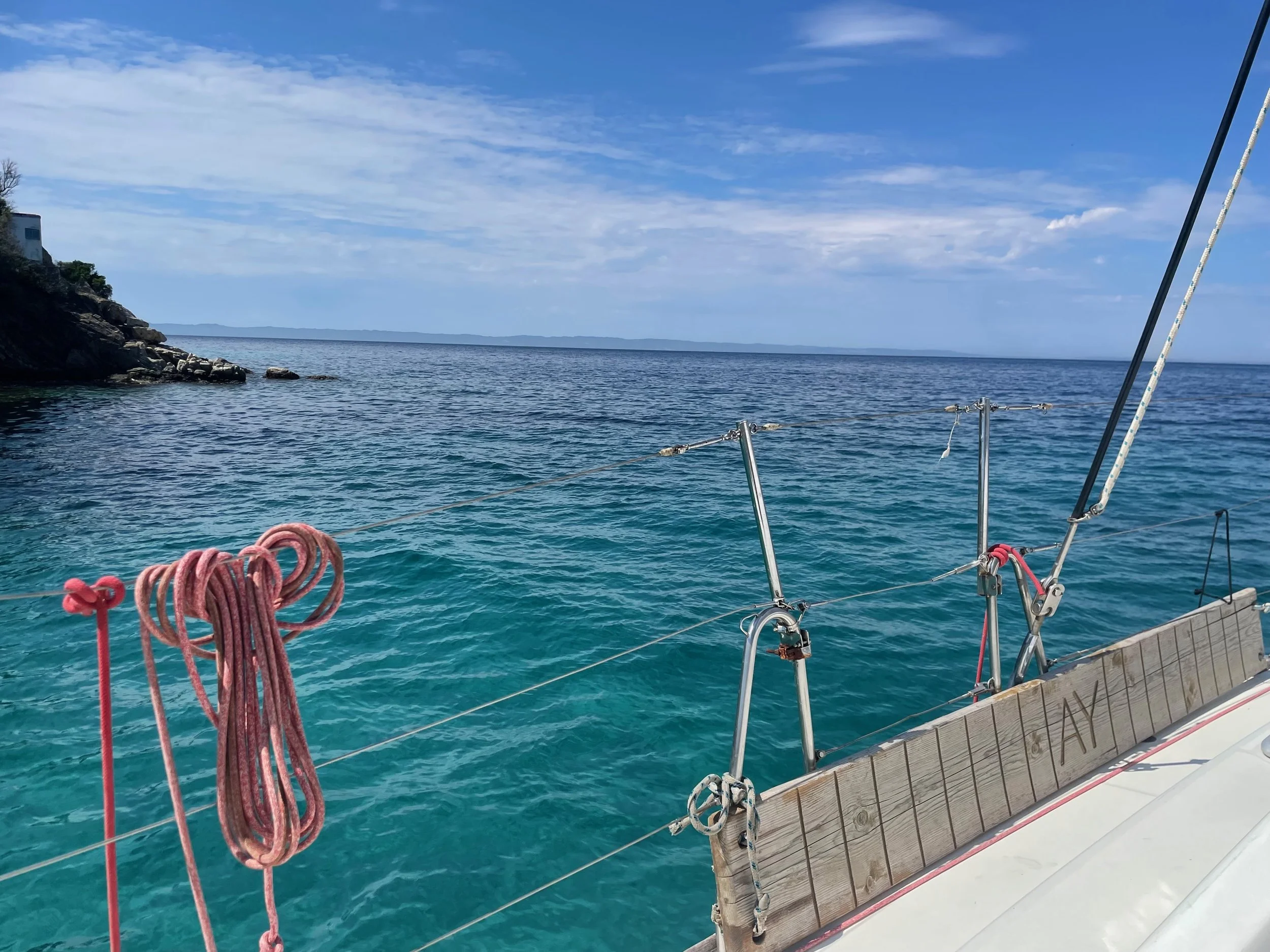
A view of the Kassandra Gulf from the catamaran. The Kassandra Gulf, Central Macedonia, Greece May 21, 2026. (Echo/Emma Taylor McCallum)
This “Climate Change and Mediterranean Ecosystems” course was led by Dr. Alisa Hove, Professor of Biology and Co-chair of the Biology and Chemistry Departments and Jill Arnold, Manager of Biology and Environmental Studies Departments at Warren Wilson College (WWC).
“Faculty-led study abroad courses offer an opportunity to learn in a global context, because you can take a course at Warren Wilson and spend the first 14 weeks or so on campus, learning course content, and also about the culture and general history, geography, natural biology, of a different country," Hove said. “Then that learning gets put into action because after most of the students take their final exams and leave for the end of the semester, students who are enrolled in study-away courses spend the following 2 or 3 weeks in a different country or in a different part of the United States with their class.”
Our spring semester was spent studying the mechanics of climate change and its effects on Mediterranean-type ecosystems, which are of particular concern in the face of climate change due to their high levels of biodiversity. We discussed topics in conservation, international policy, microbiology, ethics, ecology and learned some basic conversational Greek.
Though Greece and the Mediterranean basin may be one of the first Mediterranean-type ecosystems that comes to mind, they also occur in Western North America, Chile, South Africa and Western Australia and are characterized by close proximity to a large body of water, cool winters and hot, dry summers.
“I studied plant ecology and climate change biology in a Mediterranean-type ecosystem [like] my home state of California, in graduate school,” Hove said. “They are an ecosystem that I'm very familiar with and comfortable with, so I wanted to teach a course that could talk about climate change in these ecosystems which also harbor a ton of biodiversity and connect that to my personal and professional connections to the country of Greece.”
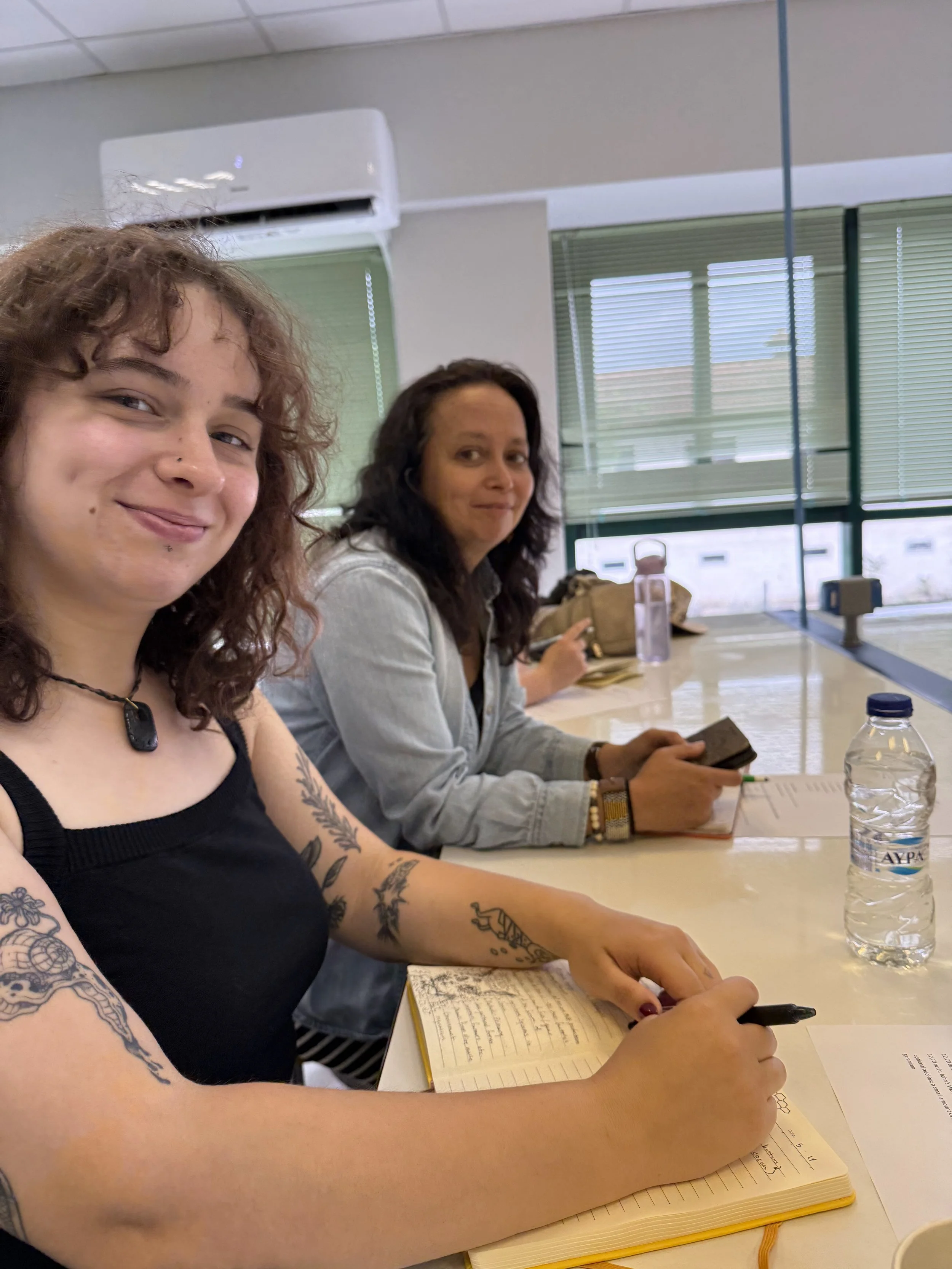
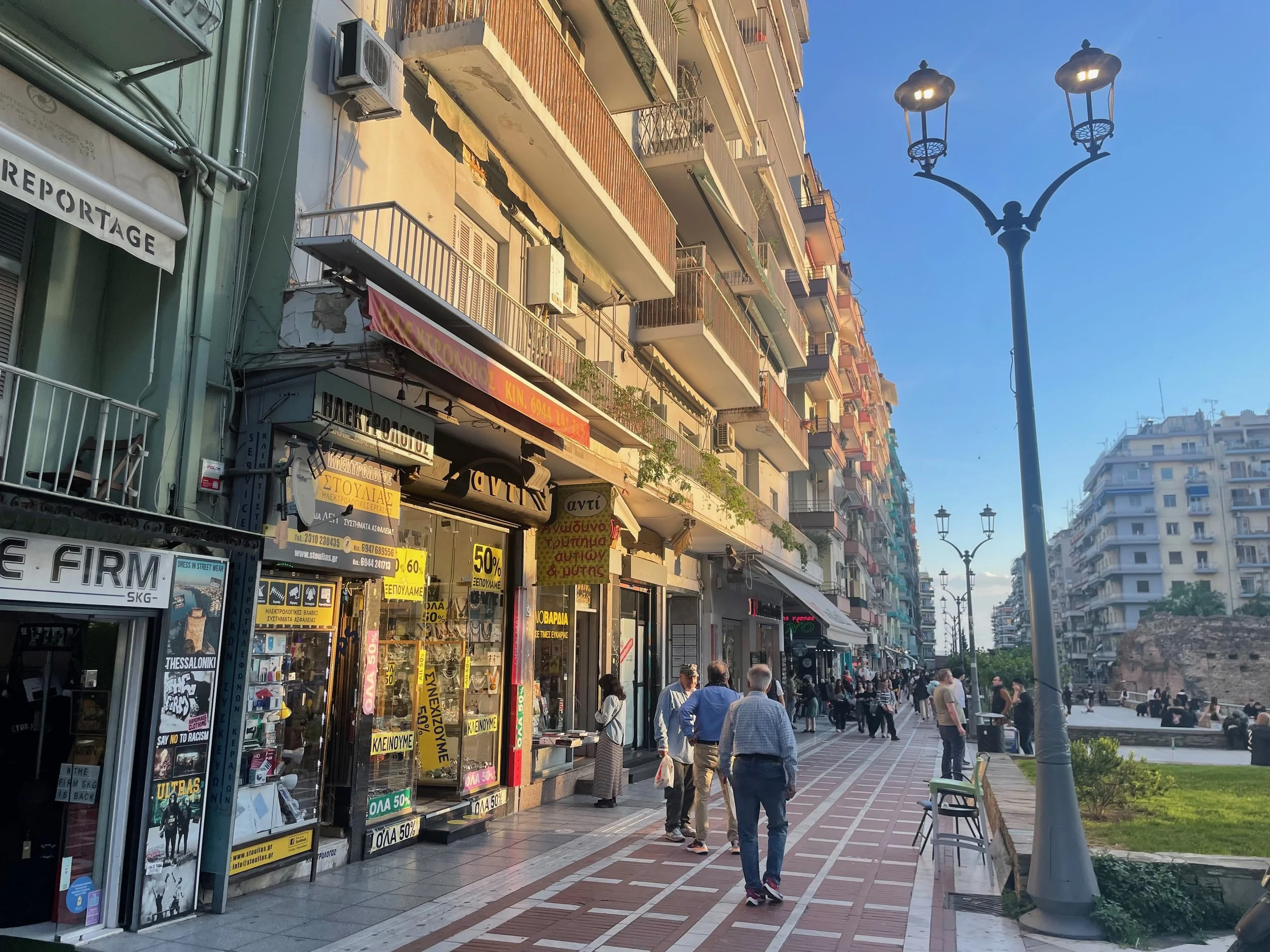
During the international part of our course we stayed at Perrotis College at the American Farm School outside of Thessaloniki, the second largest city in Greece, which is located in the north of the country.
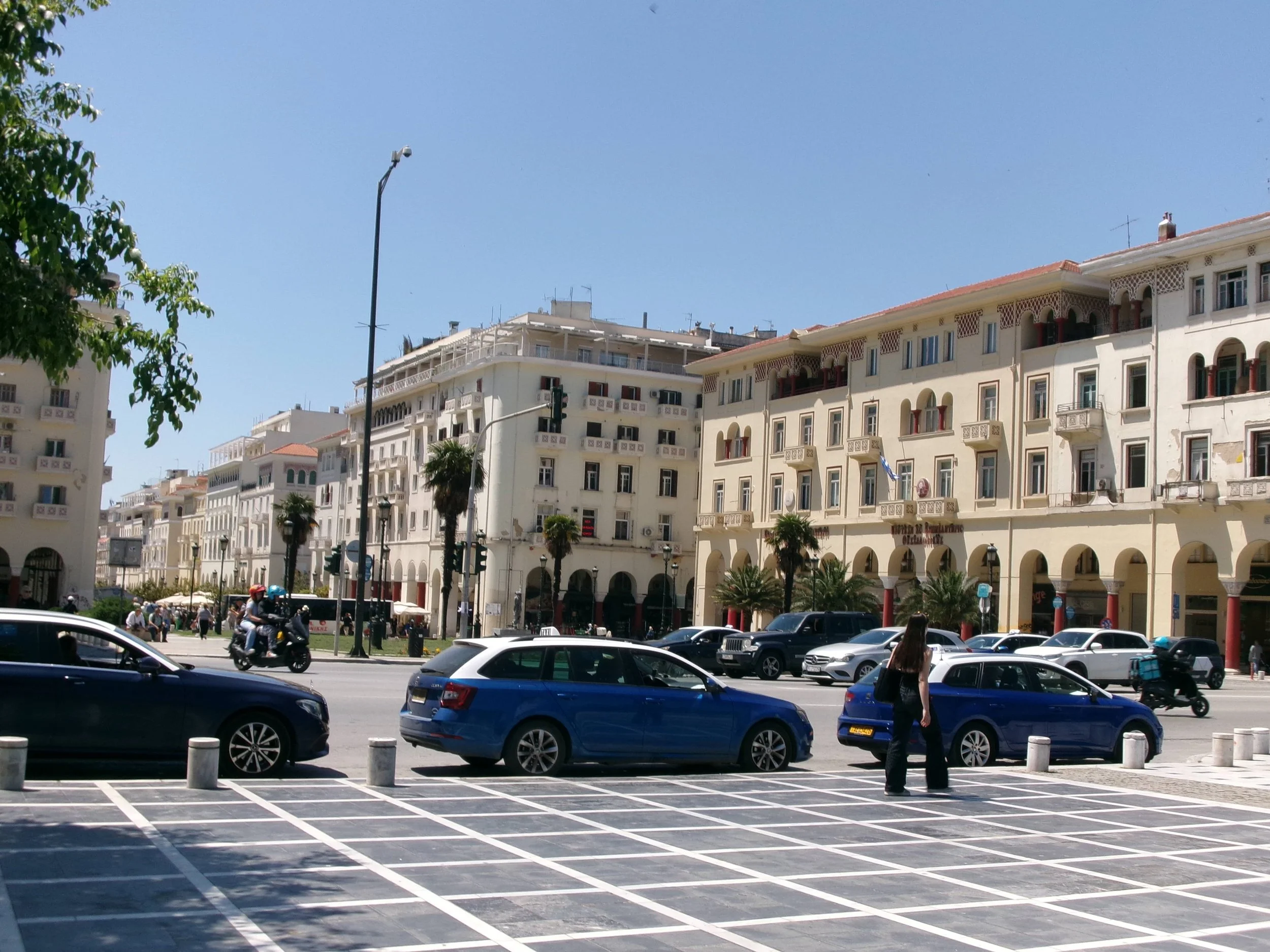
Blue taxis lined up along the curb in downtown Thessaloniki, Central Macedonia, Greece May 11, 2026. (courtesy of Toby Freel ‘26)
We attended lectures and workshops by faculty at Perrotis College and traveled into the area surrounding Thessaloniki to meet with a variety of partners to learn about how climate change is affecting the culture, ecology and economy of Greece.
Katrina Bodoh, a senior studying Conservation Biology, discussed our visits with local producers to talk about their adaptations to a changing climate and navigation of Greek, European Union and international markets.
“I think being able to speak with everyday farmers in Greece who are trying to respond to the challenges of climate change was a really valuable thing to take away from the class, and I think that was my favorite part of the course” Bodoh said.
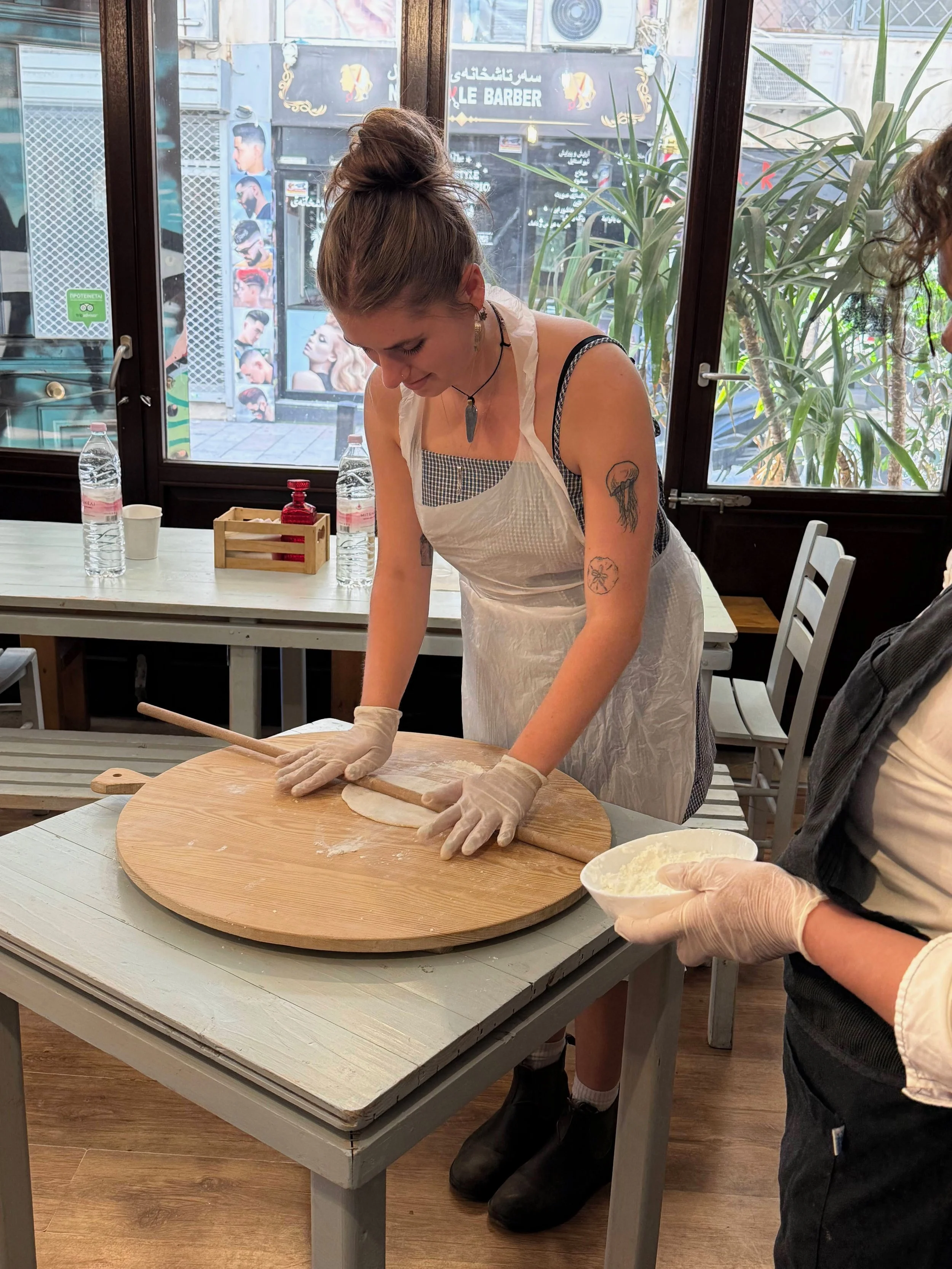
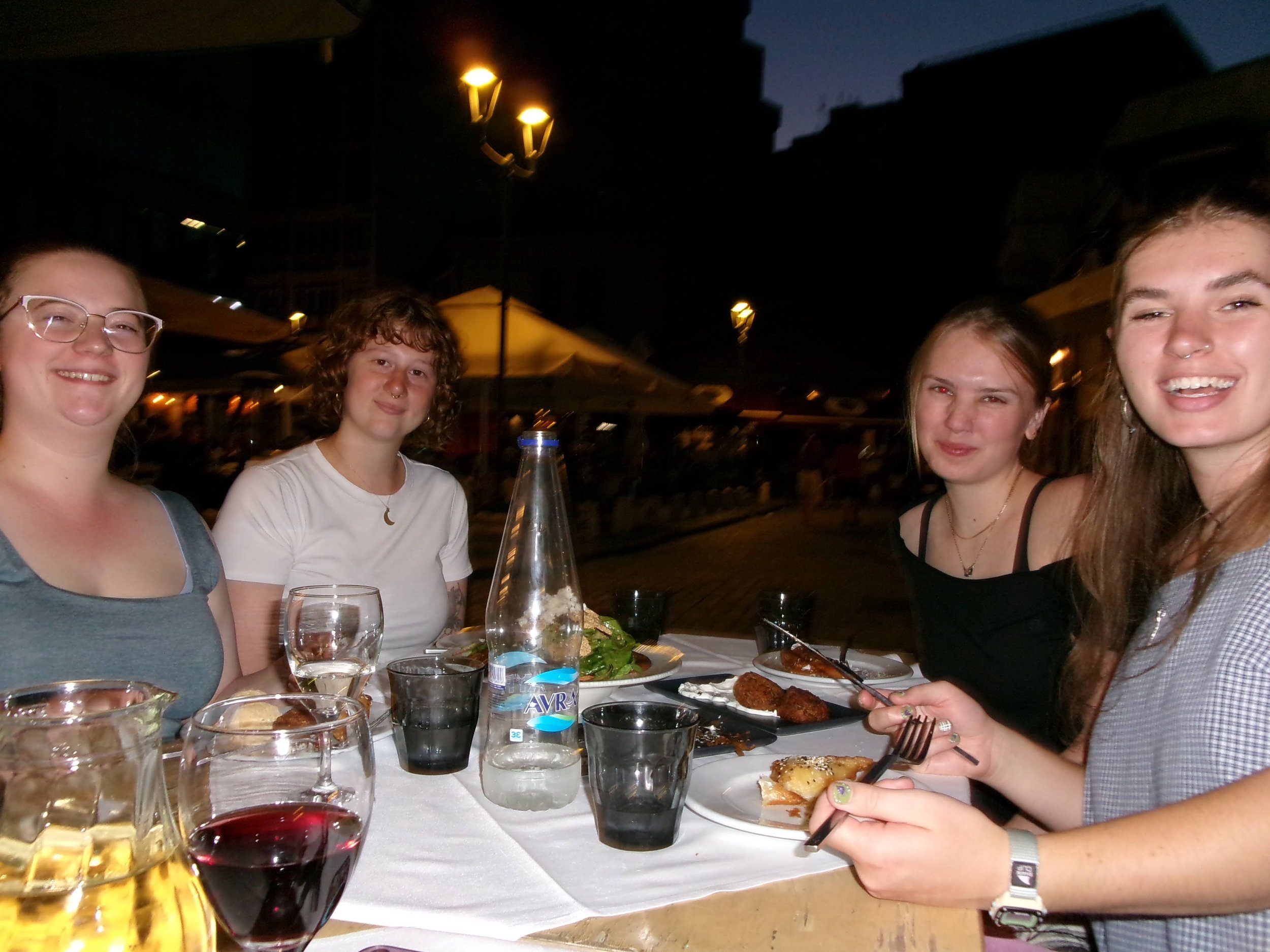
One day in the city we visited a restaurant where we learned to make dolmadakia out of grape leaves and rice and spanikopita with filo pastry and spinach.
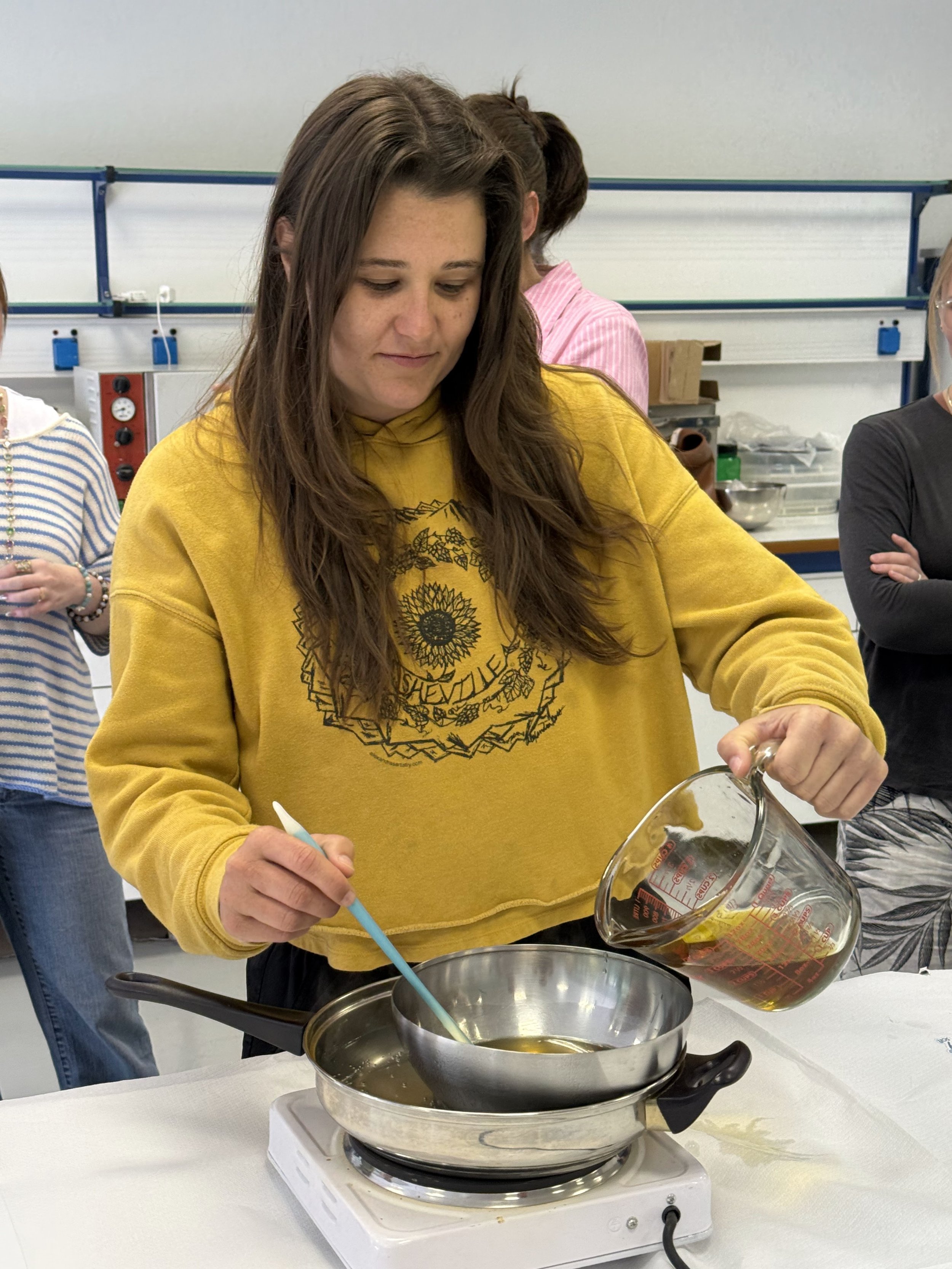
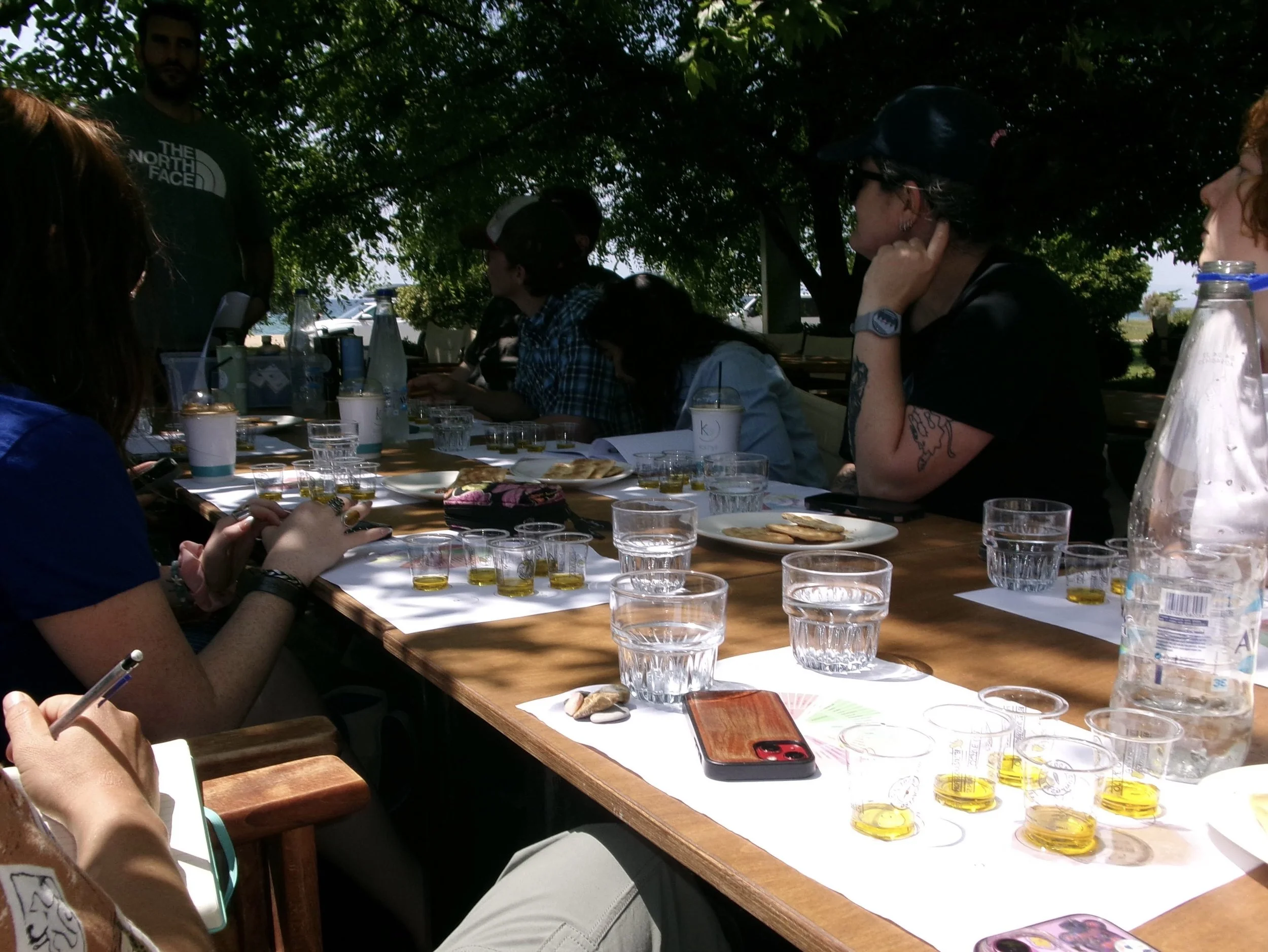
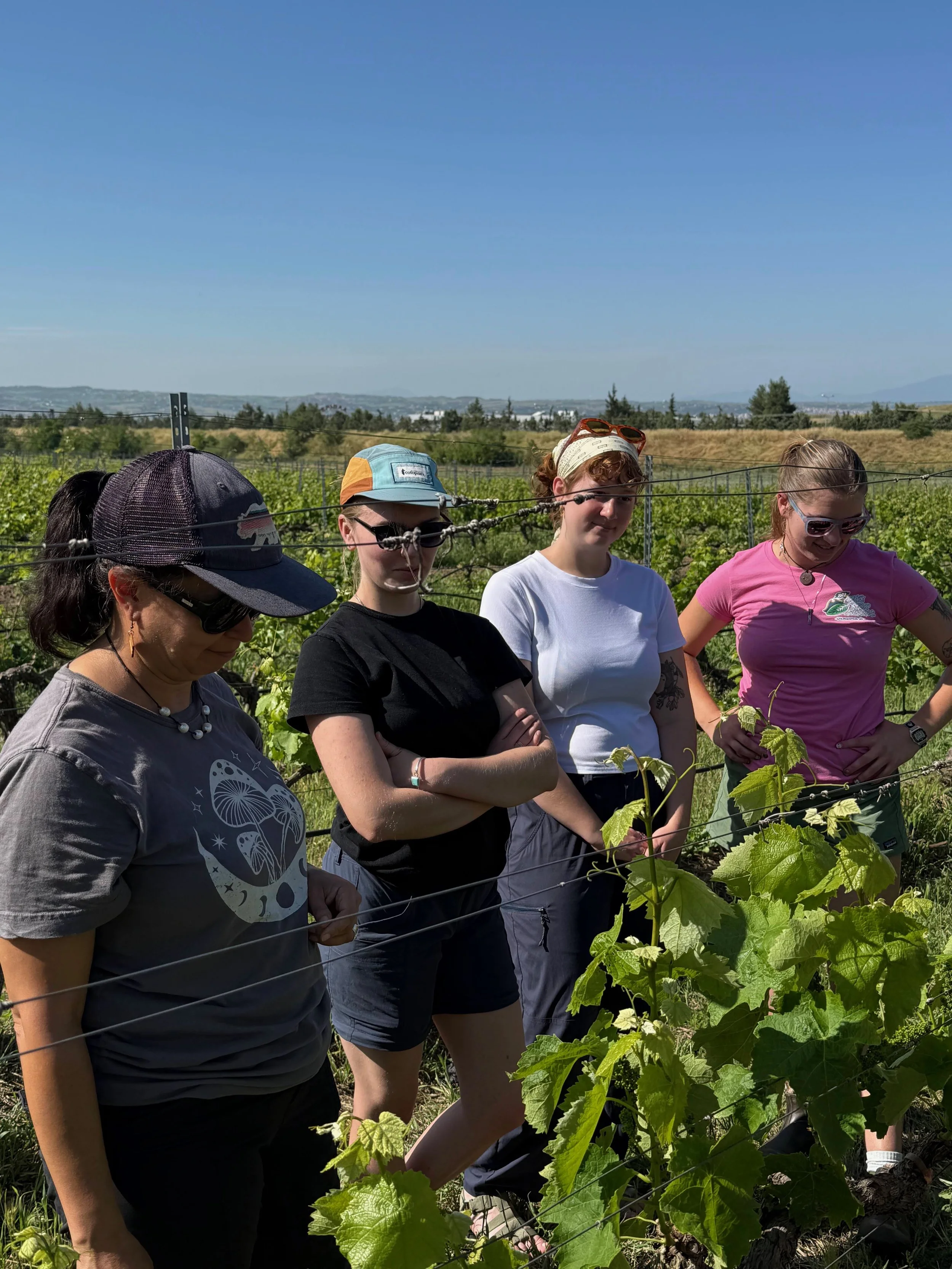
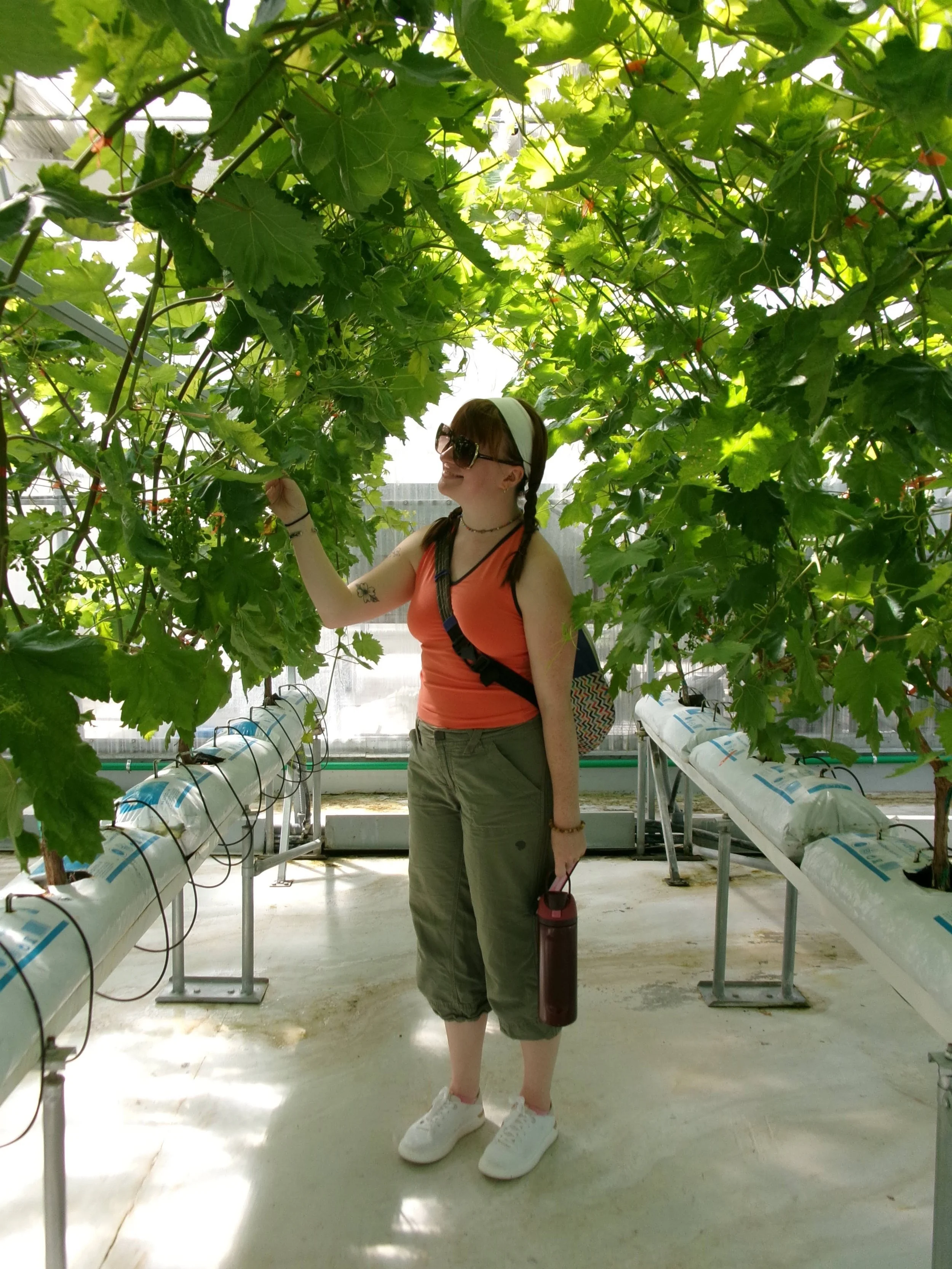
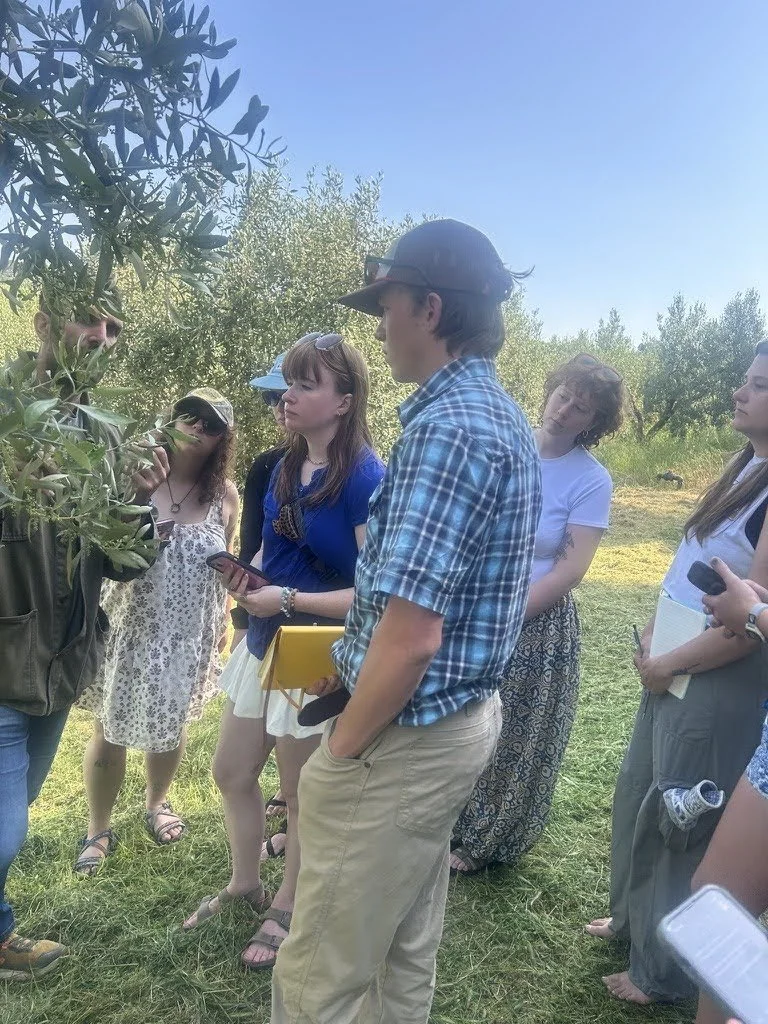
Towards the end of our time in Greece we took a two-day trip to Letochero, a town near the base of Mount Olympus, and stayed in a quirky hotel on the ocean.
“[Mount Olympus is] Greece's first national park, and also a huge hotspot for biodiversity of plants, microbes, animals, you name it,” Hove said.
We hiked with a guide from Ecogenia, which is the first youth climate action corps in Greece, to learn about the flora and fauna of the national park as well as the challenges to conservation they are facing. Later, we got to meet the young people involved with Ecogenia this year who will work on community education and environmental conservation.
Mount Olympus National Park is one of the most beautiful places I have ever been. We walked along the Enipeas River, which cascades through the gorge to the Aegean. It is fed by snowmelt and bright turquoise. None of us were quite brave enough to take a swim, but we all valiantly zipped off the bottoms of our shants (short/pants) and got numb calves from the icy water.
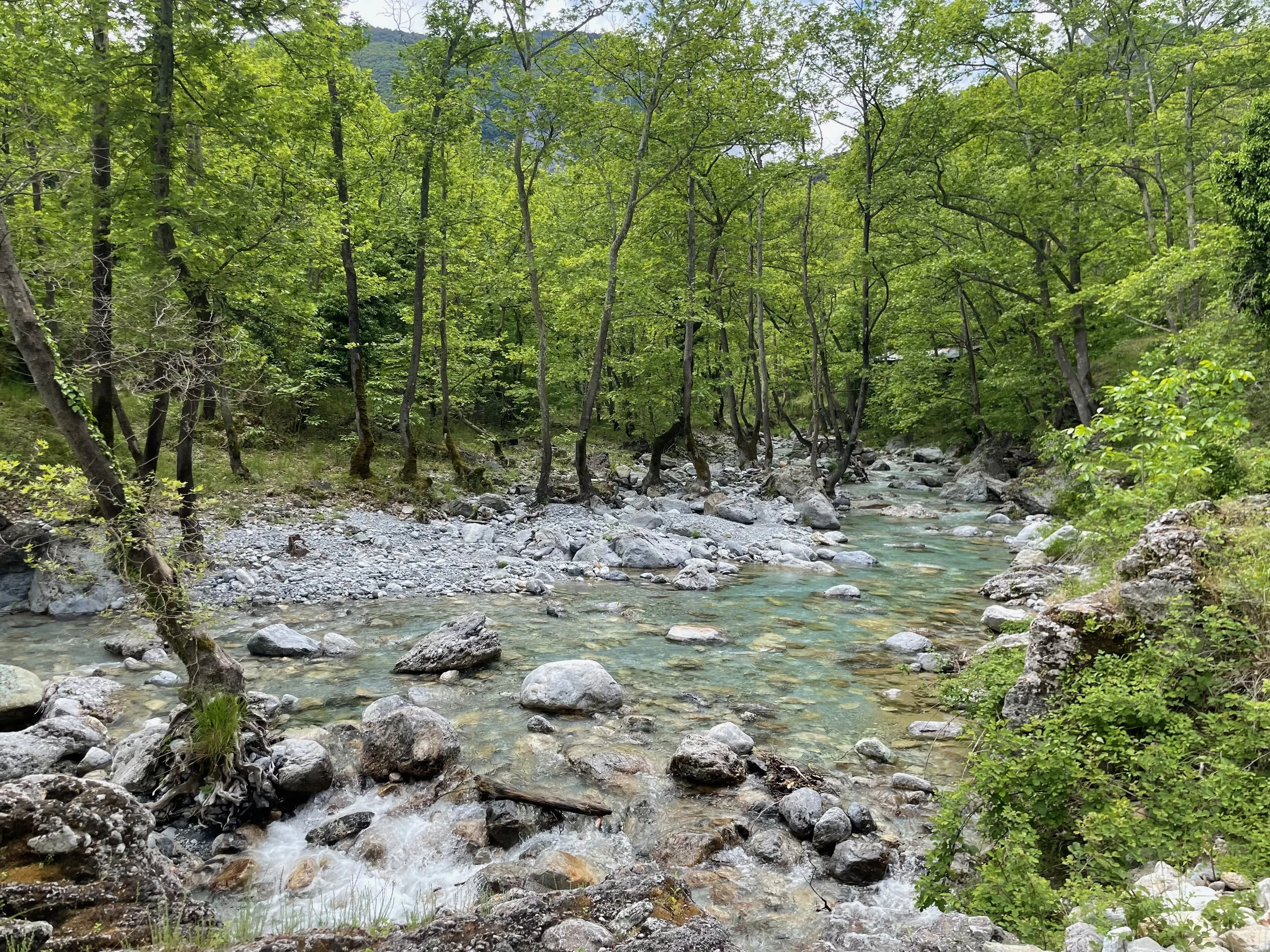
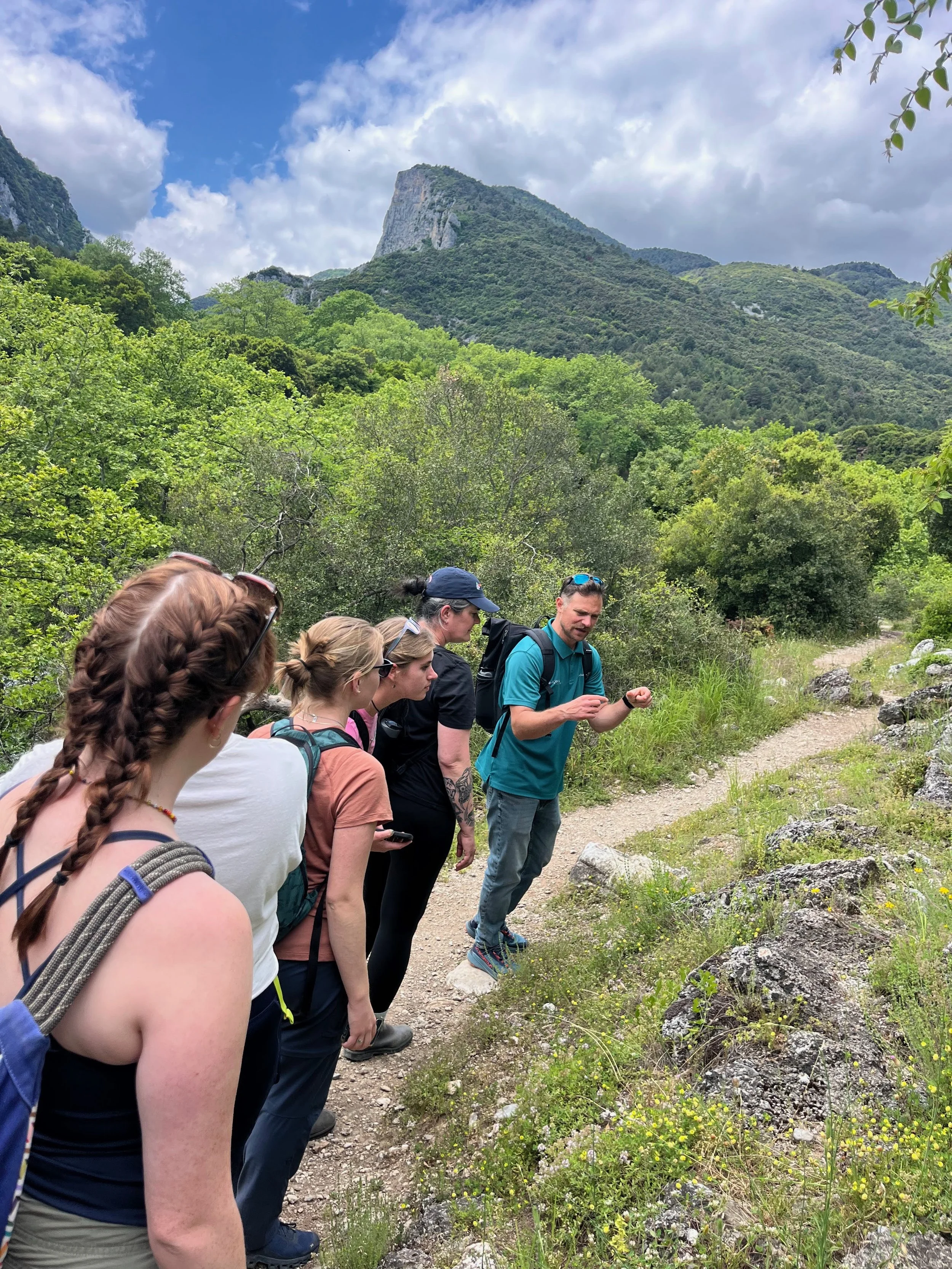
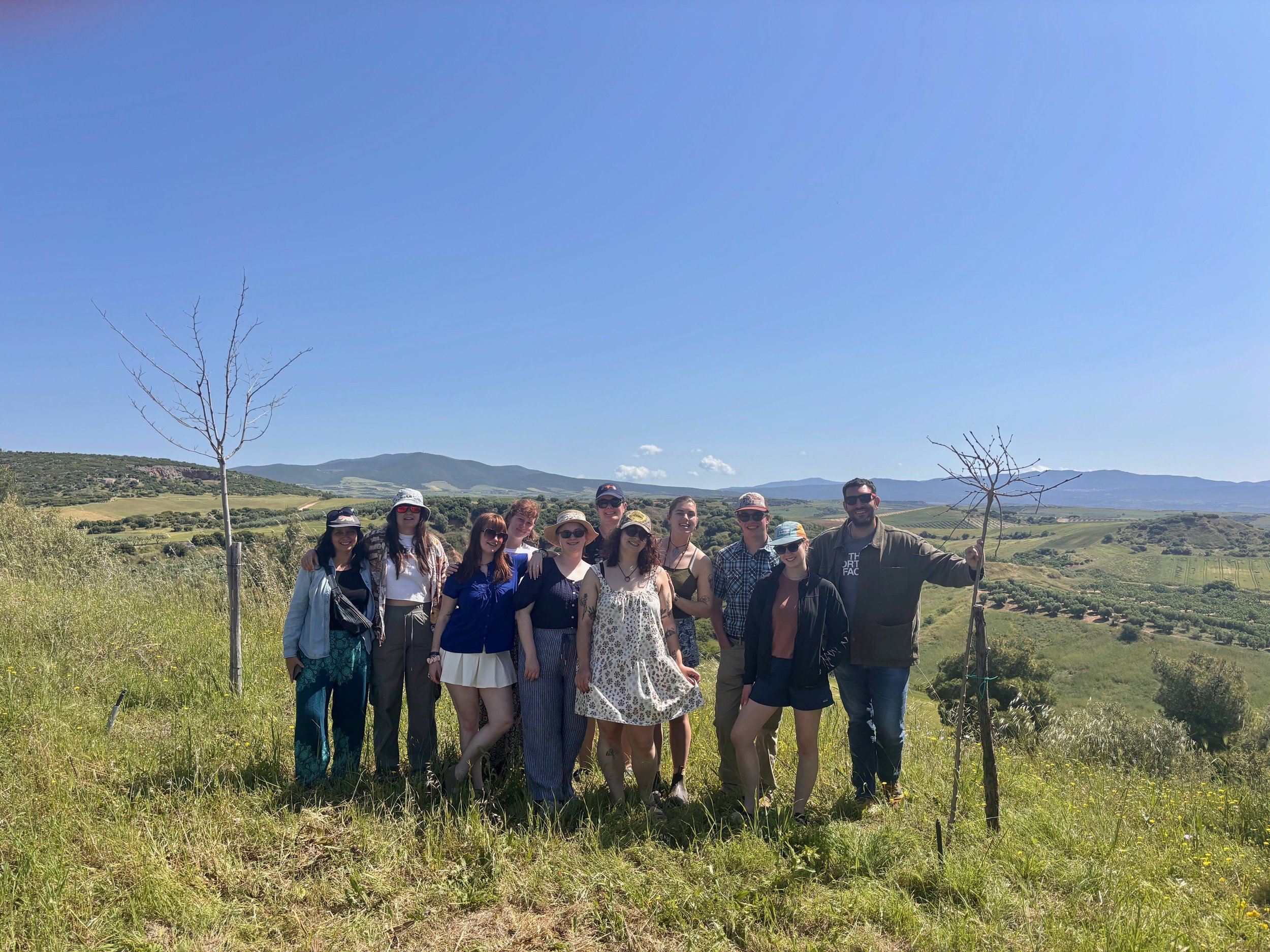
“It was great to have this opportunity to learn together in a place that's very physically beautiful and quite different from the Appalachians, but then also to connect with people on the ground who are thinking about conservation biology in their own social and cultural context” Hove said.
When asked about the importance of studying abroad, Hove said there is value in having the experience of engaging personally, academically and professionally outside of mainstream American culture. She considers study abroad as a way to develop students to be global citizens and have the chance to learn where English is not the first language.
“So many of the challenges that we're trying to tackle as a society right now, ranging from food security, climate change, infectious diseases, have their challenges that do not adhere to geographic national boundaries,” Hove said.
Faculty-led study aboard courses can provide a framework for students to engage deeply with a special topic and new place. One of my classmates on the trip to Greece was Taylor Knops, a senior in social work with a minor in psychology.
“I really loved that everything was planned and that we did it all together,” Knops said.
This format can work well for students like myself who want to stay abroad for the rest of their summer after the course ends as well as providing a structure for students who are newer to international travel.
“I think a study abroad course can be a great way to either delve deeper into a topic that you're already interested in or to potentially step slightly outside of your comfort zone,” Bodoh said. “I found it a very structured way to go abroad for the first time because it was my first time leaving the country.”
For anyone interested in taking a WorldWide course, which includes faculty-led study abroad courses and term classes, the deadline to apply is October 9 for spring 2027. Upcoming study abroad courses include “Plants, People and Place in Senegal” and “Growing Resilience: Care Farming in the Netherlands.”
The perspective gained from taking the time to travel and learn from people whose experiences differ from our own is invaluable to an education and our work as global citizens. If you have the opportunity to participate in a faculty-led study abroad course, “Take it,” Knops said.