
Students Respond to “What is Democracy?” Film Screening
Elliott Hove & Ryleigh Johnson | Sept. 8, 2026
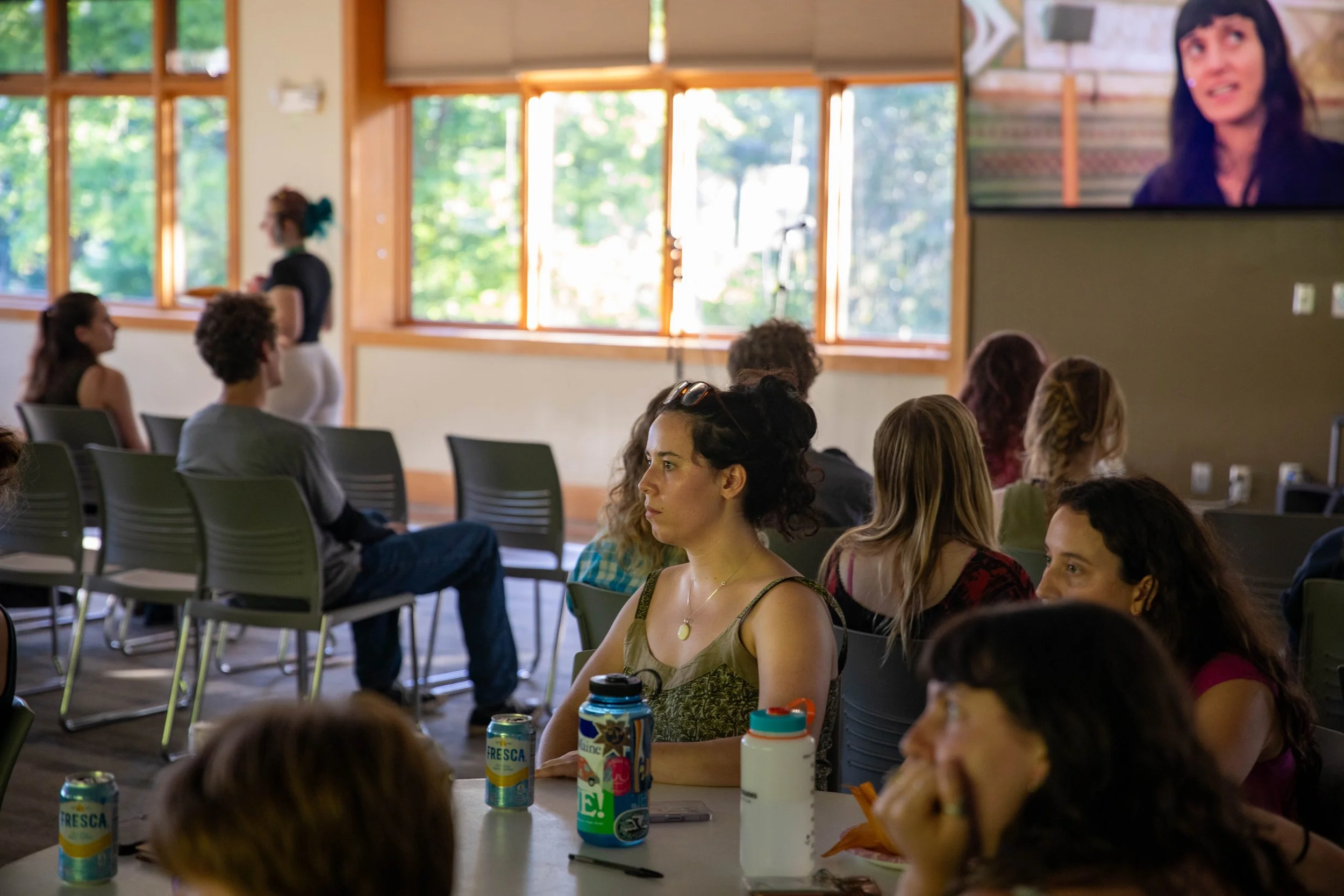
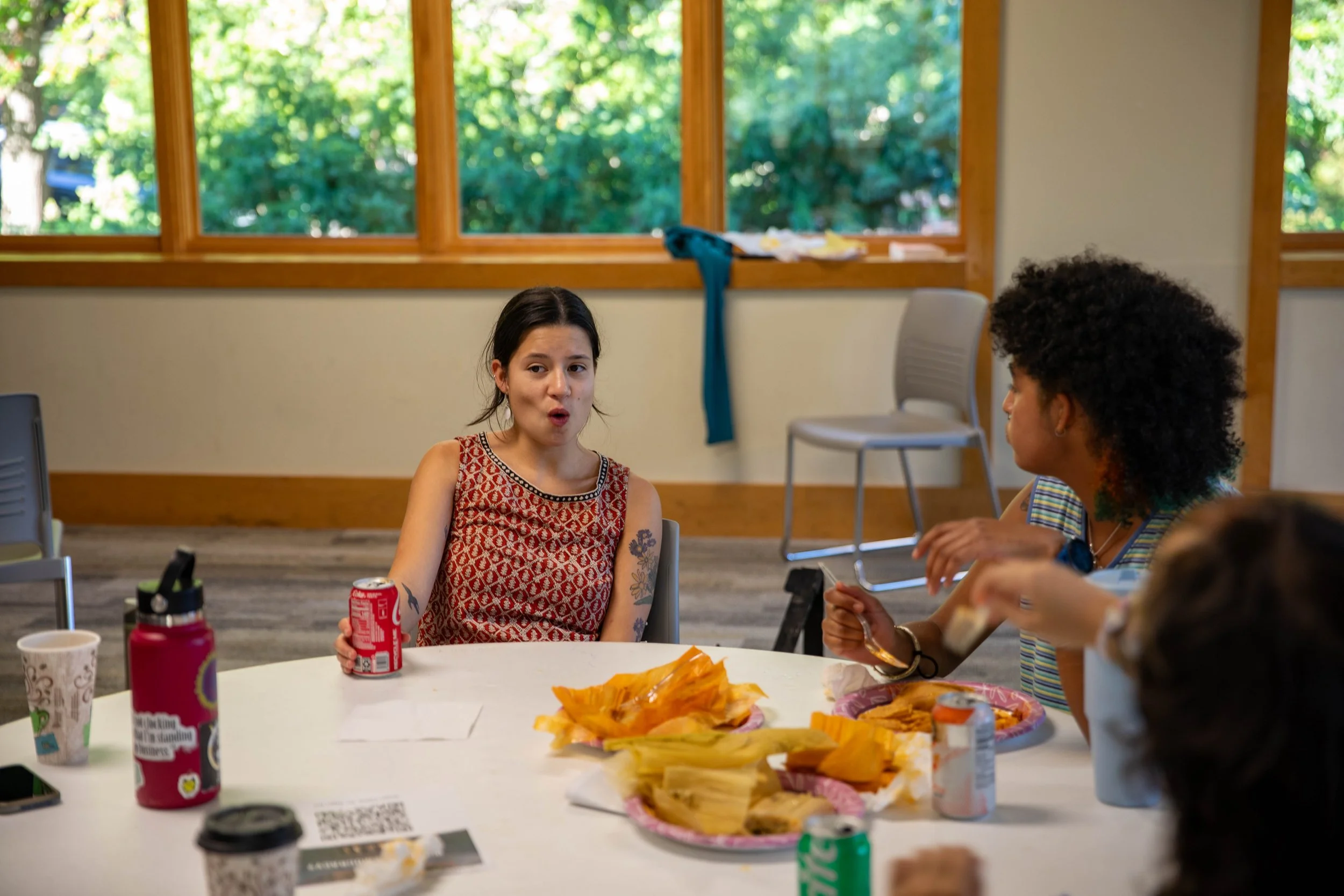
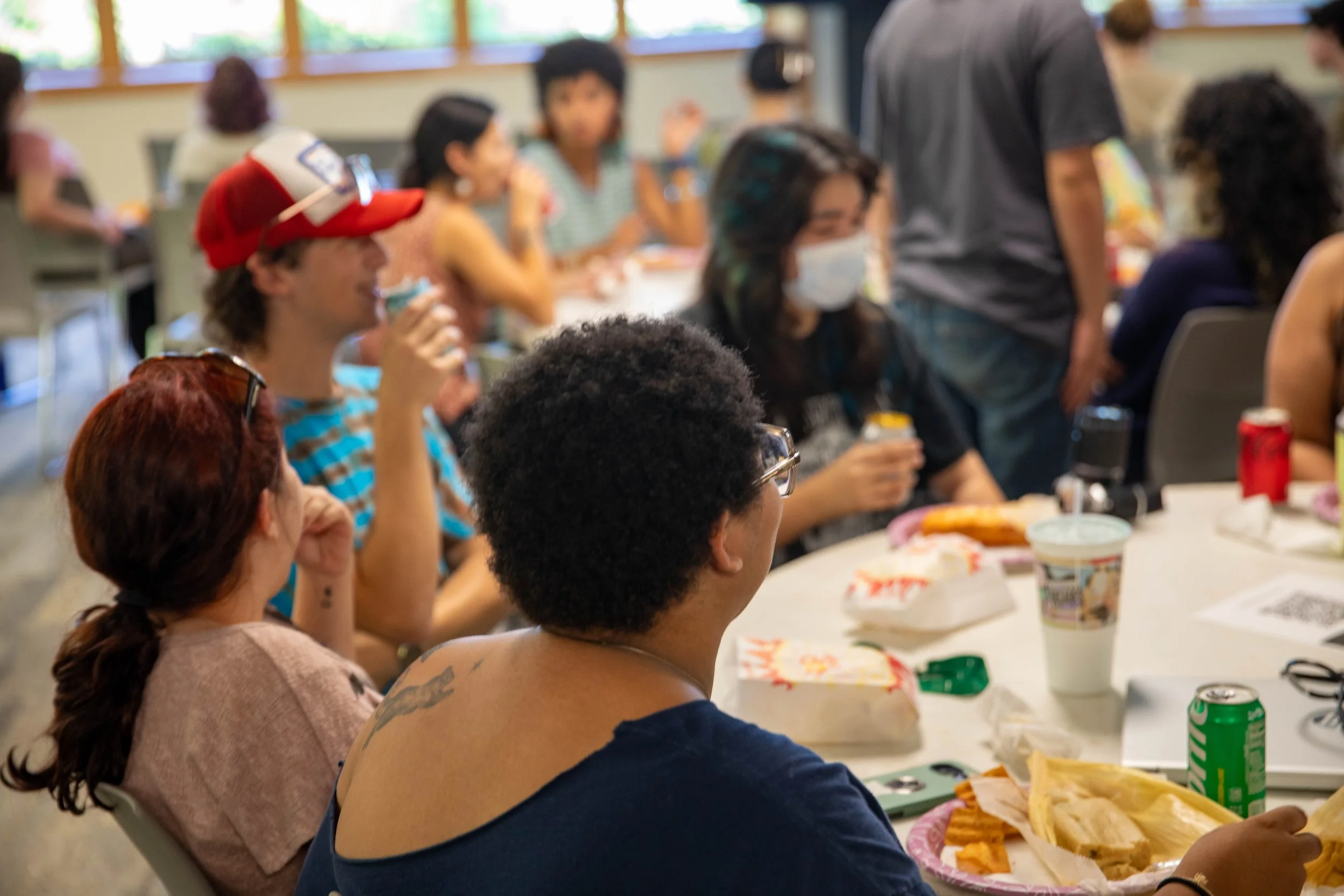
Students watch the documentary “What is Democracy?” in Canon Lounge on Sept. 3, 2026 at Warren Wilson College (WWC) in Swannanoa, N.C. (WWC/Emily Cobb)
On the evenings of Sept. 1 and 3, Warren Wilson College’s (WWC) Democracy in Action (DIA) group held screenings of the film, “What is Democracy?” The documentary is based on the book, “Democracy Might Not Exist, but We’ll Miss it When it’s Gone,” written by Astra Taylor, a Canadian-American political activist. Taylor wrestles with defining democracy in the modern age through returning to democracy’s supposed origins in Greece, considering the history of political struggles to uphold democracy and reflecting on how everyday people and scholars think about the political system.
The DIA initiative, headed by sociology professor Susan Ortiz, has worked to distribute Taylor’s book, create reading groups and organize the film screenings with the goal of inciting dialogue on campus about the nature of democracy.
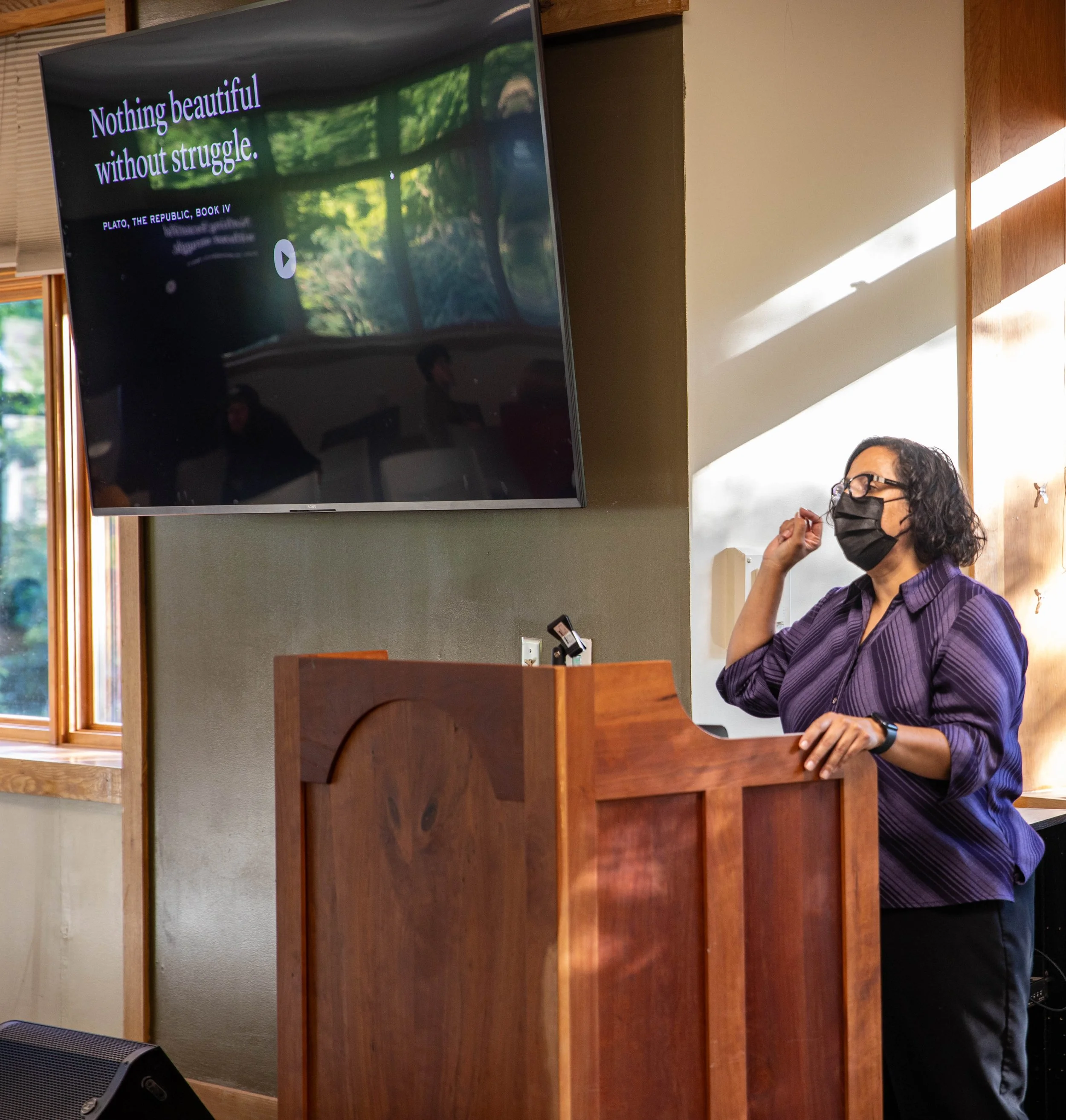
Sociology professor and head of the Democracy in Action (DIA) initiative Susan Ortiz gives opening remarks before a film screening on Sept. 3, 2026 at Warren Wilson College (WWC) in Swannanoa, N.C. (WWC/Emily Cobb)
Another means of promoting thoughtful reflection and engagement with democracy has been the initiative’s partnership with the campus’ Student Government Association (SGA). SGA co-president and member of the DIA committee Lauren Holding was in attendance at the screening on Thursday to promote participation in the SGA, which she considers the greatest means of democratic engagement at WWC for students. Holding has a position on the DIA committee behind the initiative.
“I just want to make sure that everybody is heard, and I want to make sure that we as SGA elected representatives are hearing as many voices as possible,” Holding said. “Come to us if you've got any concerns, if you need help, we can advocate for you…The SGA holds a lot of weight.”
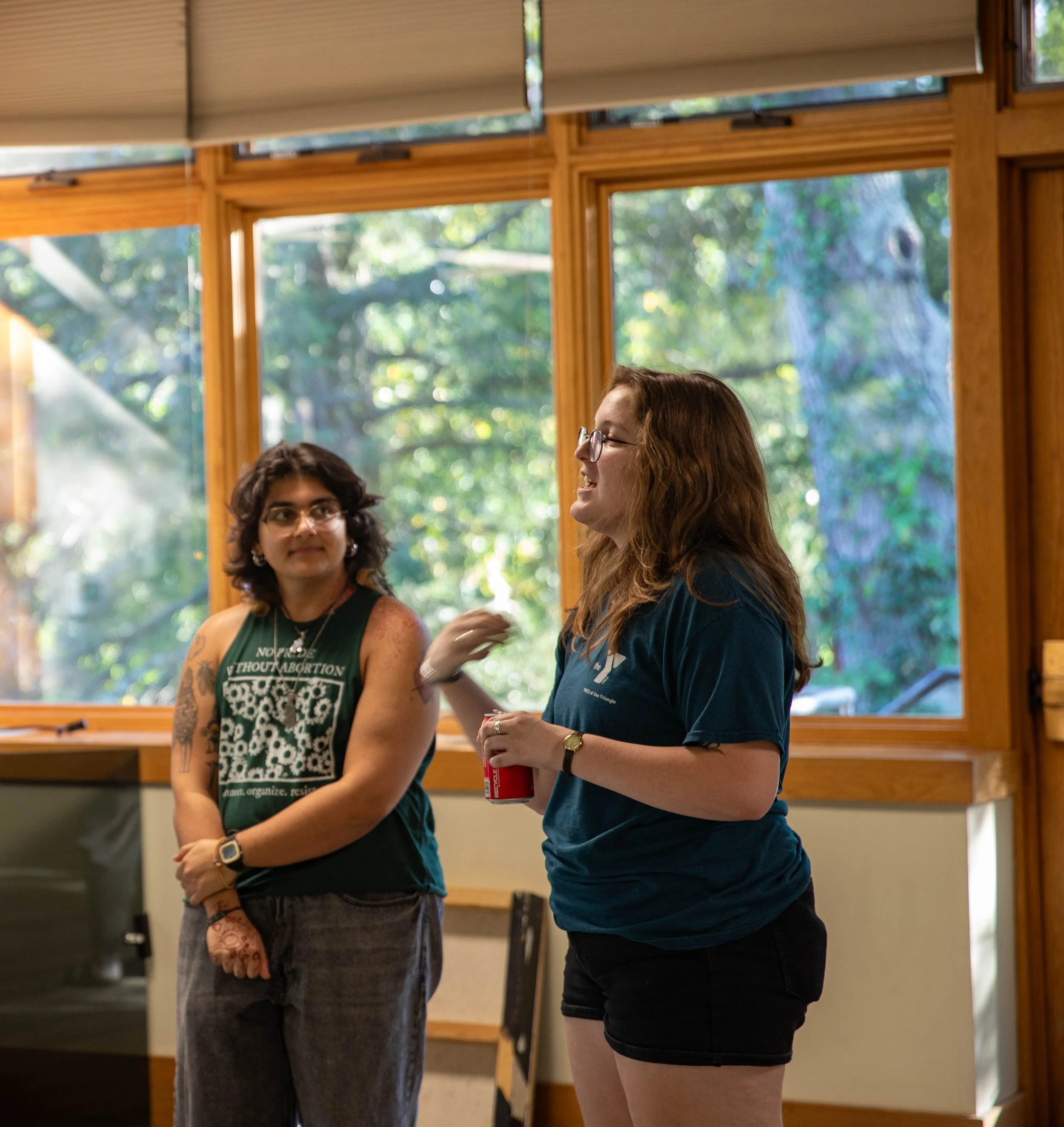
Student Government Association co-president Lauren Holding (right) speaks at a film screening on Sept. 3, 2026 in Canon Lounge at Warren Wilson College (WWC) in Swannanoa, N.C. (WWC/Emily Cobb)
Beyond encouraging WWC students to participate in democratic processes on campus, Holding highlighted the real impact that these structures can have when utilized by students.
“Last year, [Resident Assistants] came to us asking for CPR training and some other things to help them feel better about their jobs,” Holding said. “[SGA] went to the people that we thought would be able to help them best, and that was something that turned out really well. It's one of my proudest moments.”
Holding sees these accomplishments as evidence of the efficacy of democratic institutions like student governance. She stressed that while SGA holds power in WWC’s political sphere, it is ultimately a tool of the students to have a “seat at the table” (as Taylor’s film says) in what happens on campus.
“We’ve got lots of good ideas [and] plans, but if anybody has any ideas or things that they want to see on campus, feel free to come to a town hall, make your voice known,” said Holding. “We have a public comment section at the end of most of the town hall meetings, and always feel free to stop us in the street”.
Some of Holding’s peers at WWC, like senior Mandana Owzar, left the film with more complicated takeaways, mirroring the film’s own wrestling with the ever-shifting meanings of democracy across time and different societies.
“I feel like the film kind of cements this idea of, ‘What is true democracy?’” Owzar said. “It's so up in the air, and it means a bunch of things to a bunch of different people.”
For Owzar, the moment in the documentary that stuck out the most was not an interview with a scholar, but one of Taylor’s many conversations with everyday people.
“One of the most powerful scenes was the gentleman who [had been] incarcerated and talked about [how] he will never get to vote for his own rights,” Owzar said. “I think that's very emblematic of how democracy as we know it is so exclusionary, and not really democracy.”
Mictehuatl Overla, another senior, raised concerns about the film's overarching framing of democracy, including what historical models of democracy Taylor chose to highlight.
“Everything was about what was Plato's idea of democracy,” Overla said. “Something that I was thinking about was, ‘Why do I care about Plato?’ I believe that the Iroquois actually had a similar system to democracy in their government, and it was incredibly influential over the American government. So when I was looking at the critiques that they were making of the American system and how to better it in relation to this Grecian practice, I was like, ‘Well, what about these indigenous practices that also had an effect on our democracy?’”
Overla went on to describe what they would have liked to see more of from the film, as well as who they would like to see included in the conversation of defining democracy.
“I think I would love to see expansion on marginalized and criminalized views of democracy and how those people, who have been so wronged by this system, might want to either better it or change it…I don't feel like you know this Greek philosophy academia type is the only way of having… knowledge,” Overla said.
The student body at WWC is already actively engaged in the campus discussion of democracy, with a myriad of nuanced and diverse perspectives being contributed to the topic. Students who are interested in joining the conversation may consider joining a reading group of Taylor’s book on campus, held from Sept. 14-18, or attending the talk Taylor will be giving at WWC on Wednesday, Sept. 9 at 7 p.m. in Canon Lounge to discuss her book and student perspectives on democracy. Students interested in SGA are invited to attend the next campus town hall on Thursday, Sept. 17 in Sage Cafe at 6 p.m.