

Students Feel Frustrated, Unheard About Mold Issues At WWC
Mallory Wallace-Usry | Nov. 18, 2025
As with many small liberal arts colleges, some buildings on the Warren Wilson College (WWC) campus are dated and in need of maintenance. While some challenges that come with historic buildings are tolerable, the recent pattern of students throughout campus coming down with severe, unexplained symptoms related to the presence of mold in multiple buildings has become a cause for concern among the student body.
Students have noticed that certain areas of campus, such as the ceiling of Gladfelter Dining Hall, appear to be infested by mold. Many of these areas have yet to be evaluated professionally. While mold has been a problem in years past, flooding from Hurricane Helene in September of 2024 has appeared to have exacerbated the issue. According to the CDC, excess moisture and inadequate airflow indoors create the perfect environment for mold to grow. So far, the administration has not widely communicated information to students about what is being done to remediate these issues.
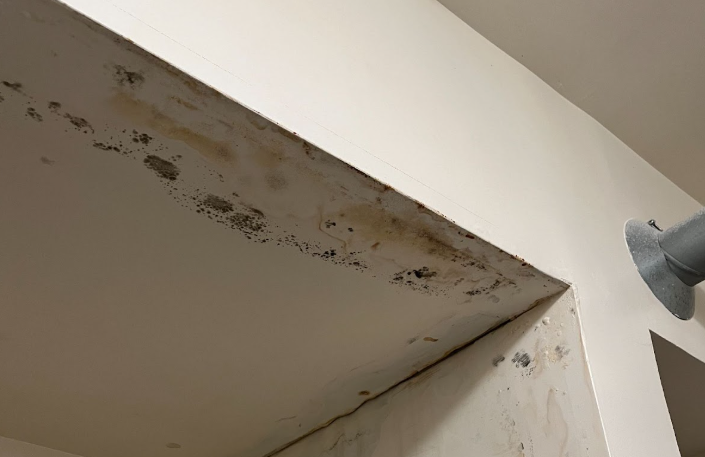
Mold pictured in Villages B dormitory bathroom in Swannanoa, N.C. (Echo/Mallory Wallace-Usry).
Grace Kalinowski, a junior Garden Crew member, has unofficially become the voice of concerned students on campus through their self-advocacy. After moving back to WWC this August, they developed a cough and eventually COVID-19. Even after recovering from COVID-19, their respiratory issues remained.
“I started noticing all of my friends were developing the same symptoms, as well as a lot of people living in different buildings on campus,” Kalinowski said. “I [got] worried that it could be mold-related.”
Kalinowski’s suspicions deepened as more mold-related issues arose on campus, such as an incident in September when nearly all of the Queer Resource Center (QRC) Crew could not work due to suspected poisoning from mold in the Sunderland basement where the QRC is housed.
“I heard [black mold] tossed around last year, but never as a really serious issue,” Kalinowski said. “This year, I just kept hearing it, and I [thought], ‘This is insane. Someone needs to do something.’ So I put out a survey asking people if they were having symptoms and if they had pictures of mold on campus.”
That survey currently has around 25 responses with photos of mold growth in many residential buildings on campus, along with Gladfelter Dining Hall’s kitchen. From ceiling tiles to bathroom drains, students have a multitude of photo evidence of mold in their living spaces.
Atlas Brackett, a first-year student living in the Sunderland basement, a floor that is primarily disabled and immunocompromised, has faced his fair share of mold-related problems.
“There was a square right outside my door that had a full-on mold spot on it,” Brackett said. “And [facilities’] solution to that was just to take the square out. So now there's just, you know, a missing tile in the ceiling.”
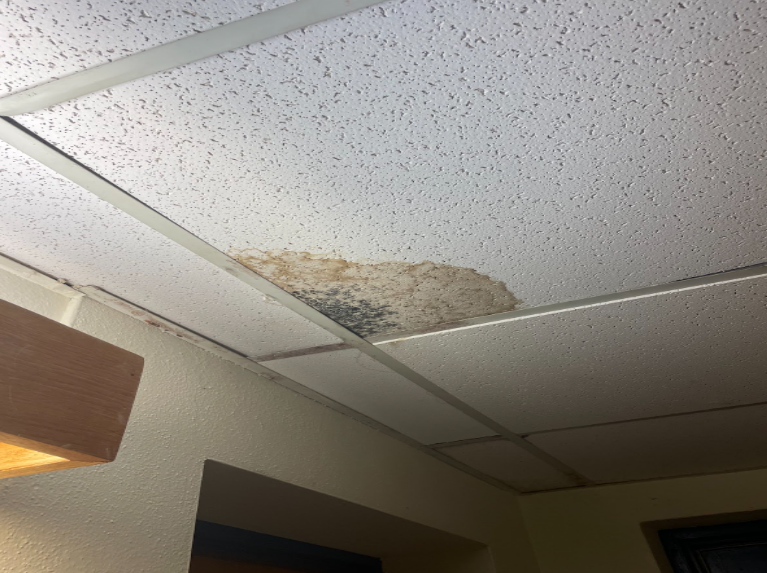
Mold pictured in Sunderland basement dormitory bathroom in Swannanoa, N.C. (Mallory Wallace-Usry/Echo).
The general consensus among WWC students seems to be that they are not being heard by the school administration when it comes to residential problems, and that if the school is taking action to remediate mold-related issues, they are not sufficiently informing the student body of these efforts.
“I've talked to my RA [Resident Assistant] a lot about [the mold],” Brackett said. “We’ve mentioned it [to facilities] many times. It's the whole reason the tile got taken out, because they actually came down here and did that. But the person that was living next to me had actual mold in their room and ended up just having to move instead of the problem being fixed.”
Students report that the mold is not just unsightly; it has also seriously negatively affected their health.
“I had nausea, vomiting, headaches, disorientation, I couldn't sleep, or I'd sleep too much,” Brackett said. “I had [something] going on that I thought was strep, and I went [to the doctor]. It wasn’t strep… [but] that lasted a few weeks.”
According to Brackett, his doctor agreed that the symptoms could be coming from the mold in his dorm. Air purifiers inside and outside of his room have helped lessen the symptoms, but they remain a temporary solution.
Allison Lienemann, a senior living in Villages B, has dealt with mold-related problems since her sophomore year.
“There was visible mold in the [Villages] bathroom when we moved in for summer housing in May,” Lienemann said. “We had a work order put in over the summer that fell through. We put another one in at the start of this semester that was not promptly addressed. [Eventually] mold testers and First On Site came out to start the remediation and found ‘very high levels of mold.’ They sealed off the bathroom and worked for about two weeks, but had to restart the process after the leak opened again. During this [time], I moved into the Stephenson basement, which also had a large mold spot in the bathroom.”
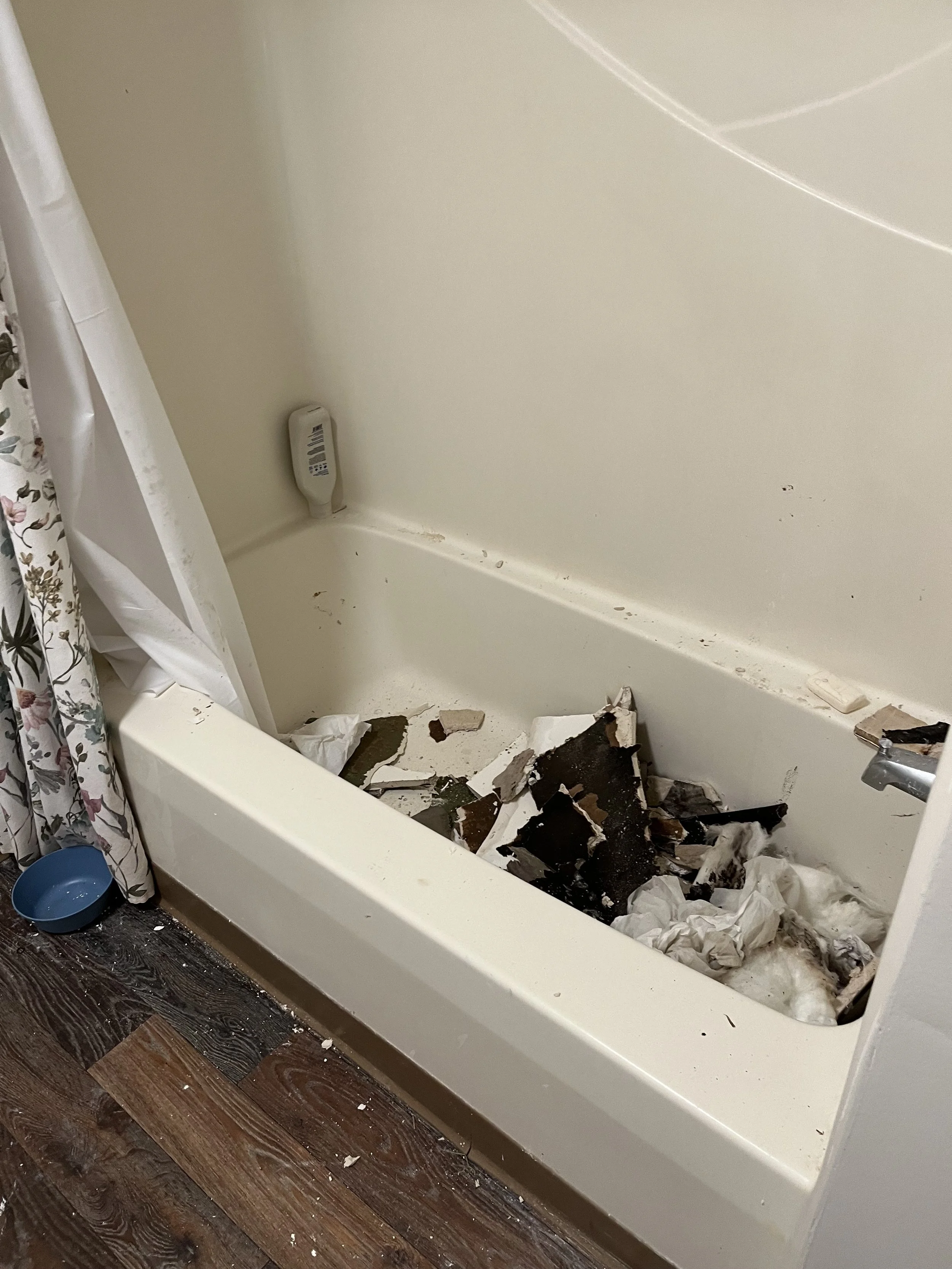

Aside from the inconvenience of maintenance work, Lienemann and her roommates suffered physical symptoms from the mold in their living spaces.
“[I had] intense brain fog, fatigue, muscle pain, weakness, headaches, intense mood swings, dizziness and a cough,” Lienemann said. “My roommates had similar symptoms that we had been experiencing for a while, which were getting worse. During the worst of it, I missed classes. I continue to struggle with brain fog and fatigue that I don't have when I’m not living in my suite.”
This is not the first time Lienemann has become ill from mold on campus.
“I had mold poisoning in Dorland at the end of my sophomore year, which manifested a lot more physically, and I was put on steroids for 2 weeks,” Lienemann said. “I still feel sick all the time. I know so many people who are sick and their issues are not being addressed, especially with non-visible mold.”
Despite this, Lienemann believes that facilities are doing the best they can with the resources they have.
“This is an institutional problem that requires more money and resources than we currently have on campus,” Lienemann said.
Fixing large issues like mold cannot be done instantly, but after months of students getting sick and dorms being vacated, the lack of acknowledgement from the administration to the larger campus community is disheartening to the WWC student body.
Kalinowski, frustrated with the lack of recognition from administrators, hopes their survey results will incite action towards fixing the mold issue.
“I compiled a document with all of my responses, all of the pictures I had of mold on campus, and there are some crazy ones,” Kalinowski said. “I wrote an email and I sent it to a bunch of different people to cover all my bases: Gilbert Hinga, vice president and dean of student engagement, the president's office, all the people in housing. Gilbert responded right before fall break, and he said, ‘This is very urgent, and we will figure this out.’”
Kalinowski was able to secure a meeting with Hinga, who is the vice president of student engagement and dean of students, along with Ian Smith, executive director of facilities and operations. They left that meeting with some clarity about the administration’s stance, but not many concrete answers to when the mold issues will be remedied. They continue to advocate for a solution to the problem, but have recently felt discouraged.
“I think there’s a point in any attempt at creating change where you kind of hit a wall,” Kalinowski said. “I think I'm hitting that wall a little bit, because there's only so much that I can do, and a lot of it is in the hands of facilities.”
As much as students would like there to be immediate change, WWC outsources maintenance work for certain problems on campus, like residential appliance repair and mold remediation, to third-party contractors. That means that there is no set timeline for when these issues might be fixed.
For now, Kalinowski says that there are a few things that WWC students can do to make their voices heard and work towards a solution.
“I think the most important thing to stress here is that we have to keep applying pressure,” Kalinowski said. “[The student body] is working with facilities. We are working with administration, even though it might seem like we're butting heads. We have to apply pressure in a way that is productive.”
Kalinowski encouraged their fellow students to inform their RA if they discover mold in their dorms, along with asking their RA to submit work orders and to email facilities with the word “mold” in the subject line in order to create a record of the issue. Additionally, they emphasized the importance of sharing and keeping photo proof of the infestation, and reaching out to the Housing department at WWC via email if students feel their concerns are not being addressed adequately.