

The Lost Art of Storytelling
Solie Lawson | March 3, 2026
Storytelling is a medium that feels lost in this day and age, with the turn from more intricate entertainment to quick buzzes of dopamine. It feels that society has detached from connection through full and fulfilling storytelling, and instead turned to what brings immediate gratification. Modern culture has forgotten to be slow in a fast-paced society, and a consequence is forgetting how to connect, according to Fast Culture, Slow Change: The Paradox of Digital Society | by Giles Crouch. What is connection without intentionality and sharing yourself with another?
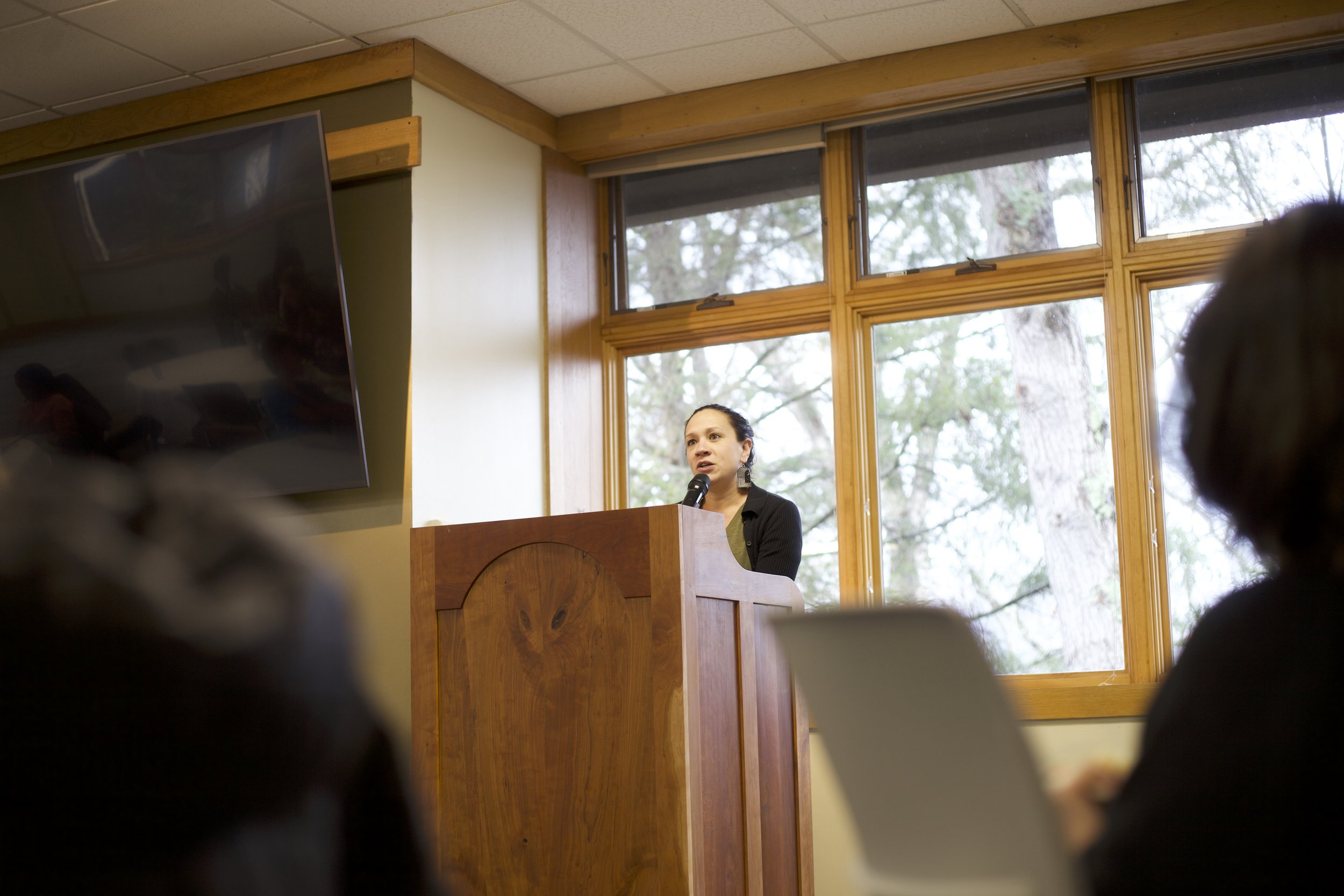
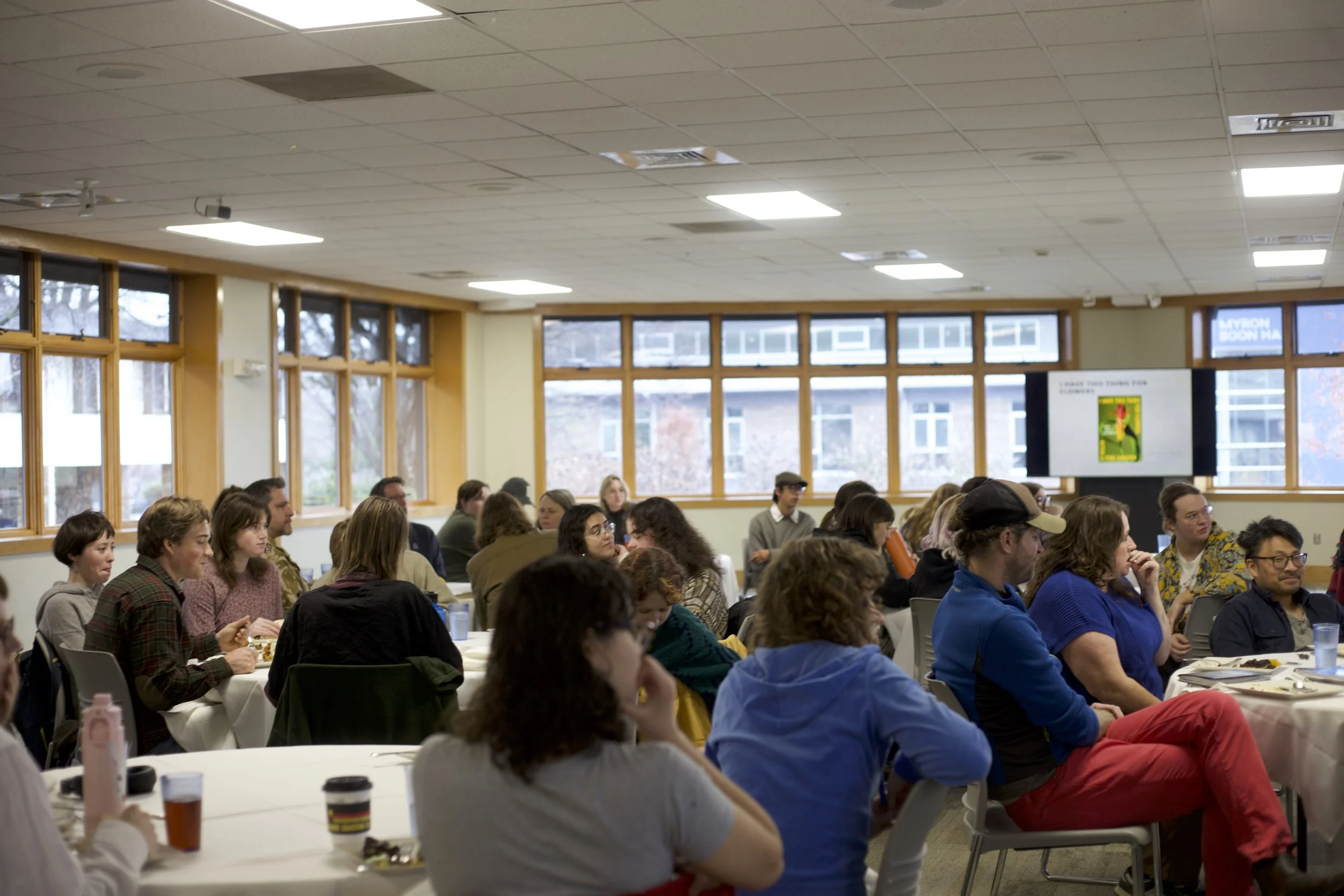
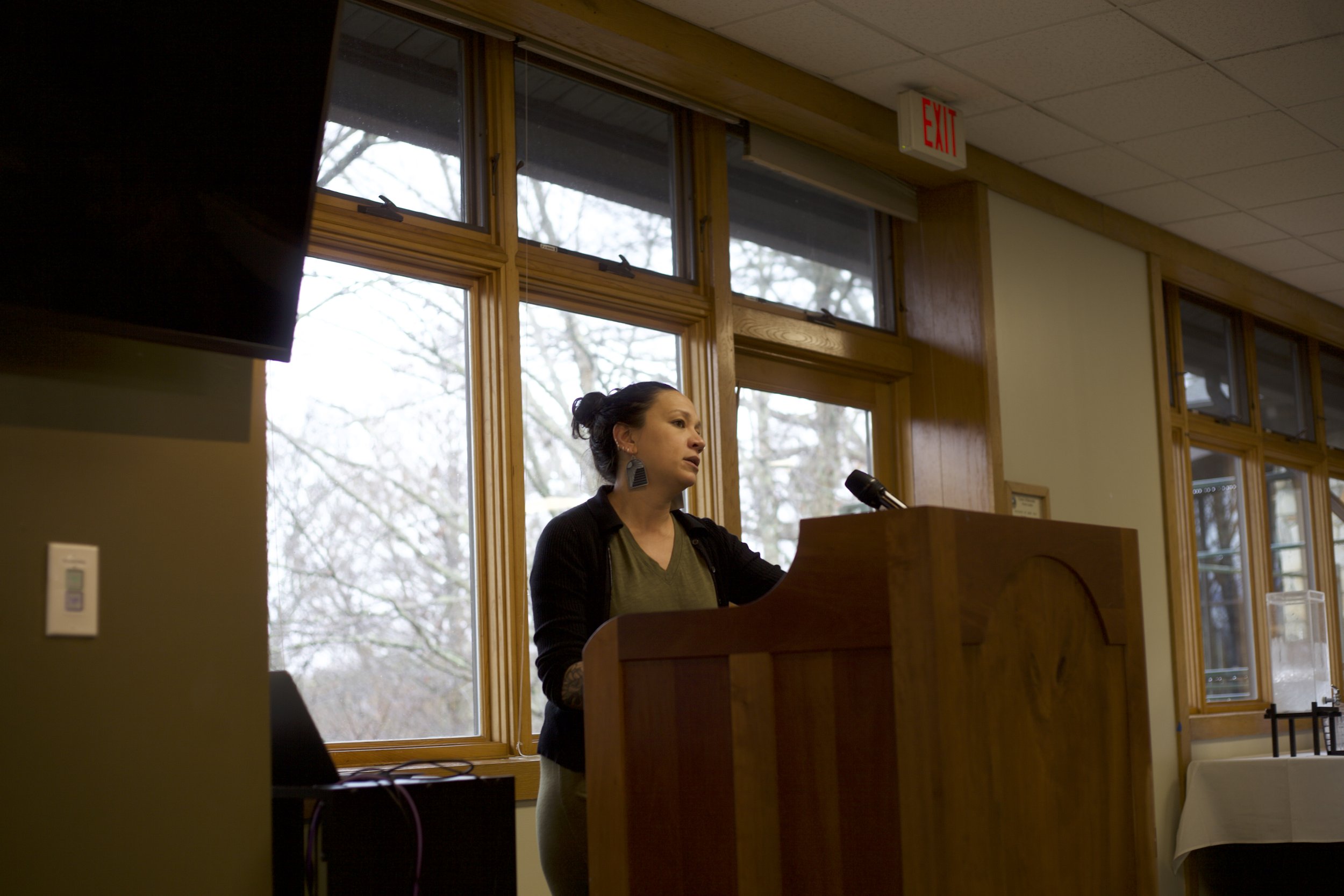
Alysia Sawchyn, the assistant professor of creative writing at Warren Wilson College (WWC), recently held a luncheon discussing her upcoming book, “I Have This Thing for Flowers.” Events such as this are highly important for the revitalization of storytelling, creating a space where students can listen to a writer share their work and be inspired about their own voice. In this reading, Sawchyn noted the importance of her research and how it reshaped her work.
“The book pulls from a lot of different fields in that the premise is basically each chapter looks at a person under a moniker and a plant that I've grown in my garden,” Sawchyn said. “Apart from the fact that I'm a casual gardener, I do not have a botany background, or [in] visual arts, herbalism, mythology, textiles or any of the fields, which I then proceeded to have to learn about in order to write about them.”
Sawchyn mentions a story she read in her childhood, titled “Frederick the Mouse.” In this book, all of Frederick's mouse friends are preparing for the winter by collecting food, while Frederick sits collecting the sun’s rays. His friends do not understand what he is doing until the end of the book, when they ask him out of curiosity why he is choosing to sit in the sun and not help. They choose to join him and then understand his perspective and choice. This anecdote exemplifies the importance of storytelling because without his explanation, Frederick’s friends would not understand or experience what he had.
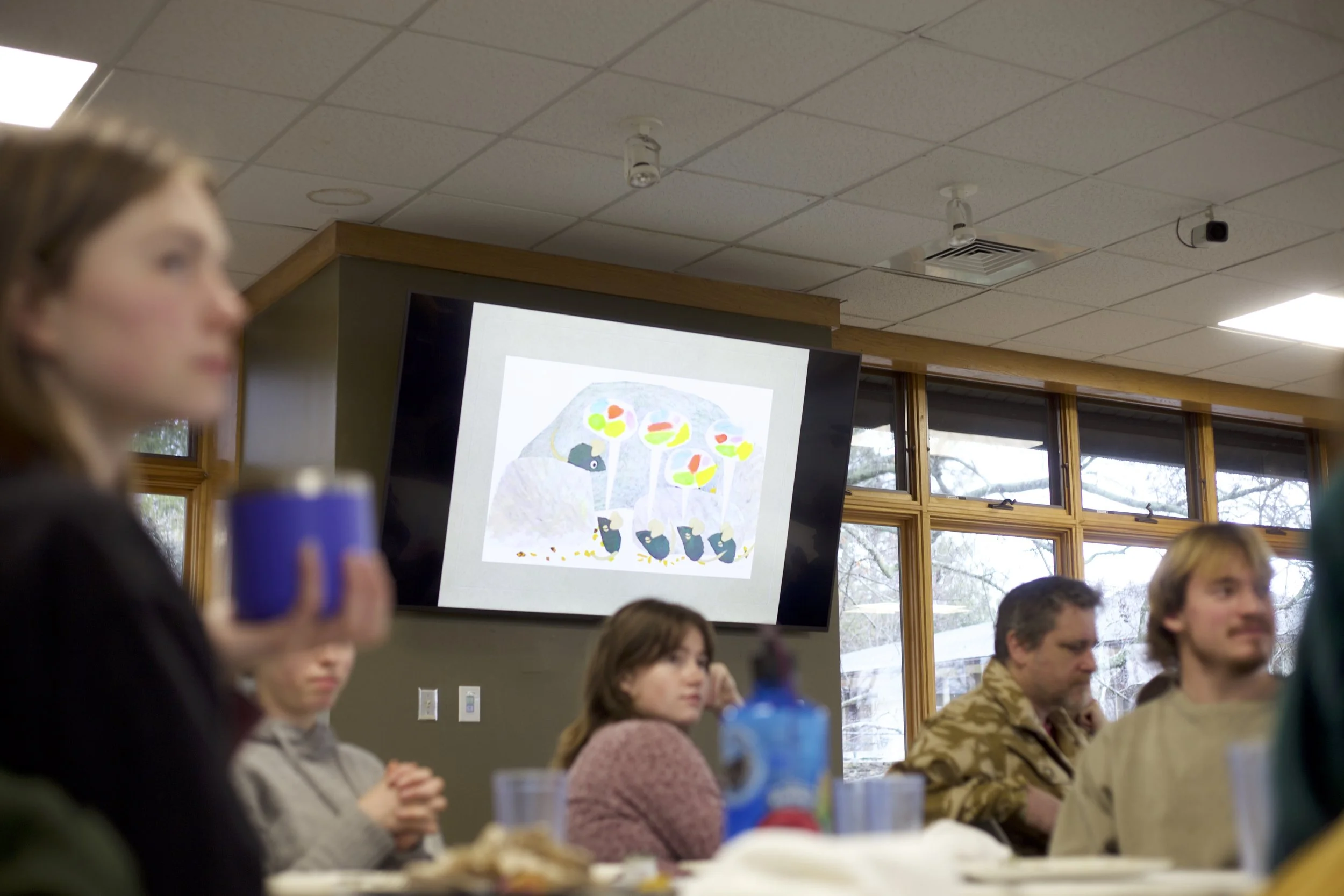
Photo from “Frederick the Mouse” at the Nielsen Luncheon in Canon Lounge at Warren Wilson College, on Feb 26, 2026 in Swannanoa, N.C. (Echo/Emma Taylor McCallum)
Rita Banerjee, who became the director of the Master of Fine Arts (MFA) program in 2023 and is an assistant professor of creative writing at WWC, has a complex perception of storytelling. She defines it in many ways, but summarizes it as conceptual ideas put into a narrative form that tells a story and inspires others. She noted the strand of storytelling through commercial media, less based on connection and mainly based on consumerism by the people.
“The bigger question is if we're surrounded by stories through advertising and marketing and from corporations and our government, how come we don't necessarily believe the stories that our government or social media are telling us?” Banerjee said. “What makes the storytelling of artists powerful and other kinds of storytelling [different]?”
This could be part of the detachment society has made with storytelling; this idea of trust. What can be trusted, and what cannot? There is manipulation that happens within production of stories in advertisement, a creation based on the need for the consumer to consume. With this ingenuity, it may cause people to retract from storytelling based on lack of trust of voice. Whose voice matters, and why are they telling the story they are telling?
There also lies a disconnect between people and storytelling with those who do not have community. Banerjee described what she sees as a production of bubbles created within groups, a withdrawal of connection and a turn inward instead of a need to listen to others. This, combined with a question of what storytelling truly is, leaves many feeling too uninspired to truly talk to one another.
“How do you tell your story, if you're afraid to do that and you don't know how you'll be received,” Banerjee said. “Creating community gathering spaces can be a great form of resistance and a great form of creating really important stories for a much larger group of people and individuals.”
Despite this, Banerjee highlighted the storytelling produced in art, mentioning a recent example of how local yarn shops, particularly in Minneapolis, Portland and Los Angeles, have contributed to the creation of a “Melt the Ice” hat. This hat is red, with a tail on it, inspired by the Norwegian red hat of resistance in the 1940s during WWII and the Nazi occupation of Norway. Banerjee notes that the hat looks similar to a bomb, symbolizing a means for advocacy in the current state of a world. With projects like this, those who are oppressed can be talked about and advocated for, creating a realm for productive storytelling as a means for change. This is why storytelling needs to be more common, because without it, how can people stress their opinions and make an active movement toward bettering the world? Banerjee expands on this by mentioning real world problems.
“You can take something that is pretty grandiose, a concept, like should people have universal health care, and you can put that in a story that makes [it] more tangible than having people debate conceptually about universal health care,” Banerjee said. “Whether it's what happened in WWII with the Holocaust, what's happening in the Middle East today, when people read about those events through poems, personal essays, novels, short fiction and even film or theater, they understand what it felt like to be in those places or experience those things. Whereas if we didn't have it in a story form, journalistic or super factual, it would be harder to drop into the emotions of that event or moment in history.”
Banerjee went on to tell a story her grandmother had told her when she traveled in her younger years to India, the place where most of her family resides. The story focused on a young boy who finds a door and walks through it, finding a secret garden. Throughout his life, he keeps seeing this door in integral moments of his life, but chooses not to go through it based on his obligations. Eventually, when he is much older and his life has been lived, he finds the door, and because he has the time, he opens it. Inside, he finds a junkyard. Banerjee was fascinated with this story, and by re-telling it and asking others what it means, she used it to build connection. The listener better understands Banerjee's relationship with her grandmother, who was a writer, and also gets to share their own perspective, therefore producing connection through interpretation.
Banerjee talked about her Bengali cultural heritage, with a particular focus on a tradition called “adda. This is when friends and family gather and share stories, songs, or poems, sometimes competitively. This creates a space of sharing that is vital to connection. To Banerjee, hearing stories from not only her elders but also her peers is so important and inspiring.
Storytelling as a regular practice may have changed, but it has not disappeared. It is still present among artists, through luncheons and in other cultures. Telling others the stories one has heard throughout one's life is important because one can inspire and fuel the action and importance of storytelling. People’s voice matters. No matter what the discussion is, voices deserve to be heard and talked about so people can better connect with each other and the world.