

Jaylei Davis | Oct. 27, 2026
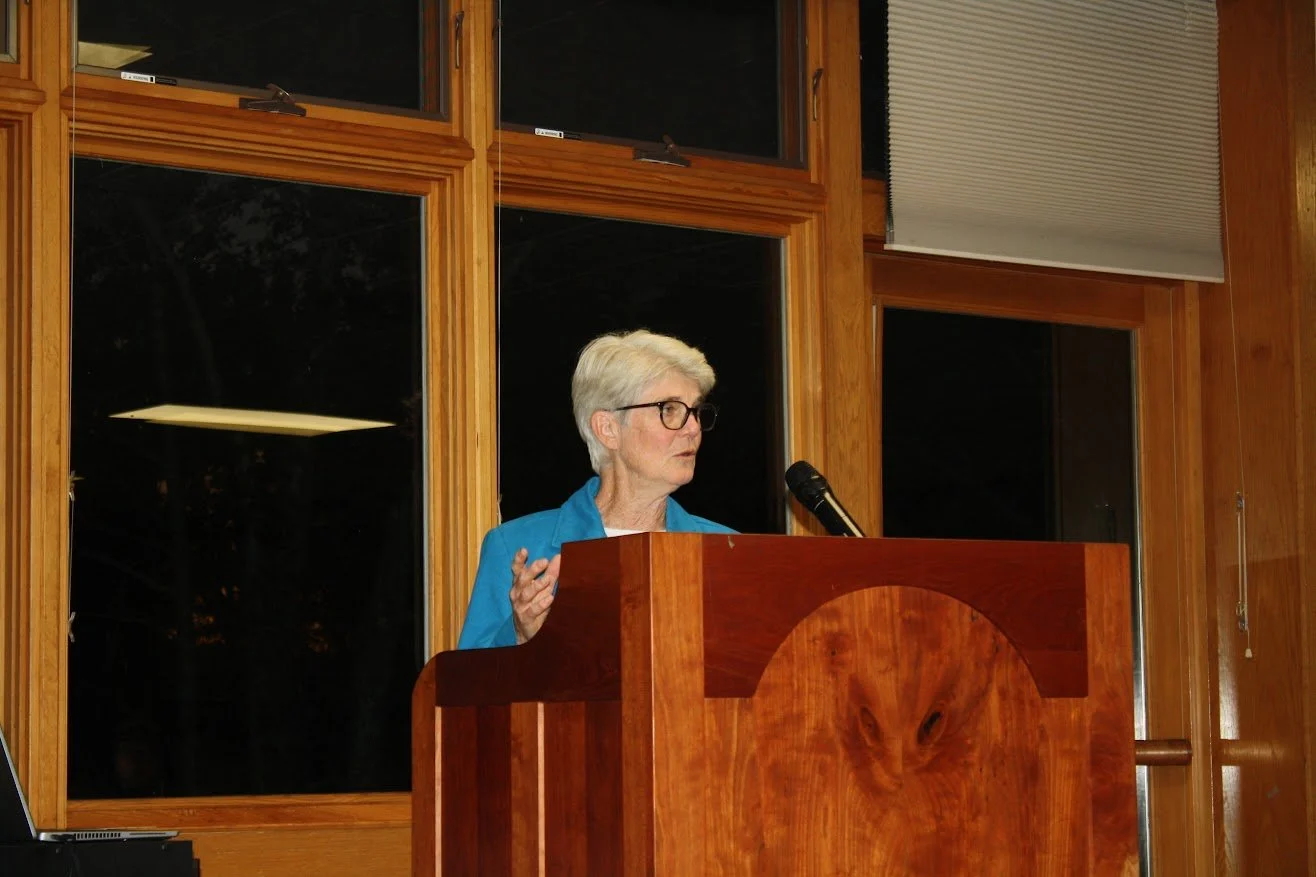
Nielsen Speaker Ladelle McWhorter presents her talk “What Does Homophobia Have To Do With Racism?” in Cannon Lounge at Warren Wilson College, Swannanoa, N.C. on Oct. 22, 2026. (Echo/Emma Taylor McCallum)
On Thursday, Oct. 22, Ladelle McWhorter gave a Nielsen Lecture at Warren Wilson College’s (WWC) Canon Lounge. The lecture was titled “What Does Homophobia Have To Do With Racism?” and was based on her book “Racism and Sexual Oppression in Anglo-America.”
When analyzing racism and sexuality, McWhorter argued that people typically use “intersectionality”, a term that was coined by Kimberlé Crenshaw. Intersectionality is the idea that when one kind of oppression intersects with another, both are transformed. One example is the idea that Black women do not experience racism the same as Black men, or sexism the same as white women. McWhorter explained that rather than taking an intersectional approach, she does analysis in a genealogical way, taking inspiration from Michel Foucault. Genealogy examines ancestries of problematic concepts and practices to expose power relations sustaining the configurations of meaning.
McWhorter, when asked why she uses genealogy rather than intersectionality, explained the nuances of her position.
“I am interested in the systems of power…There tends to be such an emphasis on individual experience and identity and that intersectionality focuses on that most of the time, more so than I like,” McWhorter said.
McWhorter began her talk by looking at the origin of the words homophobia and racism, as well as their definitions. The word homophobia was coined fairly recently in the 1960s and is defined as the irrational fear of homosexuals resulting in extreme measures to avoid them or eliminate them from one’s presence. The term racism was not coined until 1930, with the definition that racism is a belief that all members of one race are superior to all members of another race. However, the root of the word racism, race, first appeared in the 16th century, referring to clan lineage. As time went on and colonial expansion occurred, race came to refer to perceived differences in appearance and culture.
By the end of the 19th century, these morphological differences were seen as signs of race.
François Bernier, a French physician and writer who is often thought of as publishing the first racial categorization in his 1684 book “Nouvelle Division de la Terre, par les differentes Especes ou Races d’hommes qui l’habite, envoyée par un fameux Voyageur,” divided the world into “four or five” races. People wanted to know how many races there were, often basing their classification on the people’s visible features: their noses, skull shape, skin color, etc.
McWhorter explained that these divides were needed to lump people together easily across the world.
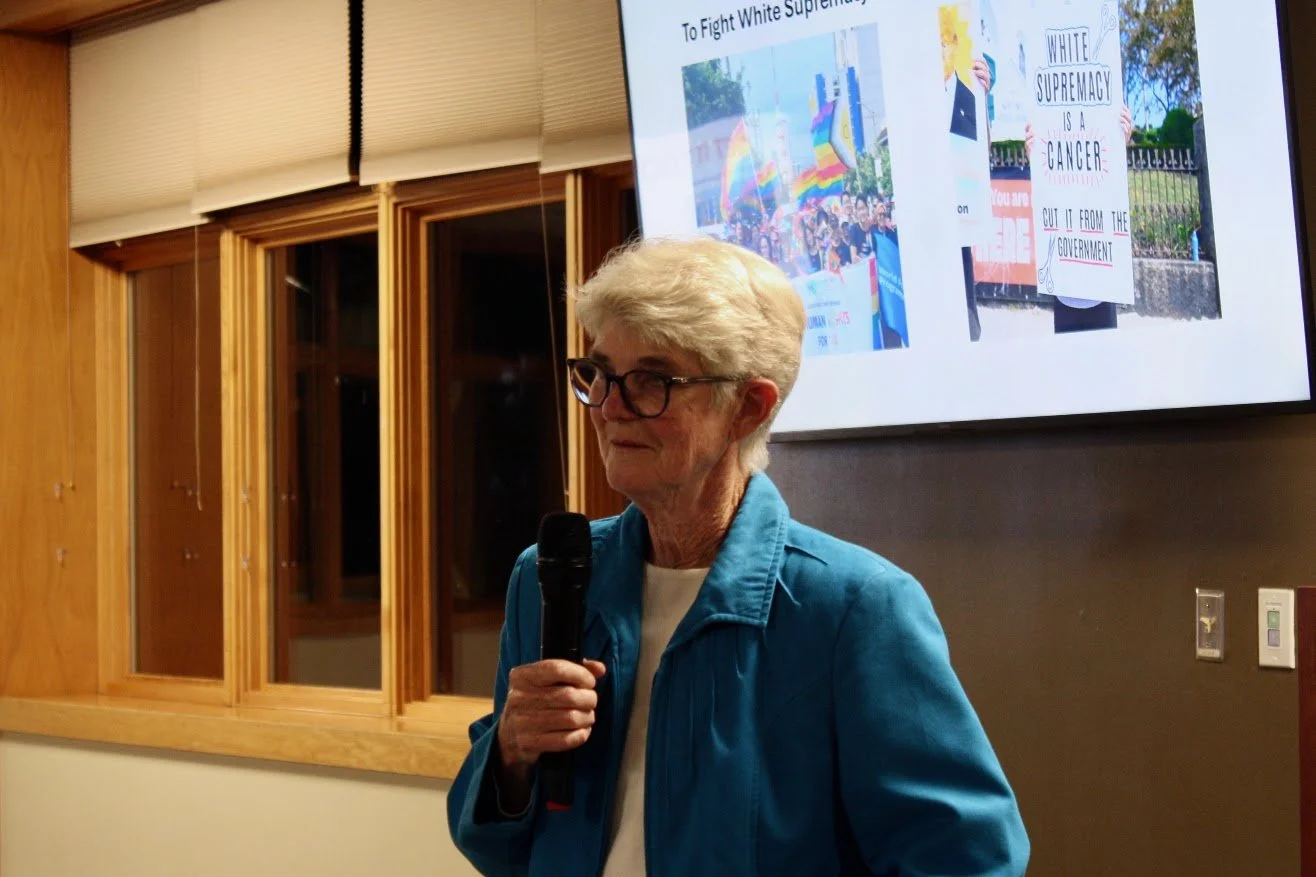
Nielsen Speaker Ladelle McWhorter presents her talk “What Does Homophobia Have To Do WIth Racism?” in Cannon Lounge at Warren Wilson College, Swannanoa, N.C. on Oct. 22, 2026. (Echo/Emma Taylor McCallum)
“Colonial America created groups that didn’t exist in order to make the groups feel different from each other, which is when the white race came into existence,” McWhorter said.
The white race, McWhorter argues, maintains its claims to supremacy by keeping each other from deviating from white societal norms. Under this framework, any kind of deviation, but especially deviations of sexuality, are viewed as a form of race treachery.
Sexuality in the 19th century, as explained by Foucault, was a way to consolidate knowledge and power. McWhorter argued that sexuality became a primary lens for understanding humans, as anthropologists theorized that sexuality was the basis of human community. People began to mark sexuality against a set of norms, like puberty. When those norms were not followed, a person could be labeled a ‘deviant.’ As time went on, societies began naming these deviants homosexuals, fetishists, sadomasochists, and more.
As McWhorter’s talk came to an end, she replaced the term racism with “white supremacy” and homophobia with “heteronormativity.” White supremacy, McWhorter argued, is the backbone of racism. This idea stems from legacies of enslavement and colonization, because the white race was created by grouping people together and is maintained by white people upholding and believing themselves to be the superior race. Heteronormativity works in similar ways, preventing the free expression of sexuality unless it fits into a white supremacist framework that either furthers the white race through reproduction or maintains the distance between white people and everyone else.
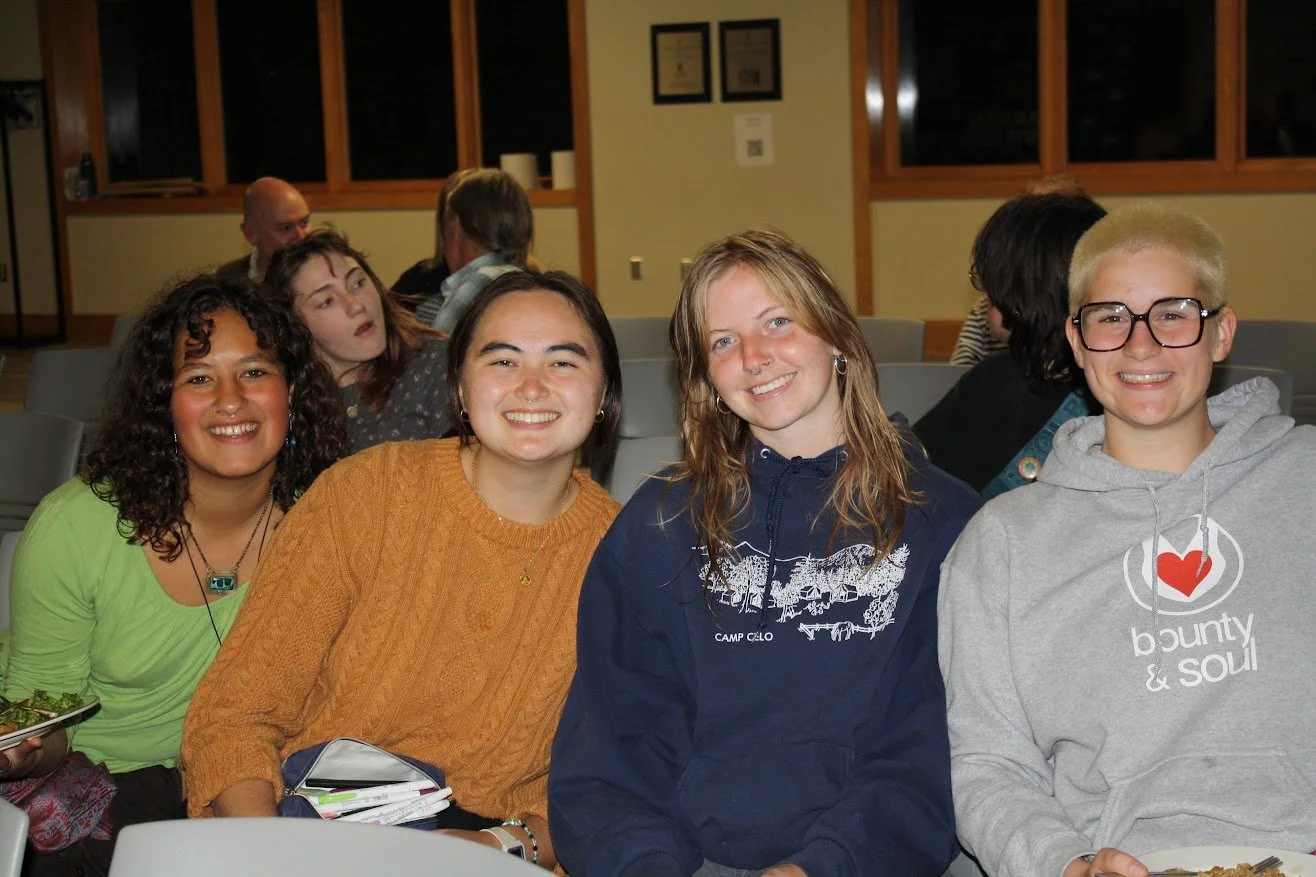
Rosie Neogy, Thi Huynh, Ivy Smith, and Anna Finke at Nielsen Speaker Ladelle McWhorter’s talk “What Does Homophobia Have To Do WIth Racism?” in Cannon Lounge at Warren Wilson College, Swannanoa, N.C. on Oct. 22, 2026. (Echo/Emma Taylor McCallum)
McWhorter ended her speech on the final point of solidarity.
“If you want to fight white supremacy you can't do that without fighting heteronormativity, and if you want to fight heteronormativity you have to fight white supremacy,” McWhorter said.
McWhorter‘s answer to the topic’s question, “What Does Homophobia Have To Do With Racism?” was: quite a lot. The talk examined the roots of the two words and how they came to be. The ideas that shaped the words were conceptualized on the basis of white supremacy and heteronormativity that has been expressed for centuries. To tear down one, McWhorter argued, is to tear down the other.