

Honoring Roots for Hispanic Heritage Month
Angel Alvarado | Sept. 29, 2026
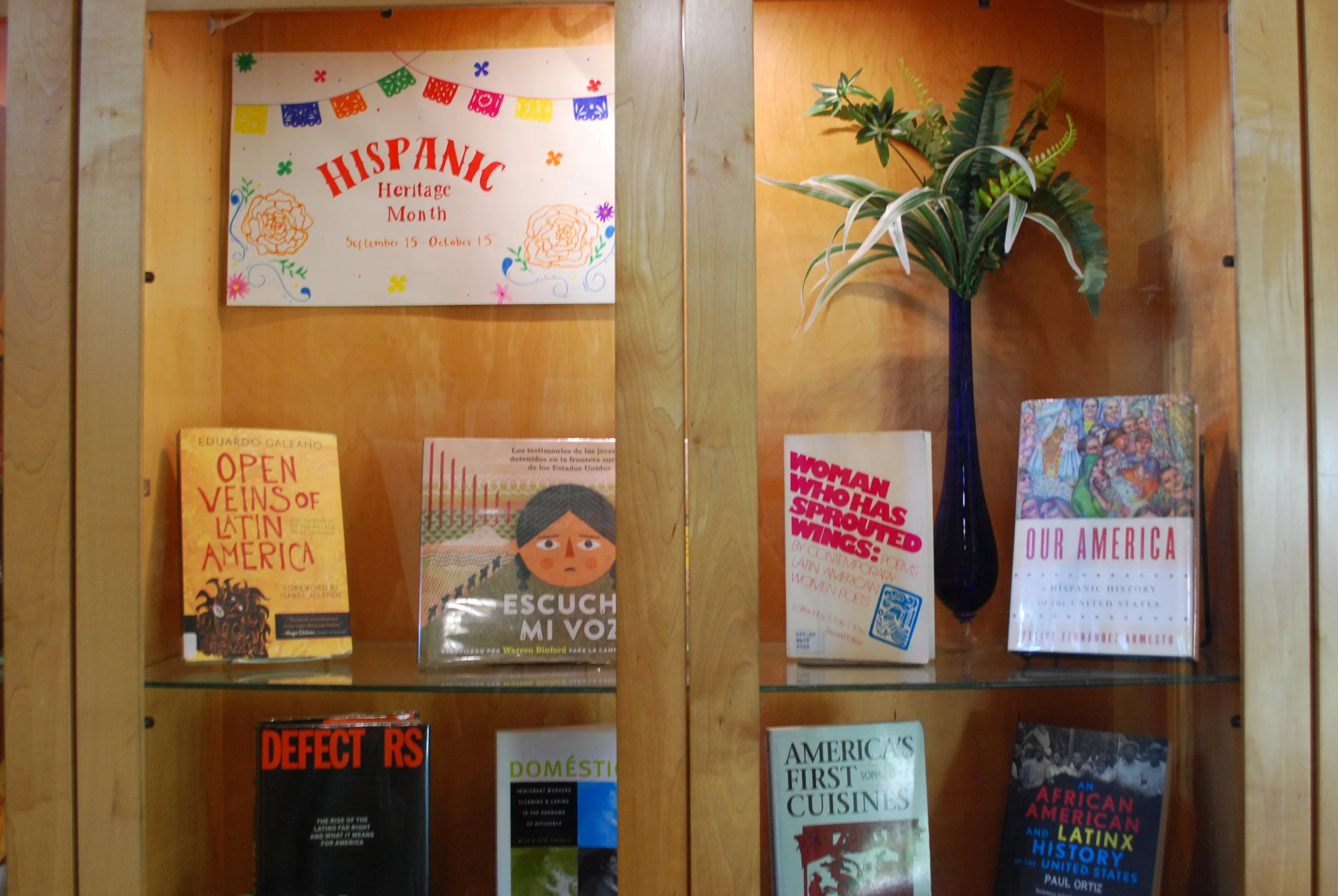
Hispanic Heritage Month display in the Pew/Ellison Library on Sept. 25, 2026 in Swannanoa, N.C. (Echo/Finn McKenny)
September is best known as the month when autumn begins, bringing in its cold chill along with the distant, ghoulish laughter conjured by eye-catching Halloween decorations. But from September 15 to October 15, it is time to celebrate the culture and recognize the contributions of the Latino and Hispanic communities during Latiné Heritage Month, also known as Hispanic Heritage Month.
Hispanic Heritage Month began as a week-long celebration in June 1968, introduced by California Congressman George E. Brown. During the 1960s, the Civil Rights Movement was in full swing, which drew attention to multicultural identities in the United States.
In September 1968, Congress passed Public Law 90-498, which requested and authorized the president, who, at the time, was Lyndon B. Johnson, to release an annual declaration announcing September 15 and 16 as the beginning of National Hispanic Heritage Week. Twenty years later, in 1988, President Ronald Reagan expanded the week-long celebration into a month-long one.
The beginning date of Hispanic Heritage Month carries significance, as it aligns with many countries that celebrate their independence days within the month. Starting on Sept. 15, the Central American countries of El Salvador, Nicaragua, Costa Rica, Guatemala, and Honduras all declared independence from Spain in 1821. Mexico declared independence from Spain on Sept. 16, 1810, followed by Chile on Sept. 18 of the same year. And finally, Belize declared its independence from Great Britain on September 21, 1981, and was added to the list of nations later on. This arrangement allows Hispanic Heritage Month to honor the resilience and determination of the Hispanic and Latiné community.
When it comes to celebrating the month, there are many ways to participate. One of the biggest ways to celebrate is through community events, like festivals or parades that feature live music, traditional food and folk dance performances. But these events depend on where one may be; the important part of celebrating is taking the time to learn more about the history, achievements, and contributions of the Hispanic and Latiné community. Students from Warren Wilson College (WWC) shared how they are celebrating this year.
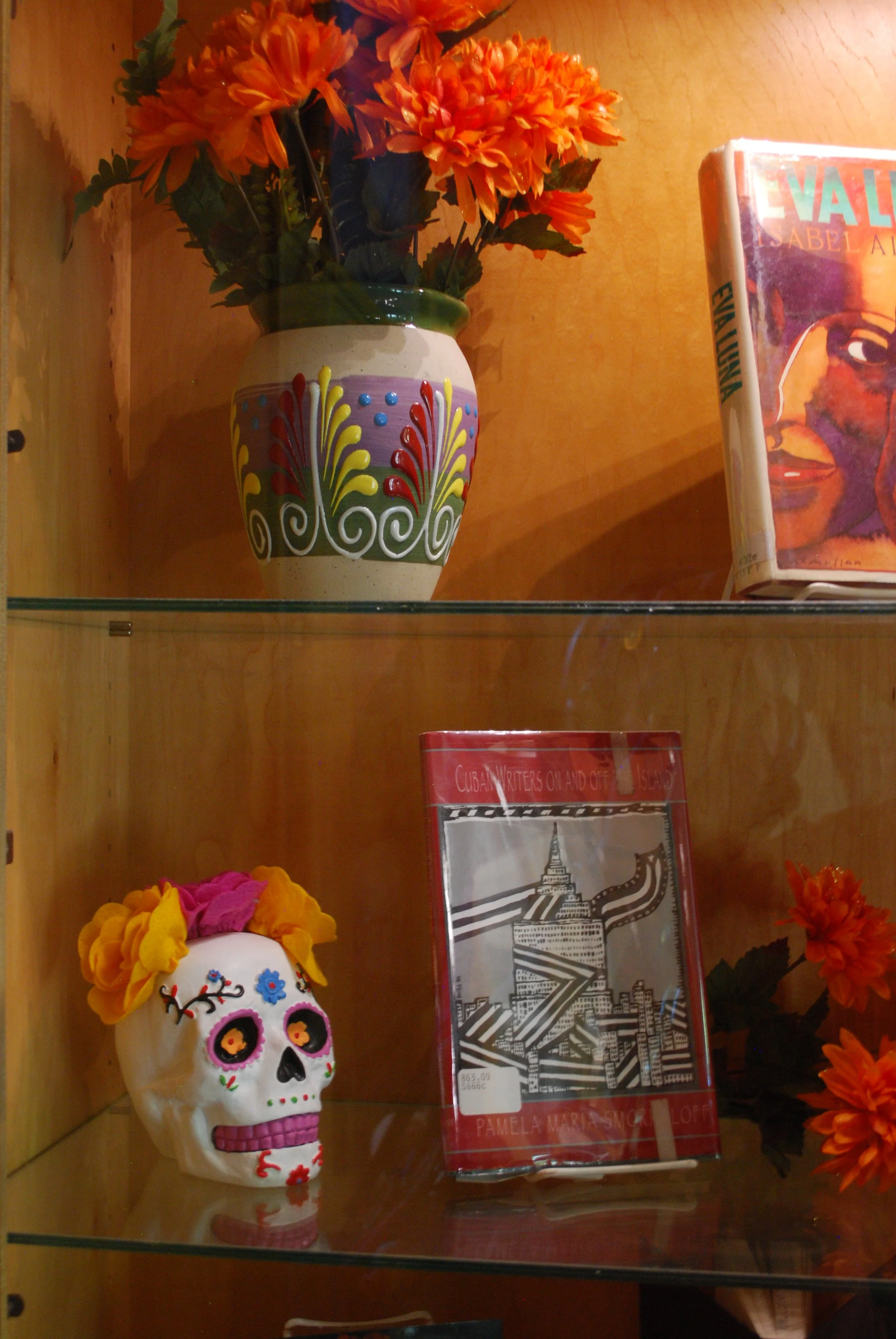
Books and decorations in the Hispanic Heritage Month display in the Pew/Ellison Library on Sept. 25, 2026 in Swannanoa, N.C. (Echo/Finn McKenny)
Nikki Tilihuit-Sauceda, a junior, shared how they would be practicing their language skills and taking the time to look back and honor their ancestors .
“I’m celebrating this year by practicing my Spanish, taking more time to honor my ancestors.”
Bandit Cox, a senior, expressed how he celebrates by helping their work crew and participating in events around campus, as well as keeping family traditions alive.
“I celebrate by helping with the library's Hispanic Heritage Month display, assisting and attending more LSC events, and learning the family arepa recipe from my abuela over break!” Cox said.
This year's Hispanic Heritage Month theme is “Unidos, Somos Más,” which translates to “Together, We Are More.” It highlights community strength and shared values; both are crucial when it comes to navigating current turbulent times.
While Hispanic Heritage Month used to see streets full of celebration, it has now prompted some community groups and individuals to rethink their attendance at traditional festivities over concerns about immigration policies and enforcement fears.
Cox agreed that the month’s significance has changed in recent years, sharing that they believed that the rising authority of U.S. Immigration and Customs Enforcement (ICE) has increased fears for all immigrant communities. He also shared his own fear for his family members.
“The increasing militarization and power of ICE has made things difficult for all immigrants, but especially for Hispanic/Latine ones,” Cox said. “When they were in my hometown, I was terrified that they'd snatch up my mom or my abuela or my aunt.”
Tilihuit-Sauceda added that with the recent political changes, the month’s significance has increased. Finding it to be a way in which culture can circulate amidst oppressive times, showing that it won’t disappear.
“With recent political events, it has made [Hispanic Heritage Month’s] importance grow drastically,” Tilihuit-Sauceda said. “It helps spread culture during a time of oppression, which sends a message that culture will never go away.”
At WWC, Hispanic Heritage Month is recognized and celebrated. There are events for students to celebrate and to learn about the various cultures and identities that make up all that is Latiné in the shared campus community.
Damián J. Fernández, president of WWC and a Cuban immigrant who was raised in Puerto Rico, emphasized that at WWC everyone’s contributions are valued and acknowledged regardless of where they may come from.
“Spanish speakers are not newcomers to our nation,” Fernández said. ”We have been in North America for centuries – from Florida to California, including in what is present-day North Carolina. We have contributed to shaping the United States in a myriad of ways – from economics to education, from pop culture to science. At Warren Wilson, we acknowledge and value the contributions of everyone. We celebrate the promise of pluralism and inclusive excellence to create a better society for all.”
For the next month, from Sept. 15 to Oct. 15, keep an eye out for any events around campus or individually learn about Latiné culture: visit the library’s Hispanic Heritage Month display and read a new book, or support Latiné-owned culinary spots around Asheville to uplift the community and have a tasty bite.