

Warren Wilson Takes First Steps to Regain “Bee Campus” Certification
Emily Cobb | April 28, 2026
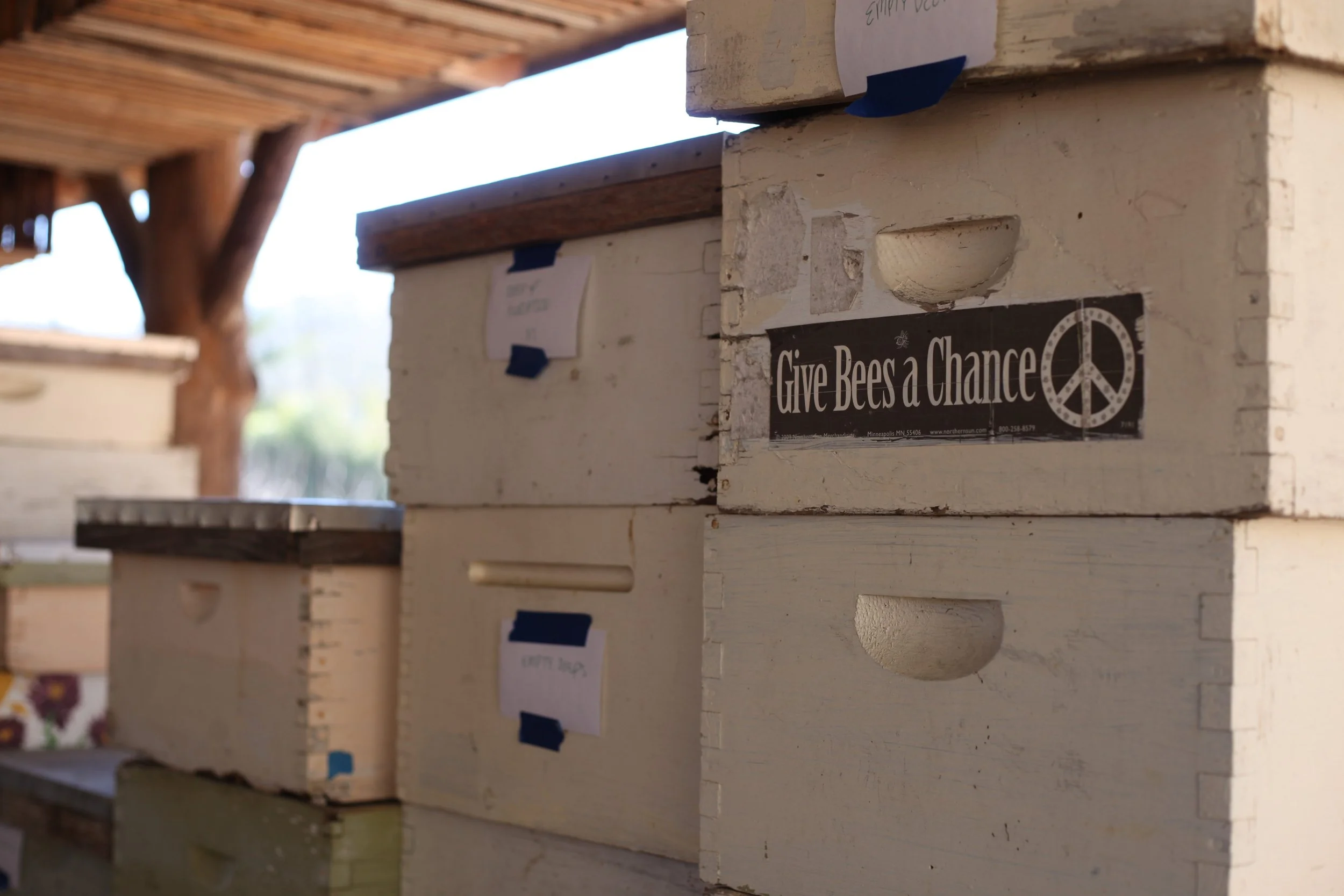
A bee box emblazoned with a sticker reading “Give Bees a Chance” at Warren Wilson College, on Feb 16, 2026 in Swannanoa, N.C. (Echo/Emma Taylor McCallum)
Warren Wilson College (WWC) contains a rich and diverse ecosystem. The Bee Campus Committee has been restarted at WWC to maintain and support a vital part of that ecosystem: native pollinators. Junior conservation biology major Zoie Green is leading the charge alongside Warren Wilson biology professor Amy Boyd.
Bee Campus is associated with Bee City USA, which started in Asheville in 2012. Now, it has a national reach as a nonprofit with multiple cities pledging to protect pollinators.
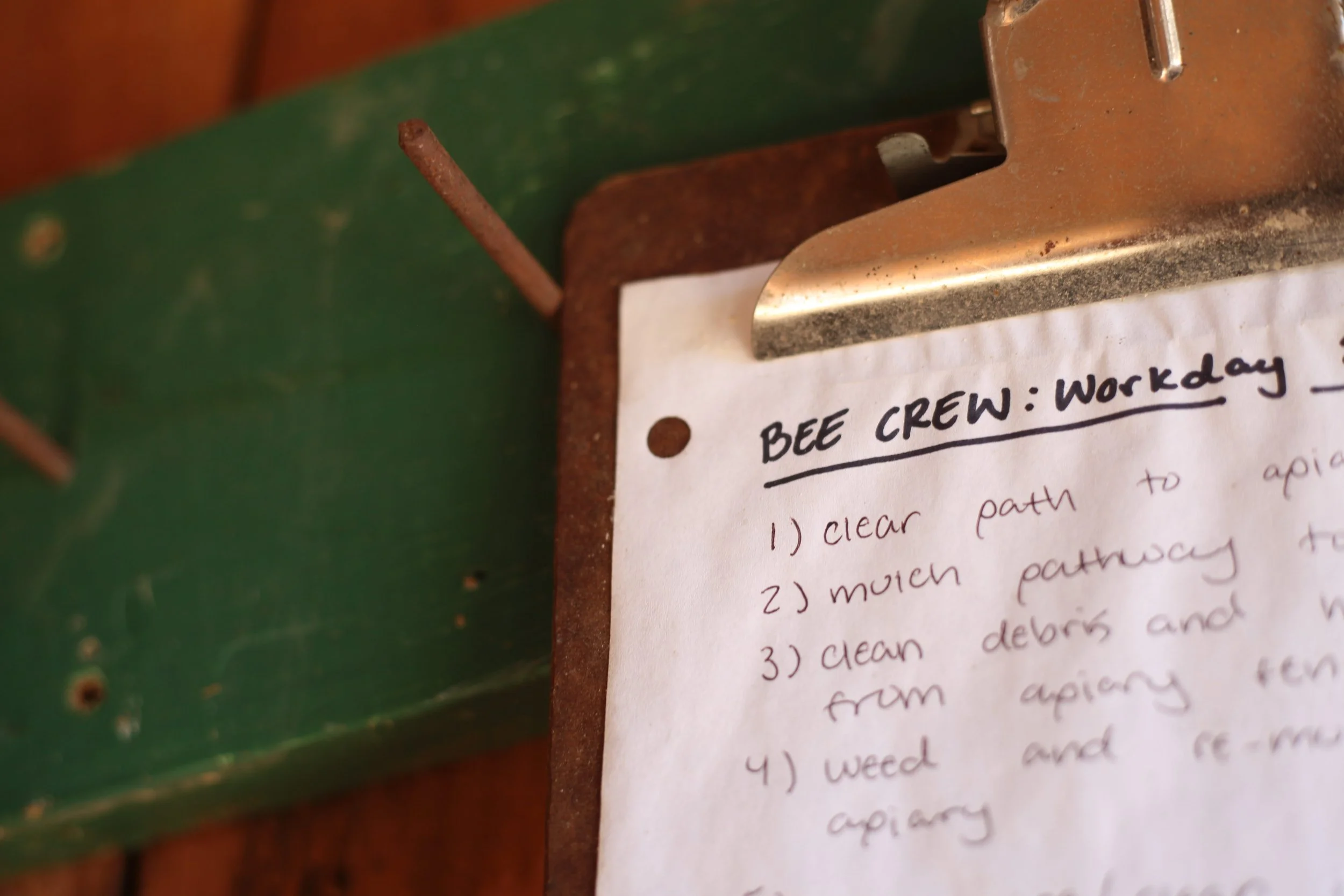
The goal of the committee is to assist classes and work crews, such as the Ecological Landscaping Crew, in supporting native pollinators through campus landscaping, education and outreach programs.
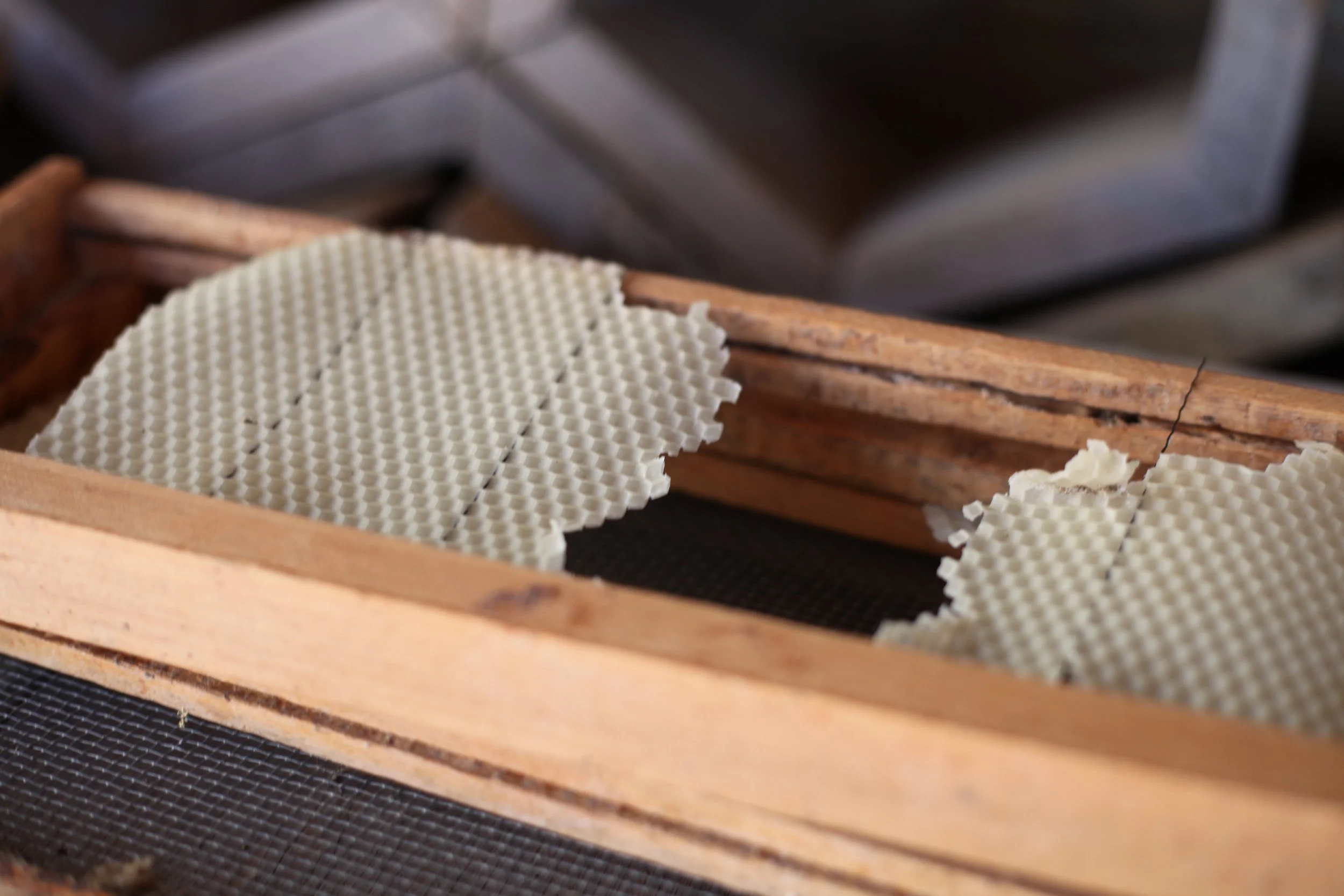
Warren Wilson was the 22nd college to join the Bee Campus Consortium in 2017 through the Bee Crew, a subset of the Garden Crew. Due to COVID-19 and transitions in supervisors, the college did not continue the mandatory documentation and reporting, and WWC lost the affiliation.
Boyd has been at WWC for 25 years and reflected on how Bee Campus looked previously.
“[Bee Campus] was pretty much completely run by students, and that's great, but it's hard sometimes for continuity sake, because students don't stay more than four years, usually,” Boyd said. “That baton just didn't get passed.”
In July of 2025, Green was working with housing in their Resident Assistant (RA) role, and decided they wanted to build a pollinator garden in front of the Schafer dormitory buildings to support native pollinators.
“A lot of non-native and invasive species were [growing there] and that space wasn't being used or taken care of by landscaping at that point,” Green said. “So I offered to plant a pollinator garden, and in the process of getting that approved, I realized that we were no longer associated with Bee City. [I then] got that process back and rolling with Amy Boyd…and then Erik Mangs from Eco Landscaping Crew as our landscaping constituent.”
According to Boyd, Bee Campus USA had also been trying to get Warren Wilson re-affiliated for several years, but due to energy and time constraints, Boyd had been unable to assist in this process. Through Green’s work, the college now has a Bee Campus Committee again, completing an accreditation requirement.
Luckily, because WWC was one of the first 30 campuses to join, the college has founders' rights and does not have to pay the yearly renewal fee. According to Green, this makes it more feasible for WWC to continue to be a part of the gold standard for pollinator education and outreach within college campuses. Boyd also weighed in on the accreditation benefits.
“It helps Warren Wilson get recognized for the work we're already doing,” Boyd said. “As the Bee Campus Committee, we're not creating anything that didn't already exist; we're just documenting it. By doing so, we can get this certification that gives more recognition from the outside for what we're already doing for pollinators on our campus…The other part is that it helps us stay accountable and paying attention to ‘Are we doing the things that we believe in? Are we making sure that we're connecting with the outer community? Are we keeping up the pollinator gardens that we plant? Are we connecting with our students through the curriculum?’”
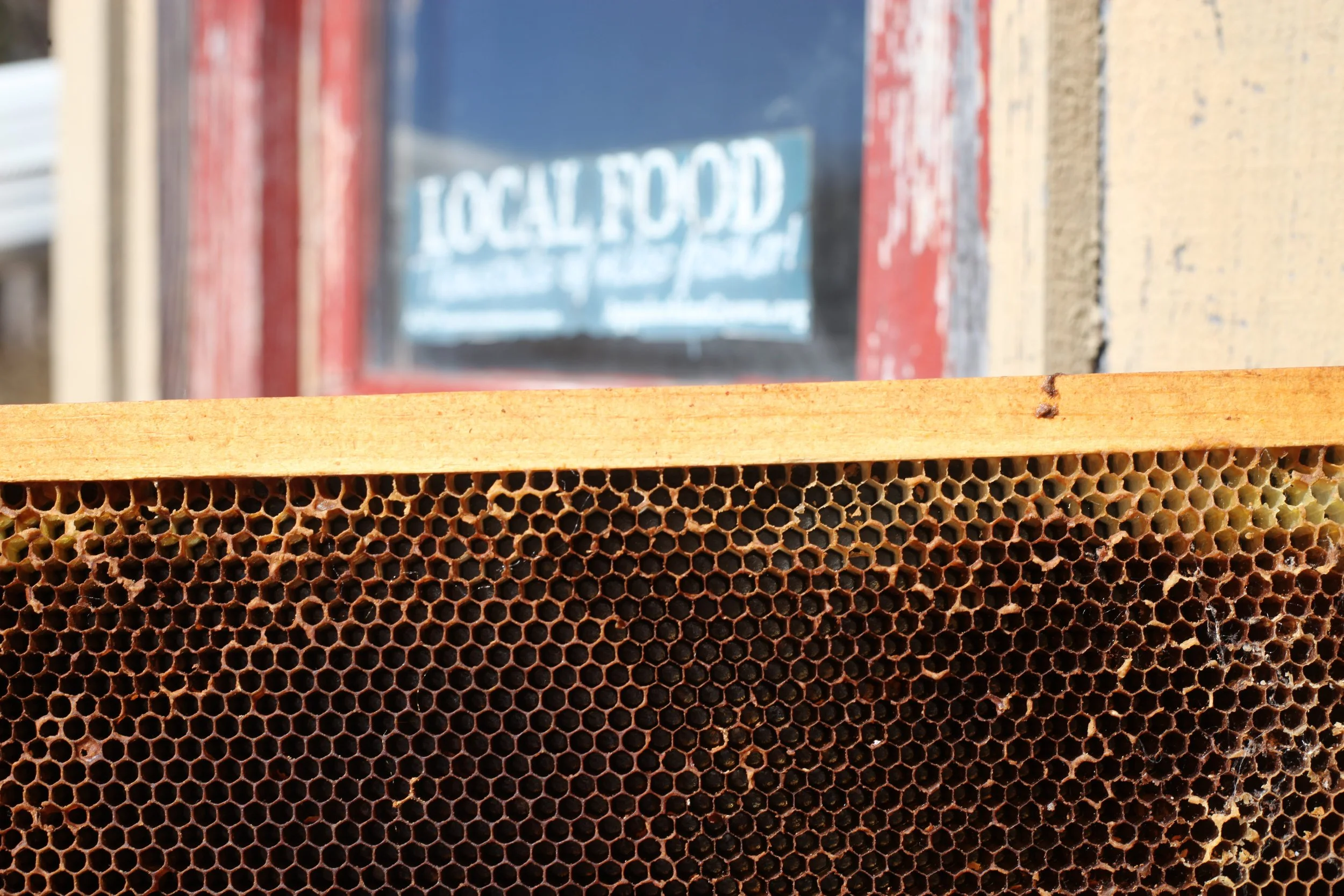
Honeycomb produced by the bees at Warren Wilson College, on Feb 16, 2026 in Swannanoa, N.C. (Echo/Emma Taylor McCallum)
The pollinator garden was built during the fall 2025 semester, with all of the plants provided by Bee City volunteer and US Fish and Wildlife Service employee Brian Tompkins. Bee Campus Committee events, including an off-campus pollinator event and a work day project, have been held this spring semester.
Currently, there are regular Bee Campus Committee meetings where Green, Boyd, Mangs and Andrew Peterson, one of the Ecology Landscaping Crew supervisors, meet. Next semester, the committee is hoping to open meetings to the Warren Wilson community so students, faculty and staff can have their voices heard.
“It gives me a lot of hope for the world, especially knowing that our pollinators are declining globally, and that insects generally are declining, and so trying to create habitat and also get other people interested and involved is something that matters a lot to me,” Green said.
If WWC community members want to be included in meetings, Green recommends getting on the Bee Campus Committee email list. Green is also requesting that students send information about volunteer work and projects their crews are doing related to pollinators so they can include it in their reporting. This can be done by emailing the committee. The committee can also be found on Instagram at @wwc_bee_campus.