

Red Blood, Rewards, and Regulations: Blood Donation and Its Incentives at WWC
Ryleigh Johnson | Sept. 22, 2026
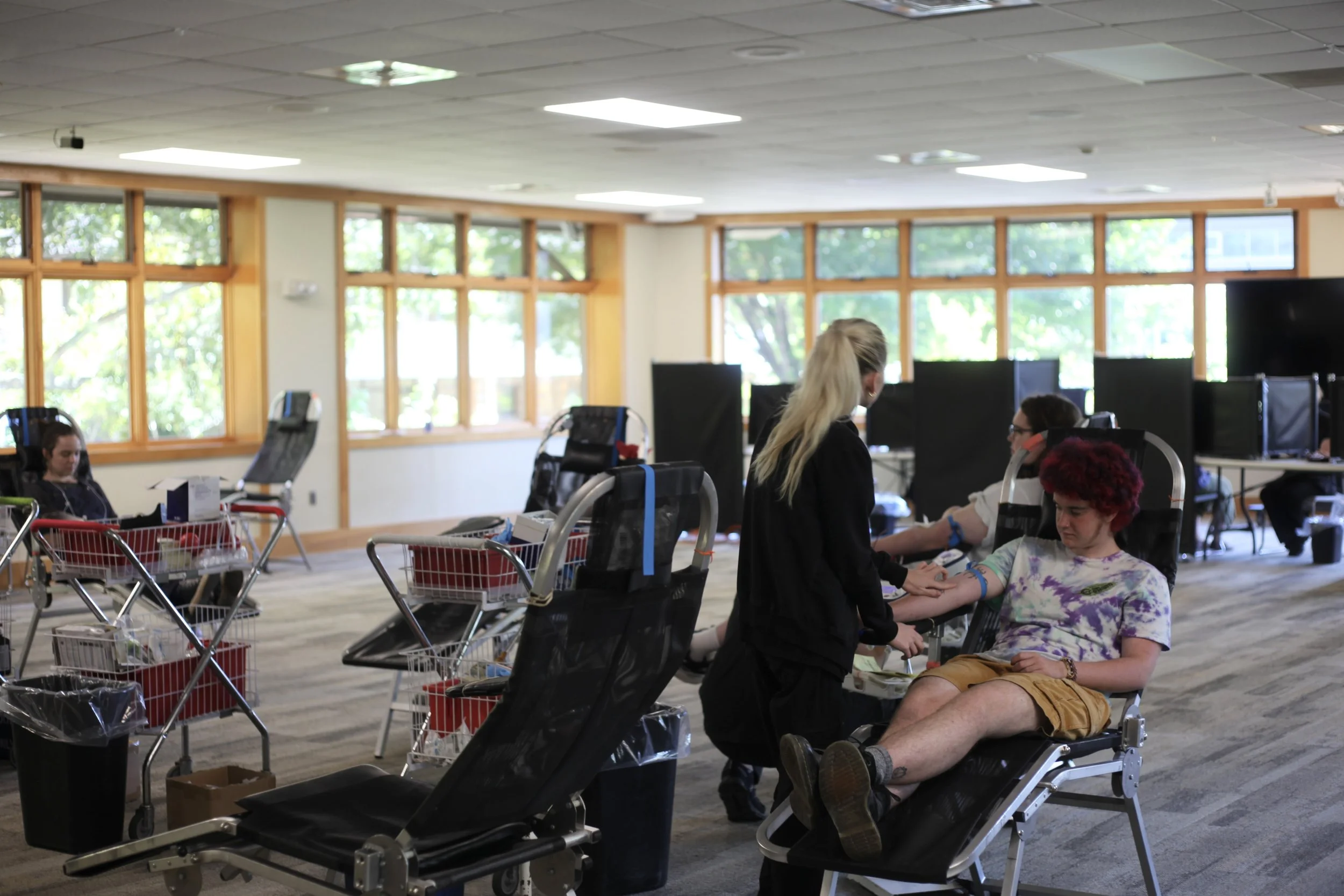
Senior Gabe Ranke donates blood in Canon Lounge at Warren Wilson College in Swannanoa, N.C. on Sep. 17, 2026. (Echo/Vivian Bryan)
On Friday, Sept. 18, Warren Wilson College (WWC) students entering Canon Lounge were greeted by some unfamiliar faces. Andrew Mauer and Robert Fisher, employees of the Blood Collection, cheerfully signed in blood donors and guided them through the paperwork process.
“I came from a sales position...this is kind of sales too,” Mauer said. “When I'm hounding people to get their blood...it feels good to do it because we're gonna put [it in] hospitals and stuff. It's not like we're just vampires out to take people's blood.”
Jokes aside, Mauer and Fisher represent just one part of the team that regularly hosts blood drives at WWC, offering students gift cards in exchange for a donation. While they find that donors tend to come for more altruistic reasons, these tactics represent a larger trend in blood donation across North Carolina.
“You see a lot of people that [say], ‘I donate all the time because my grandmother needed 12 transfusions when she had a car accident,’” Mauer said.
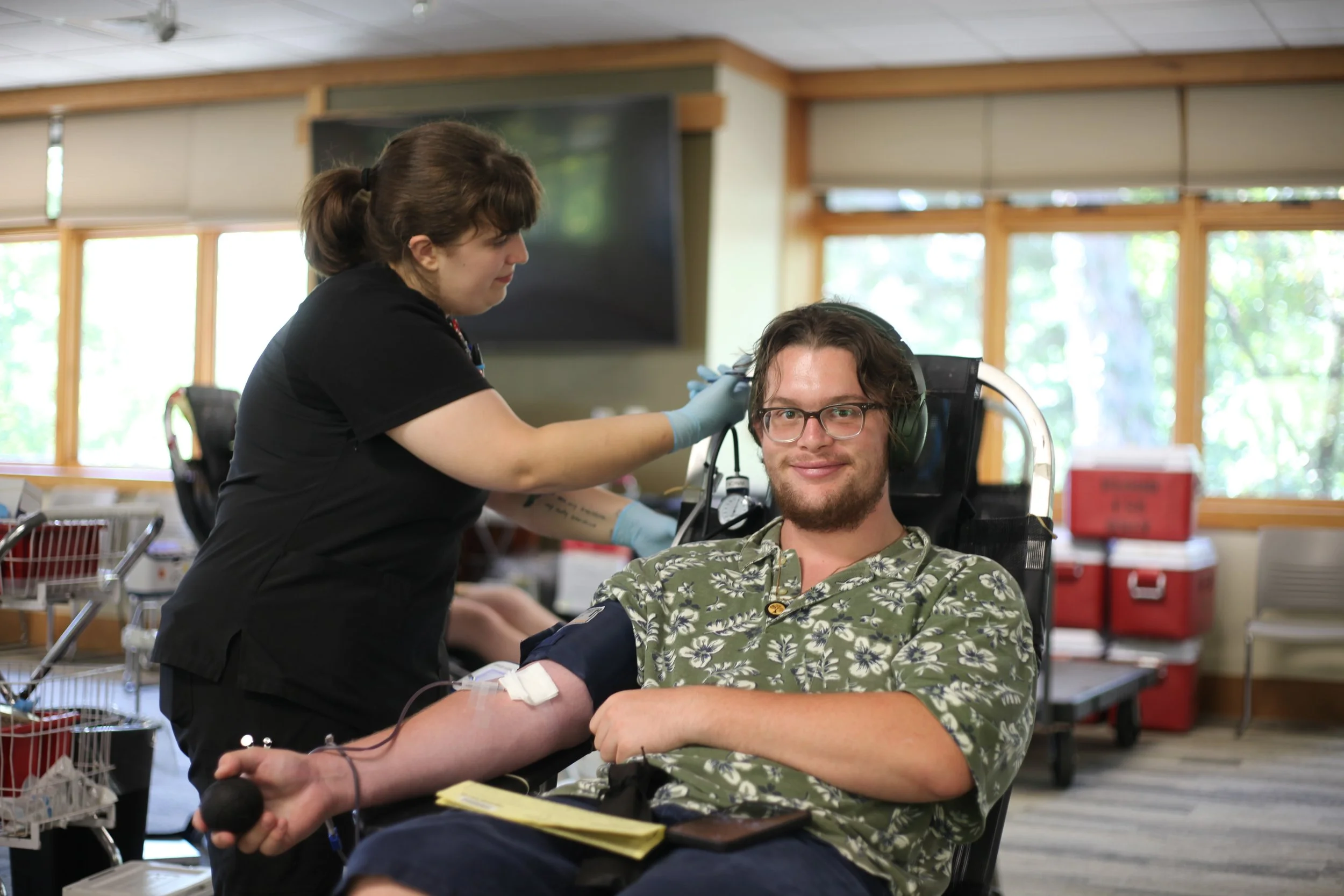
Junior Sean Coyle poses for photo while donating blood in Canon Lounge at Warren Wilson College on Sep. 17, 2026 in Swannanoa, N.C. (Echo/Vivian Bryan)
Donors are not the only ones who are encouraged to donate because of a real-life connection. Fisher, who works in mobile operations for The Blood Connection, explained how a personal experience influenced his decision to work for the company.
“Every unit of blood [donated] helps three people ,” Fisher said. “There's all kinds of stuff online about what this does for people. Me personally, my mom died from cancer, and every time she received a blood donation, she literally came back alive, and it gave us precious time with her before she died.”
This giving spirit was reflected in the donors who awaited their appointments in Canon. Kurt Goodbar, a senior student at WWC, donates primarily out of a desire to help others.
“I've actually never been able to figure out how to log into my account and get my money, so I just do it because I can, and it'll help people,” Goodbar said.
Bailey Powers, Strategic Ventures Operations Manager at WWC, also jokingly emphasized the ease and importance of donating.
“I'm [blood type] O-negative, and we're therefore superior to everyone else…” Powers said. “Our blood is literally worth more. I have no qualms about [donating]. Never had a bad experience... It's arguably the easiest good deed you can do.”
Powers hinted at an interesting aspect of how The Blood Connection’s compensation model for donation operates. At the event on Sept. 14, gift cards started at $40, with larger amounts available for blood types in greater demand from blood banks and hospitals.
The O-negative blood type, often referred to as “the universal donor”, is one such case. O-negative blood can be used for transfusions to people with any other blood type, making it essential for emergency procedures when medical providers do not necessarily know the blood type of the patient. On Friday, O-negative donors received $120 in rewards.
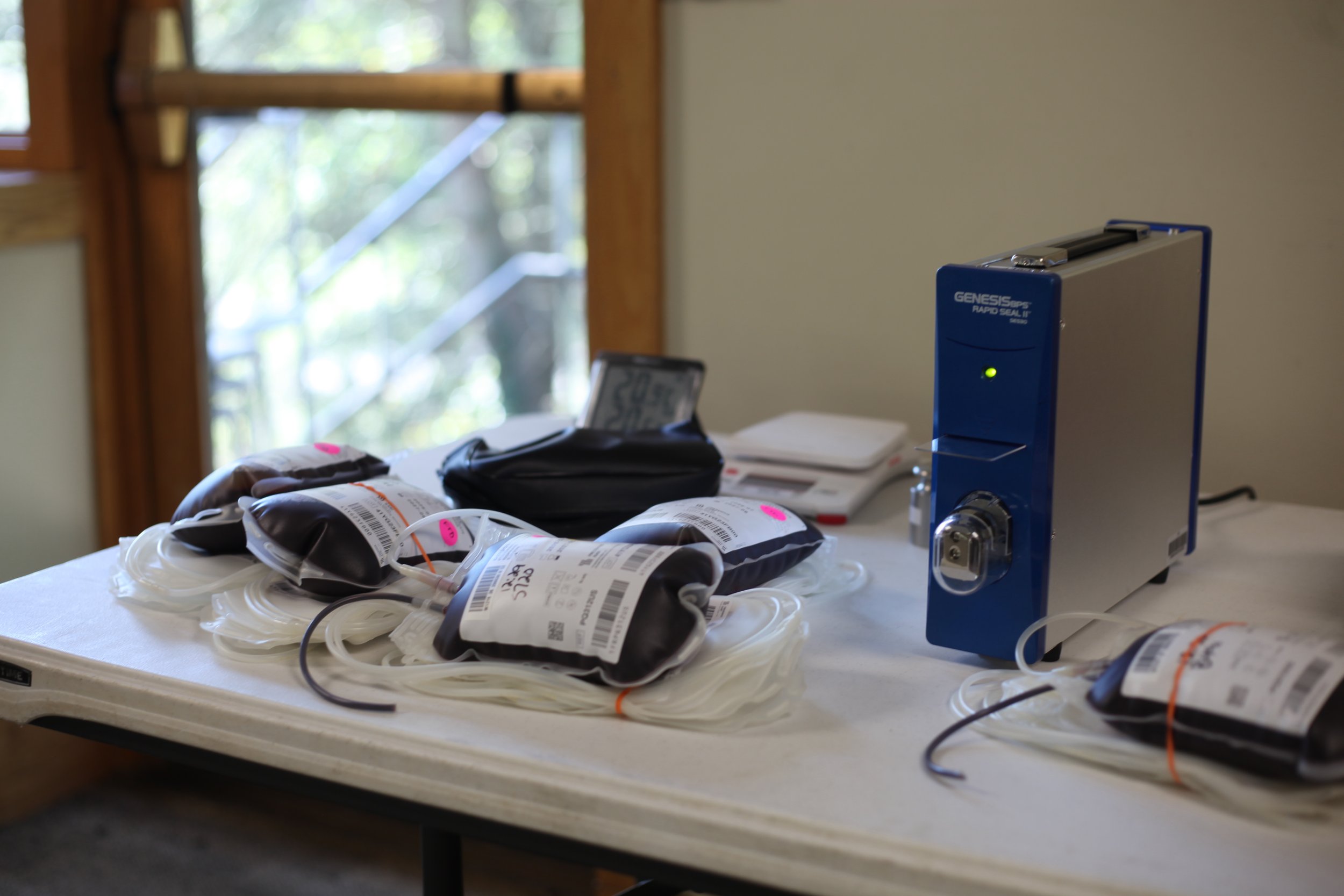
Bags of donated blood rest on a table in Canon Lounge at Warren Wilson College on Sep. 17, 2026 in Swannanoa, N.C. (Echo/Vivian Bryan)
These rewards are made possible, in part, by the price that hospitals pay to organizations like The Blood Connection for each unit of blood they provide. In 2021, the median price that hospitals paid for red blood cells, derived from whole red blood donations, was $214 per unit.
This $214 helps to cover the operational costs of the staff, infrastructure and incentives needed to run donation centers. In recent years, particularly in North Carolina, donation centers have offered greater rewards to donors in an effort to combat what The Blood Connection spokesperson Katie Smithson told The Charlotte Ledger was “a silver tsunami” of donors aging out of being able to give blood.
These incentives make college campuses, the site of many young people who may be in need of quick cash, great donation sites. Mauer commented on the consistent high turnout he had personally seen at WWC.
“This is a rock star campus,” Mauer said. “You guys do a great job here, especially [because] the student body isn't that huge. We'll probably get over 60 units today, so that's 180 lives possibly saved.”
While some studies have suggested that rewards do incentivize donation, medical professionals worry about the potential for an increase in low-quality blood should incentives become more common. At present, the FDA requires blood to be labeled “paid” or “volunteer” donor because of concerns about the quality of blood that paid participants donate.
This is why organizations like The Blood Connection offer gift cards rather than monetary payments to donors. As gift cards are not transferable and cannot be exchanged for cash, they allow the organization to provide compensation and still label the blood it provides hospitals as “volunteer” donations.
After hearing Goodbar mention that he had not been able to access his rewards, Mauer walked over to tell him to make sure to take an instruction card on reward redemption before he left. This conversion highlighted the reality that blood donation centers confronting blood shortages face: the best donors are those who are not primarily motivated by the money, but oftentimes, money does help produce more donations. Goodbar told Mauer he would grab a card before he left, optimistic that maybe this time he could do a good deed and be rewarded.
“This time, my friend told me that it would help me finally figure out how to get my money,” Goodbar said. “So hopefully, I'll get both.”