

How To Get Kicked Off The Echo (in 1968)
Richmond Joyce | April 14, 2026
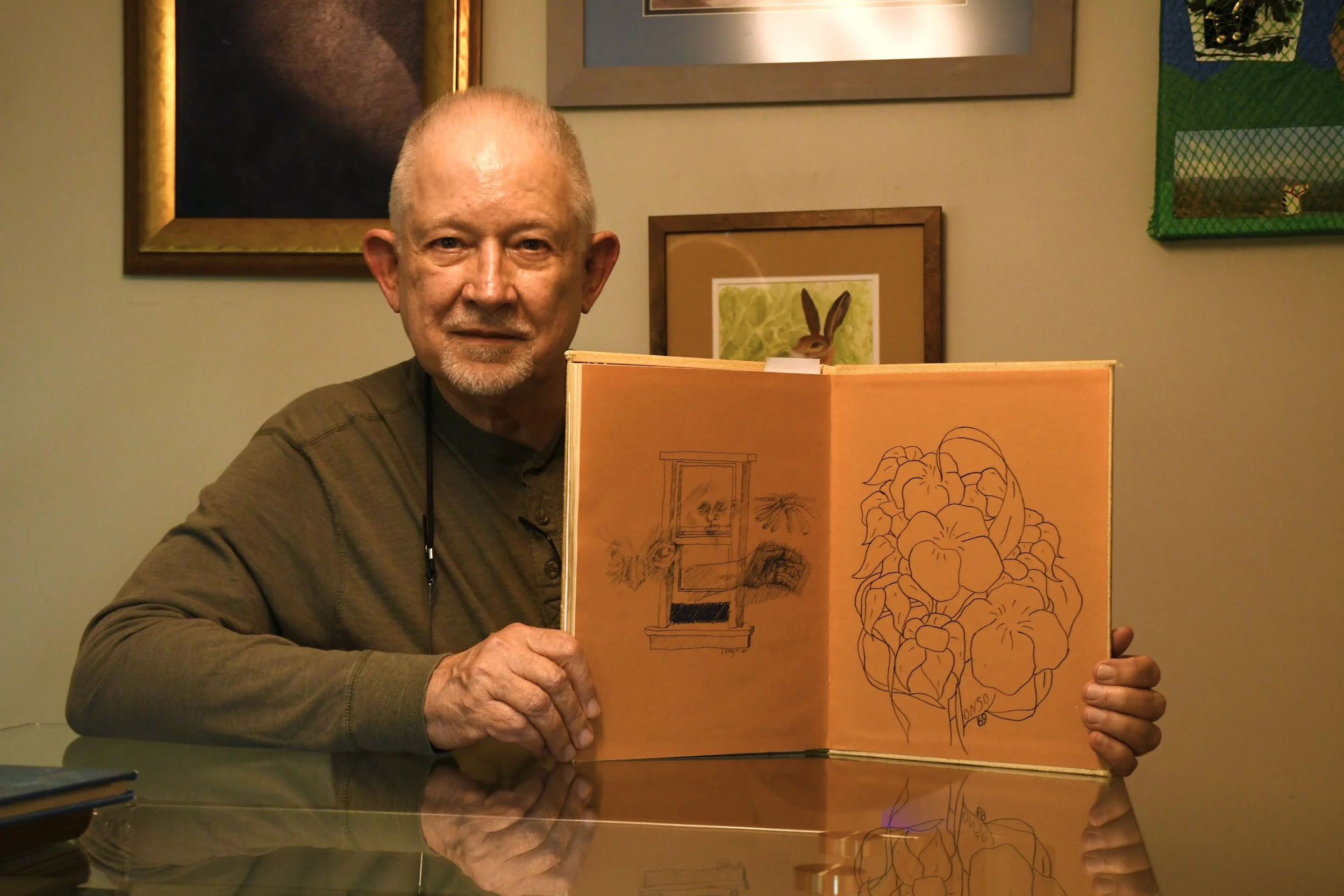
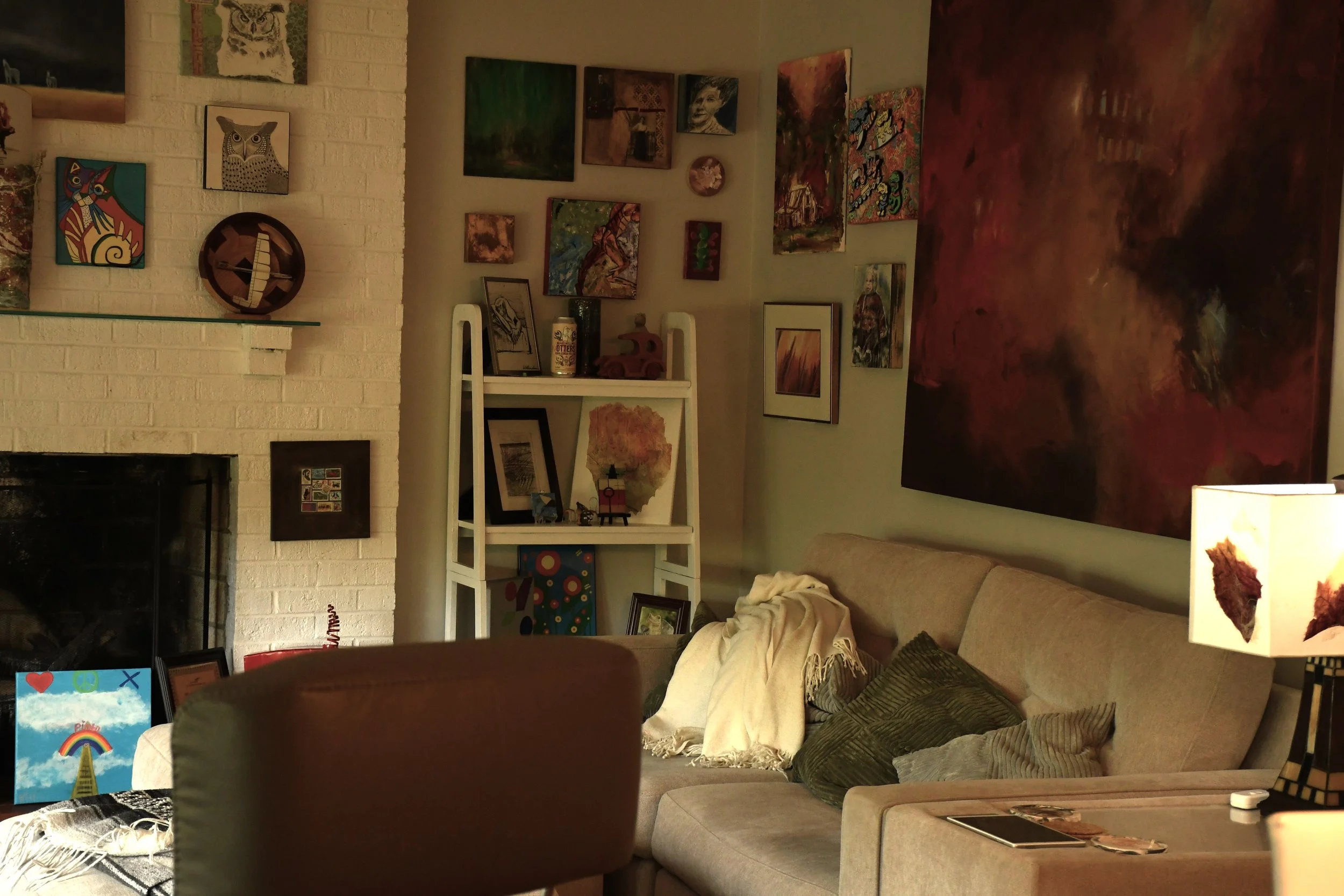
Kam Kammerer welcomed me into his home in Tryon, North Carolina with a hug and sat me down at his dining room table. Across its modern glass tabletop sat three Ole Ladies—but these were no fates, nor furies. These were Warren Wilson College (WWC) yearbooks (a trend making a resurgence this year) which he acquired during his time as a student at Warren Wilson from 1964 to 1968. Kammerer and his classmates would make up the first group of students to graduate from WWC with a four-year college degree, rather than the two years that had been standard for our “junior college.”
Kammerer welcomed me to sit down beside him after we waved a quick ‘hello’ to his husband, William “Bill” Dill, down the hall. He then proceeded by opening up these books to pages upon pages of handwritten notes and illustrations from classmates. He explained that with so many talented artists amongst his friends, he asked them to draw something for him instead of writing a note to remember them by. Many obliged, and so between rows of black and white headshots and typed names and scenes around a familiar campus, were sprawling doodles and sketches full of color. To me, it looked like something that could have been made just as easily today by our current student body 60 years later.
The next thing Kammerer pointed out to me was various faces in the mix of the yearbook. He would flip a page and tell me, “He was gay,” flip, “He was too.” As a gay man himself, Kammerer was able to find common ground and solidarity amongst peers here at WWC during the 60s, back when our student body was hovering around 300. But how in the world exactly did a gay man from Springfield, Missouri, born into a hard-shelled Southern Baptist family end up at our small Northern Presbyterian Mission college in rural Western North Carolina?
“My sister and I kind of moved away from that [Southern Baptism] because the church we were going to, those people were coming to show off their cars and their furs and their diamonds and stuff like that,” Kammerer said. “That didn’t seem appropriate to us. So we just kind of stopped for a while, and then my sister became friends with a person that was going to the Presbyterian Church, and we started going there too.”
When Kammerer was finishing up high school, his Missouri Presbyterian Church sent out groups of young students across the continental United States to get a taste of the world and the reach of their church. This trip went from Chicago all the way down to New Orleans, but it was one stop in Swannanoa, North Carolina, that stuck with Kammerer. What place else but our very own Warren Wilson Junior College?
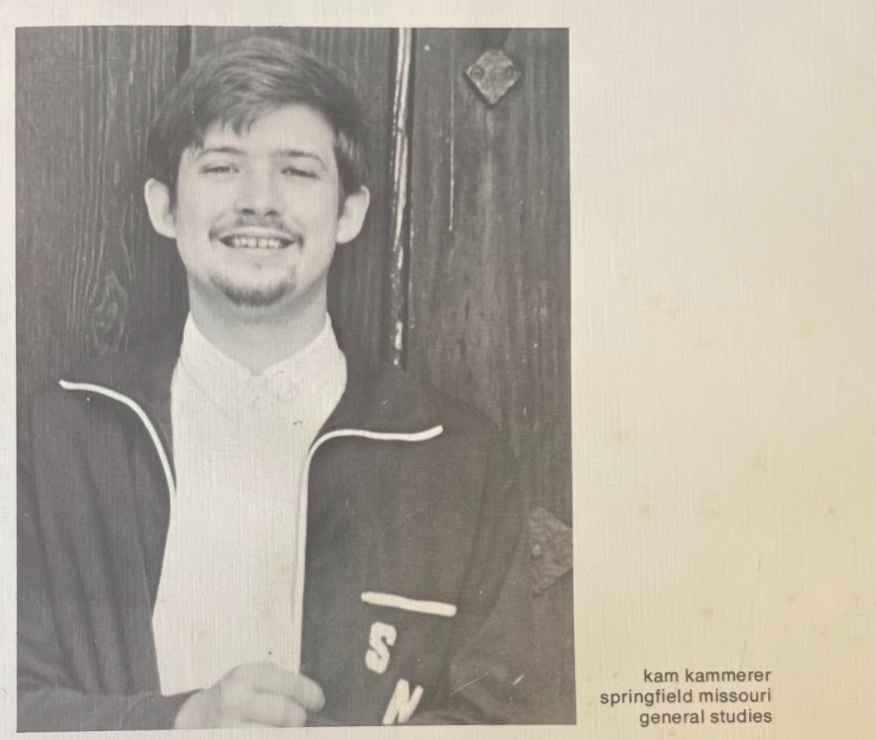
Photo of Kam Kammerer in the Ole Lady Warren Wilson College Yearbook taken at Warren Wilson College on April 14, 2026. (Echo/Richmond Joyce)
The institution was a hot spot of diversity and pushed for 25% of the student population every year to be foreigners. In the late 60s, this looked like countless students from Cuba and from the Middle East, especially around contemporary Palestine. This smorgasbord of identities stuck out to Kammerer, and on the bus back home, as they were pulling out and away from our little valley, he recalled thinking, “This is where I want to go to college.”
Kammerer would get his wish of going to WWC, but more than that, he would be a part of the first four-year program at our institution. As such, the class of 1968 had sway in what the program would look like going forward. Kammerer, when asked what he would like to see, brought forward the idea of international travel. He grew up being fascinated with the wider world, but never had the financial backing to explore how he pleased—now, though, through college and the Board of Home Missions, it seemed like the perfect time to try.
“You’re always bringing foreign students in,” Kammerer said, “but I’m not seeing any programs specifically to send U.S. students out.”
Through his initiative, Kammerer became the first WWC student to leave the country for a study abroad program, at the time called ‘Scandinavian Seminars’, which would pick him up and place him in a folk school in Finland for his junior year of college. Kammerer, a member of our very own Echo Newspaper at the time, also achieved the status of our first ever foreign correspondent!
Being in Finland and experiencing the culture of a world far removed from the American South or Midwest would change the trajectory of Kammerer’s life. The country he experienced was full of casual drinking, something he certainly did not grow up with, and a general acceptance of homosexuality. Kammerer has been fascinated by queer culture and queer existence since he was in high school, writing a paper when he was still back in Missouri analyzing the subcultures of queer life as they were shown to him then.
So dazzled by his time in Scandinavia, he planned on moving back after graduating from college. Although this would not work out as he had expected, this trip did lead him into an interesting situation, stuck between a rock and a hard place—or more accurately—college bureaucracy and the Echo Newspaper.
In his senior year, back on American soil, Kammerer explained to me that how he viewed the world had changed. Specifically for this story, the experiences he had in Finland shifted his views on relationships. Meanwhile, on our campus, a relationship was forming between a young female teacher and an older male student, putting them around the same age.
Anyhow, Kammerer told me how this teacher, while dating the student, ended up getting pregnant. According to him, there was no rush between the two, and they were planning on getting married at the end of the school year, and that would be that. Kammerer reported a small snippet on this event… however, the outcry was likely not for the reason you are imagining.
“I made the statement that I thought that sex between two consenting adults in private was a good and lovely thing,” Kammerer said.
They had a faculty advisor for the paper at the time, but the advisor either did not see this comment or thought nothing of it. Unfortunately, the alumni body who received the paper as well as the students and faculty thought otherwise. Despite the progressive nature of the Northern Presbyterian Church, the discussion of sex before marriage in the paper was a step too far.
There was outrage.
“I was told that I could remain as editor and they weren’t going to editorialize on anyone else’s work, but anything I wrote had to be approved,” Kammerer said. “And so I said no.”
Thus came the end of Editor Kammerer of the Echo Newspaper, although he was still permitted to work on the yearbook that year. Rest easy, dear readers, Kammerer got his revenge through the Ole Lady when he lined up a certain member of the staff involved in his newsletter debacle in a photo, so that it replicated an image of a pig presented on the previous page. Well played, Kammerer, well played.
Kammerer had his ups and downs during his four years at WWC—from the end of his first queer fling on campus that was so brutal he ended up seeing a surprisingly chill psychiatrist through the school, to friends who he has kept by his side for the rest of his life. He remembers almost all of his professors fondly, and he has stayed involved with the college through alumni programs and donations.
Kammerer has been dead-set on supporting us since he first stepped foot on this campus 60 years ago. He and his husband are fierce defenders of us strange and woodsy people, and he is proof to all of us that there is a past and a future here for LGBTQ+ folks that is not lost, nor buried as far down beneath the surface as current administrations might have us believe. And yes, WWC has always been a queer place—however you want to read into it.
If you ever find yourself in Tryon, North Carolina, and Tryon Painters and Sculptors is open—pop in and see if Kam or his husband Bill are around! Their art can be found here for sale on occasion, and they are frequent volunteers behind the desk!