

Angel Alvarado | Nov. 17, 2026
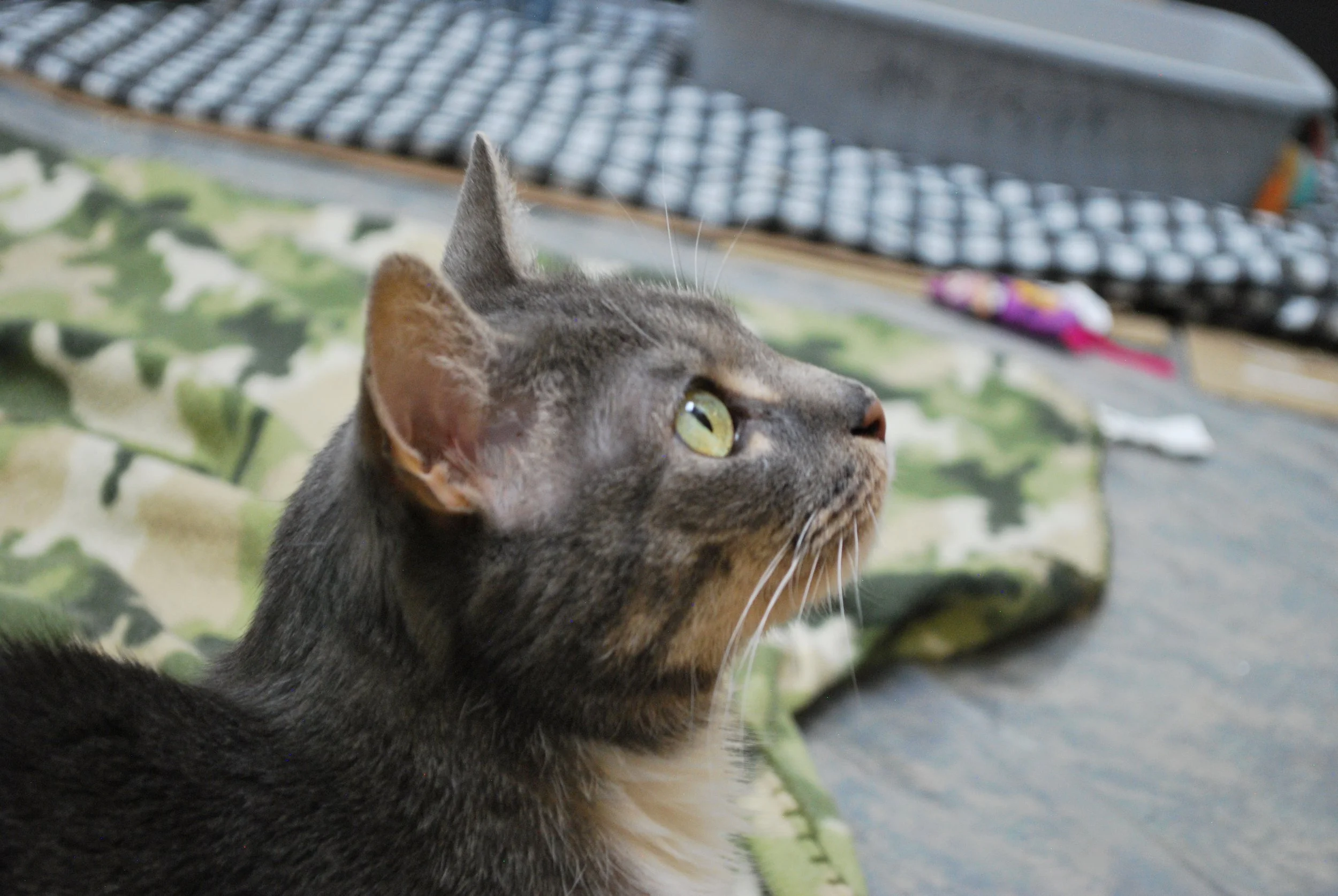
Library cat, Madeline, in the Pew/Ellison Library on Warren Wilson College Campus on Nov. 10, 2026 in Swannanoa, N.C. (Finn McKenny/Echo)
Sound the alarm, as there is a new foster cat staying in the Cat Cabana at Warren Wilson College’s (WWC) Pew Learning Center & Ellison Library!
The Cat Cabana is a space that the Library Circulation Crew has set up to foster cats with the goal of getting fosters socialized and in good health before being sent to an adoption center. The Cat Cabana project was dreamed up by the Circulation Crew years ago, taking them nearly four years to get it started. Before the program could be set into motion, things were put on hold while the Pet Policy was in development. It was then interrupted by Hurricane Helene, before being postponed again when the library went through a change of directors. By then, there were only a few students remaining from the original crew who wanted to set up the Cat Cabana. Despite that, the project was finally launched last spring, which is when the crew got their first foster, MoMo.
Teresa Imfeld, the interlibrary loan & circulation services manager in her 18th year of working at Ellison Library, enthusiastically shared that one should never give up on passion projects, no matter how much time it may take to start them.
“If you have a good project, keep plugging away at it: constant baby steps will ultimately get something off the ground,” Imfeld said.
Madeline is a grey and white domestic shorthair around one to two years old and the second cat that has been fostered through the Cat Cabana. She is a very sweet and friendly cat, known for her clingy nature. Madeline is not shy about spending her time with visitors, choosing to take naps on their laps and cuddle up in their arms, and is always excited to have people visit her in between their studying sessions, providing a stress-relieving break for students.
Madeline arrived as a foster from the Buncombe County Rescue Center, which serves as a resource hub for animals in need in Buncombe County. She arrived at the Buncombe County Rescue Center very underweight; the hope in fostering her is to help her get back to a healthy weight so she can return to the center and be put up for adoption. During her time spent in the Cat Cabana, she has gained 1.5 pounds.
Once Madeline gains enough weight, the rescue center will move her over to their adoption unit at the Asheville Humane Society. Imfeld believes that Madeline should be around until Thanksgiving break. In terms of adoption, only off-campus students would be able to adopt the fosters, as WWC campus pet policy has restrictions about how long you need to have had your pet before you can bring them to campus. The policy mandates that students must have had their pets for at least six months prior to bringing them to WWC and that all adoptions would be done through the originating shelters that the foster pets originally came from.
Tara Whitney, a sophomore and co-crew lead for the Circulation Crew, shared how she appreciates seeing the students' excitement when it comes to visiting the Cat Cabana.
“It's been really cool to see people's enthusiasm; they come in and head to the front desk, and immediately they're like, 'How can I see the cat? Can I see the cat?’” Whitney said.
Whitney and other crew members share the responsibility of taking care of the Cat Cabana and the foster cats. Their work involves cleaning out the litter box, making sure the fosters have water and food, cleaning up the space and then making sure students are not entering the space without signing up.
Imfeld expressed worry about how students would react to fosters coming in, but after seeing MoMo’s popularity, she is no longer concerned. She also noted that the longer fosters stay on campus, the fewer visits they get.
“I did not know how students would react to MoMo when I first brought him,” Imfeld said. “It turned out he was quite popular, but he was also only with us for a couple of weeks. Madeline is going into her fourth week with us, and I'm a little saddened that she has fewer and fewer visitors the longer we have her.”
Imfeld supposes that fewer visits could be from students juggling more work as the semester progresses, the novelty of a new foster wearing off, or students not wanting to get attached to Madeline, because she will ultimately be leaving for the adoption center. Imfeld believes that this aspect of fostering pets is one of the most difficult parts, and it can cause some apprehension.
“Fostering can be hard, because we do end up saying goodbye to the animals and we have to live in the unknown about what happens to them,” Imfeld said. “It can make people uncomfortable.”
Imfeld added that despite fostering being difficult, it is also a rewarding experience in its own way, inviting students to visit and appreciate the fosters and send them off with celebrations and warm goodbyes to their new homes.
“It is a wonderful experience to know you have helped an animal grow and become healthy again and then trust they find a forever home,” Imfeld said. “I hope students will still allow themselves to open their hearts and love the cats a bit, and wish them well as we continue the Cat Cabana. In the meantime, I hope students will visit Madeline while they can and, when the time comes, will send her off to be adopted with many well wishes.”
While Madeline is still at WWC, go pay her a visit at the Cat Cabana! Keep an eye out for any new fosters, because at the end of the day, what's a better way to spend one’s study break: doomscrolling or spending time with the sweetest cat?